
Solar ROI For Small Business
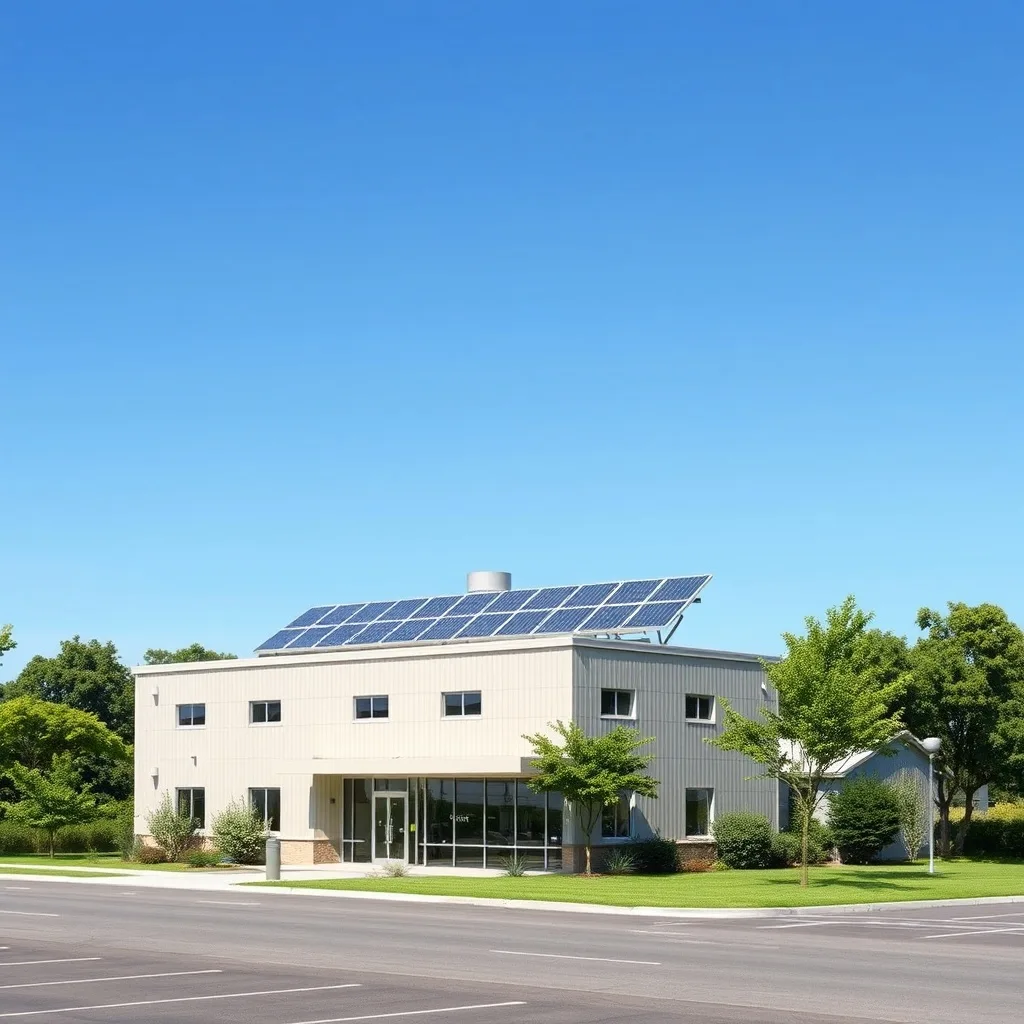
Solar ROI for small business is usually stronger than residential solar ROI on paper – commercial electricity rates are often higher, usage is concentrated during daytime hours when solar production peaks, and businesses can access accelerated depreciation that homeowners cannot – but the financing structures, tax treatment, and decision process are different enough that residential payback rules of thumb don’t transfer directly.
This guide covers how commercial solar ROI is actually calculated. It walks through the depreciation and incentive stack unique to businesses. It also covers financing options beyond a straight cash purchase, and the questions worth asking before signing a commercial solar contract.
Table of Contents
- Why Commercial Solar ROI Differs From Residential
- Depreciation: The Biggest Lever Homeowners Don’t Have
- The Full Commercial Incentive Stack
- Financing Options Compared
- Worked ROI Example
- Why Daytime Load Matters More for Businesses
- Case Study: Two Business Types Compared
- Solar and Commercial Property Value
- PACE Financing for Commercial Solar
- Demand Charges: A Commercial-Only Factor
- Solar Renewable Energy Certificates (SRECs)
- Insurance and Warranty Considerations
- Questions to Ask Before Signing
- Common Mistakes
- Frequently Asked Questions
Why Commercial Solar ROI Differs From Residential
Three structural factors typically make small business solar ROI more favorable than an equivalent residential system. First, commercial electricity rates run higher than residential rates in most utility territories. Second, businesses can claim accelerated depreciation on the system as a capital asset. Homeowners cannot depreciate a personal residence’s solar system. Third, business electricity usage is concentrated during business hours, which lines up closely with when solar actually produces. That reduces reliance on net metering export credits, which may be worth less than the retail rate.
Depreciation: The Biggest Lever Homeowners Don’t Have
Commercial solar systems qualify for the Modified Accelerated Cost Recovery System (MACRS). It lets a business depreciate the system’s cost basis over a 5-year schedule for tax purposes. That is a substantial reduction in effective net cost on top of the federal tax credit, because depreciation reduces taxable income in the years it is claimed. Bonus depreciation rules allow a large share of first-year depreciation, but they have varied by tax year. Confirm the current-year rules with a tax professional before finalizing project economics. This single factor is often the difference between commercial and residential solar ROI headlines.
The Full Commercial Incentive Stack
| Incentive | Typical Value | Notes |
|---|---|---|
| Federal investment tax credit | 30% of system cost | Same base rate as residential; commercial systems can sometimes stack additional adders (domestic content, energy community location) |
| MACRS depreciation | Varies by tax bracket and bonus depreciation rules in effect | Requires the business to have taxable income to offset; consult a tax professional |
| State/utility commercial rebates | Varies widely by state | Often separate application process from residential rebate programs |
| Section 179 expensing (in some cases) | Varies | An alternative or complement to standard depreciation in certain business structures – tax-professional territory |
See our commercial solar depreciation guide for the depreciation mechanics in more detail, and our tax credits guide for the base federal credit rules.
Financing Options Compared
| Option | Who Claims Incentives | Best For |
|---|---|---|
| Cash purchase | The business | Businesses with available capital and sufficient tax liability to use the full incentive stack |
| Commercial solar loan | The business | Businesses that want ownership and incentives but prefer to preserve cash flow |
| Power purchase agreement (PPA) | The PPA provider | Businesses without enough tax liability to use incentives efficiently, or that prefer zero upfront cost |
| Operating lease | The leasing company | Similar to PPA – predictable fixed payment, no ownership, no direct incentive capture |
Worked ROI Example
Here is a simplified illustration for a 50kW commercial rooftop system at roughly $110,000 gross cost. The 30% federal credit takes off $33,000. A conservative first-year MACRS depreciation tax benefit adds roughly $15,000 to $20,000 in tax value, though this varies by bracket. Effective net cost can land in the $57,000 to $62,000 range. Set that against annual electricity savings of $12,000 to $16,000 for a business with matching daytime usage. The payback period commonly lands in the 4 to 6 year range. That is meaningfully faster than a typical unincentivized residential payback, driven mostly by the depreciation benefit residential buyers cannot access.
Why Daytime Load Matters More for Businesses
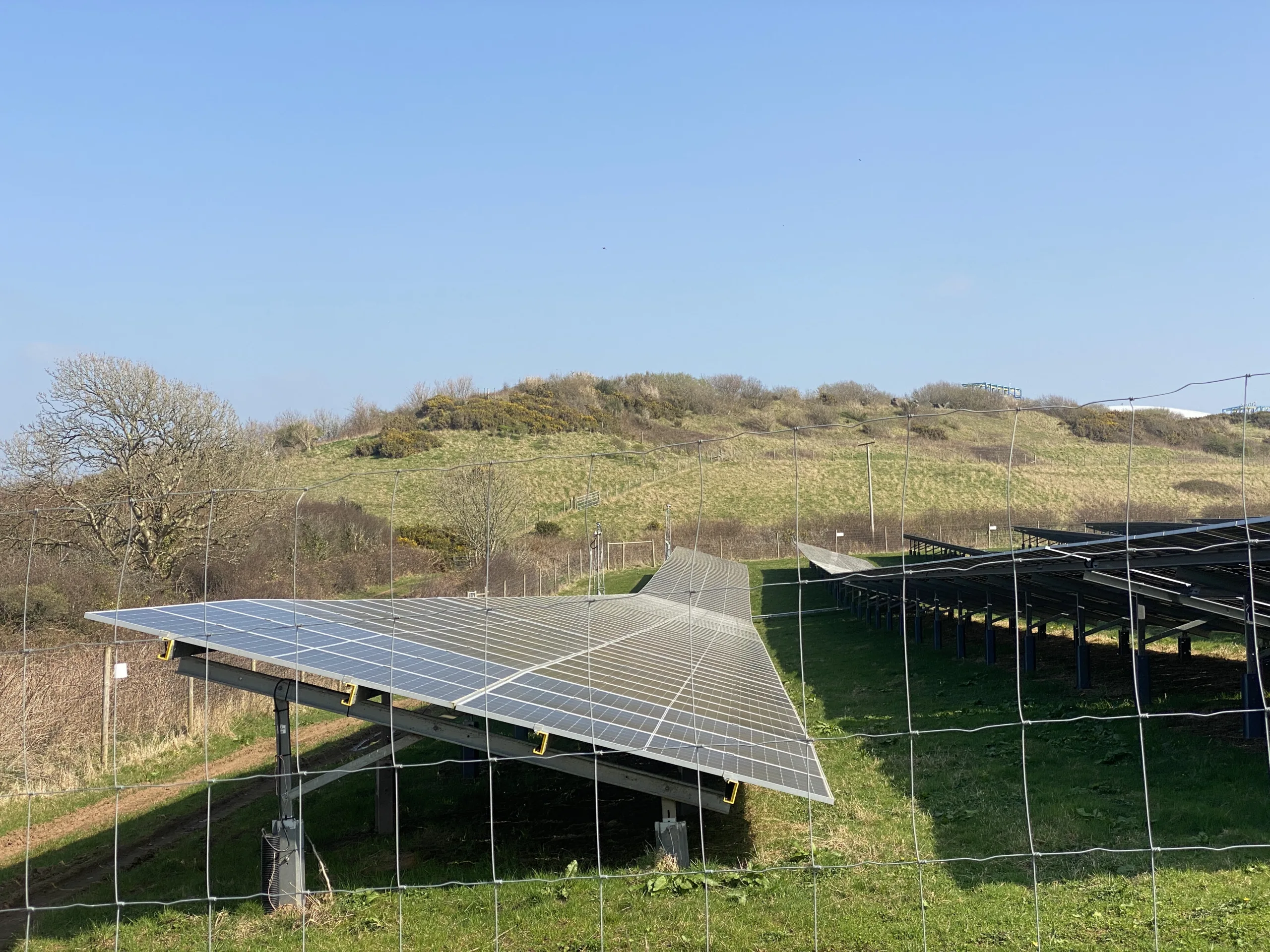
Some businesses peak during business hours: offices, retail, light manufacturing, and warehouses running daytime equipment. These see a much higher share of solar production directly offsetting real-time consumption. Less is exported to the grid at a potentially lower net-metering credit rate. This self-consumption match is a bigger ROI factor for commercial buildings than for the average home. Business load profiles concentrate during exactly the hours solar produces most. A typical residential household is different, since usage often peaks in the evening after the workday.
Case Study Comparison: Two Business Types
ROI varies substantially by business type, mostly driven by how closely usage timing matches solar production and how much roof or land area is available relative to load:
| Business Type | Typical Load Pattern | Solar Fit | Typical Payback |
|---|---|---|---|
| Retail storefront (daytime hours) | Concentrated 9am-6pm, closed evenings | Strong – usage and production overlap closely | 4-7 years |
| Light manufacturing / warehouse | Steady daytime shift usage, sometimes high demand charges | Strong, plus demand-charge reduction value | 4-8 years |
| 24-hour operation (some restaurants, hospitality) | Significant overnight usage | Moderate – solar alone can’t offset overnight load without storage | 6-10 years, shorter with battery for load-shifting |
| Office building, standard business hours | Concentrated weekday daytime, low weekend usage | Strong on weekdays; weekend excess may rely on net metering export value | 5-8 years |
Solar and Commercial Property Value
Beyond direct energy savings, an owned commercial solar system can factor into a property’s valuation. It works much like any other capital improvement. But the effect is less standardized in commercial appraisal than in residential markets. It depends heavily on whether a buyer values the reduced operating cost the same way the seller does. For businesses that lease rather than own their building, this consideration usually does not apply directly. Solar decisions in leased space hinge on landlord approval instead. The remaining lease term relative to system payback also matters. So does whether the lease structure lets the tenant capture ownership benefits. If it does not, a different financing approach such as a PPA may fit better, since it requires no capital investment in a property the business does not own.
PACE Financing for Commercial Solar
Property Assessed Clean Energy (PACE) financing is a commercial-specific option not available to most residential buyers in the same form. It lets a business finance a solar system through a special assessment attached to the property tax bill. Repayment runs over a long term, often 15 to 20 years. The obligation is tied to the property rather than the borrower personally. That means it can transfer to a new owner if the property is sold before the system is paid off. PACE financing is available only in states and municipalities that have enabled it, and terms vary considerably. It is worth asking about specifically if a business wants to avoid a separate loan application process. It also suits a business wanting financing that does not appear as a personal or corporate debt obligation the way a traditional loan does.
Questions to Ask Before Signing a Commercial Solar Contract
- Is the depreciation and tax credit benefit modeled using our specific tax situation, or a generic assumption? – ask for the underlying assumptions, and verify with your own accountant.
- What happens to the system if we move or sell the property? – especially relevant for leased space vs. owned commercial property.
- Is the system sized to our actual daytime load, or to maximize roof coverage? – oversizing beyond daytime consumption reduces the self-consumption advantage described above.
- What is the maintenance and monitoring plan, and who is responsible for it? – commercial systems are typically larger and more complex to service than residential ones.
- Does our utility’s commercial rate structure include demand charges? – if so, ask specifically how the proposal accounts for demand-charge reduction, not just total kWh offset.
Demand Charges: A Commercial-Only Factor
Many commercial and industrial electricity rate structures include a demand charge. This is a separate fee based on the single highest 15- or 30-minute power draw during the billing period. It sits on top of the standard per-kWh energy charge. Demand charges can represent a large share of a commercial electric bill. Unlike total kWh usage, they are driven by peak simultaneous load rather than total consumption. Several large pieces of equipment running at once is the classic example. Solar reduces demand charges only to the extent it is producing during that peak-draw window. A business whose highest demand spike happens on a cloudy morning or after sunset gets little demand-charge benefit from solar alone. A business whose peak draw reliably occurs during sunny midday hours can see a meaningful reduction. This is a genuinely different calculation from residential solar ROI, since most residential rate plans do not include demand charges at all. Ask any commercial solar proposal specifically whether demand-charge reduction was modeled, or only total kWh offset. The two can lead to very different real-world savings even for an identical system size.
Solar Renewable Energy Certificates (SRECs)
Some states have an SREC market, a subset of states with solar carve-outs in their renewable portfolio standards. There, a commercial solar system earns one certificate per megawatt-hour produced. These certificates can be sold separately from the electricity itself. Utilities facing renewable-mandate compliance requirements buy them to meet their obligations. SREC prices vary substantially by state and market conditions, and this revenue stream is entirely separate from, and additional to, the energy-cost savings and depreciation benefits already discussed. Where available, SREC income can meaningfully shorten payback beyond what a pure energy-savings calculation shows. Check whether your state has an active SREC market before excluding this from a commercial solar ROI model. It is easy to miss if an installer’s standard proposal template does not include it by default.
Insurance and Warranty Considerations
Commercial property insurance policies often need updating once solar is added. The system represents new insurable capital equipment and may affect roof-related liability considerations. Notify your commercial insurer before installation rather than after. Ask specifically whether the policy needs an endorsement or rider for the solar equipment. On warranties, verify equipment and workmanship terms as carefully as the ROI numbers. A 10 to 25 year equipment warranty is only as useful as the manufacturer’s and installer’s ability to honor it. Weigh installer longevity and manufacturer reputation alongside the headline financial return. This matters most for a business planning to hold the property through the full payback period and beyond.
Common Mistakes
- Modeling ROI without confirming the business has enough tax liability to use the full incentive stack – depreciation and tax credits only have value against taxes actually owed.
- Sizing to roof capacity instead of actual load – wastes capital on export capacity worth less than self-consumption.
- Not comparing PPA/lease total cost against ownership total cost over the full contract term – a lower upfront number can still be a worse 20-year deal.
- Skipping a demand-charge analysis – for businesses on demand-charge utility rates, solar’s ability to shave peak demand can be a bigger value driver than total kWh offset alone.
Frequently Asked Questions
Is solar ROI really better for small businesses than for homeowners?
Often yes, primarily due to MACRS depreciation access and typically higher commercial electricity rates and better load-timing match – but it depends heavily on the business having sufficient tax liability to use the incentives.
Do small businesses qualify for the same federal solar tax credit as homeowners?
Commercial solar uses a separate federal tax credit mechanism (the investment tax credit under business tax code) rather than the residential credit, though the headline rate is similarly 30% of system cost as of 2026 – confirm current rules with a tax professional since business tax credit mechanics differ from the residential version.
Can a small business lease instead of own solar and still see ROI?
Yes, but the “ROI” framing changes – a lease or PPA is evaluated as monthly payment vs. avoided utility cost, not as a break-even ownership calculation, since the business never owns the asset or claims depreciation/tax credits directly.
Does system size affect commercial solar ROI significantly?
Yes – oversizing relative to actual daytime load reduces the self-consumption advantage that drives much of commercial solar’s ROI edge over residential. Right-sizing to real usage typically outperforms maximizing roof coverage.
What tax professional should a business consult before going solar?
A CPA or tax advisor familiar with MACRS depreciation and the commercial investment tax credit specifically – general accounting knowledge doesn’t always cover the nuances of energy-project depreciation schedules.
What is a demand charge and how does solar affect it?
A demand charge bills for your single highest power draw in a billing period, separate from total kWh used – solar reduces it only when panels are actively producing during that peak-draw window, which is a commercial-specific consideration most residential rate plans don’t have.
Are SRECs the same thing as the federal tax credit?
No – SRECs are a separate, state-specific revenue stream from selling certificates tied to production, available only in states with an active SREC market, while the federal investment tax credit is a nationwide tax benefit based on system cost, not production.
Do businesses need to update insurance before or after installing solar?
Before, ideally – notify your commercial property insurer during the planning stage so any needed policy endorsement is in place by the time the system is energized, rather than discovering a coverage gap after installation.
Conclusion
Small business solar ROI is driven less by panel efficiency than by how well the incentive stack is modeled. That stack covers the federal credit, MACRS depreciation, and any state or utility rebates. It has to be modeled against the business’s actual tax situation and daytime load profile. Confirm the depreciation assumptions with your own accountant. Size the system to real usage rather than roof capacity. Compare financing structures on total cost of ownership, not just upfront price. See our depreciation deep-dive and payback period calculator for the two calculations that matter most here.
Further reading: U.S. Energy Information Administration – Solar Explained and Wikipedia – MACRS (Modified Accelerated Cost Recovery System).
For a full comparison of the funding routes available to businesses and homeowners alike, including C-PACE and USDA REAP, see our solar funding guide.
Related Posts


Leave a Comment
Your comment will be published after it has been approved. Please send comments that do not contain slang words.