
Solar Battery Storage Crisis in 2030: Global Grid Warning Signs
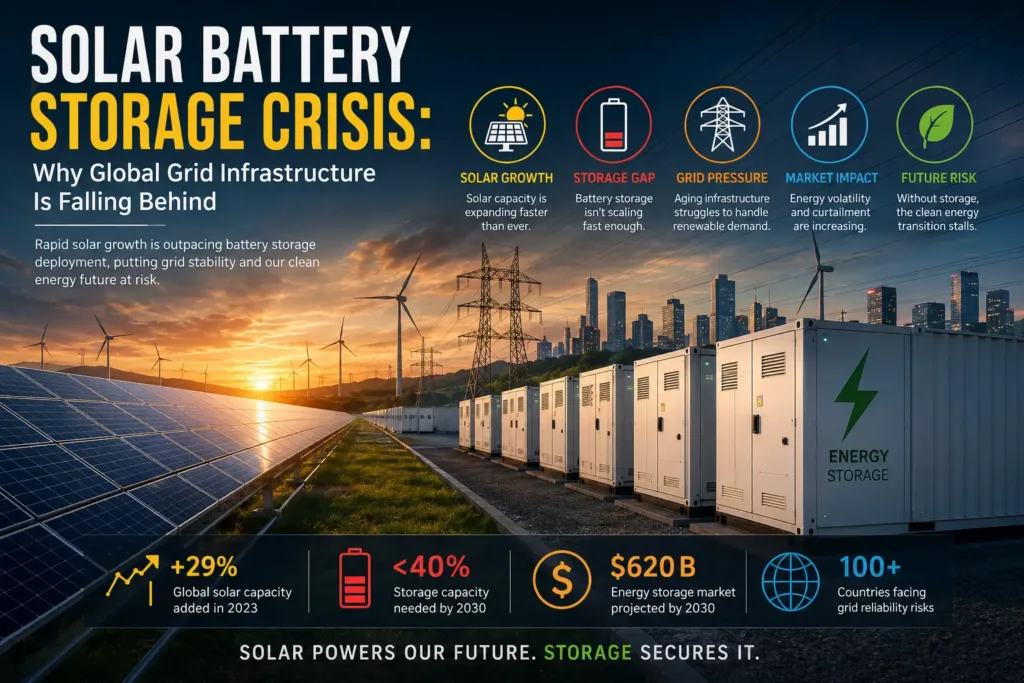
Solar Battery Storage Crisis is rapidly becoming one of the biggest threats facing the global renewable energy transition as electrical grids struggle to keep pace with utility-scale solar expansion and battery infrastructure deployment worldwide.
Across California, Germany, China, India, and parts of the Middle East, utility-scale solar projects are producing record amounts of renewable electricity during daylight hours. Yet grid operators are increasingly warning that renewable energy growth is now outpacing battery energy storage systems and transmission infrastructure modernization.
During renewable energy conferences in Munich and Abu Dhabi, one discussion repeatedly dominated conversations among battery manufacturers, utility executives, photovoltaic engineers, and infrastructure investors: modern electrical grids were never designed for renewable-heavy decentralized electricity generation at this scale.
The modern clean energy economy is entering what analysts now describe as the Solar Battery Storage Crisis. Massive photovoltaic deployment has exposed a structural weakness inside global energy systems because electricity storage infrastructure is not scaling quickly enough to stabilize renewable-heavy power networks.
That imbalance is beginning to reshape investment strategies across the global renewable energy market. Battery storage is no longer viewed as a supporting technology. In many markets, it is rapidly becoming the most valuable component of the entire clean energy transition.
Why the Solar Battery Storage Crisis Is Accelerating
For years, renewable energy headlines focused almost entirely on solar panel efficiency, falling photovoltaic costs, and record-breaking installation numbers. Reality inside modern electrical grids looks far more complicated.
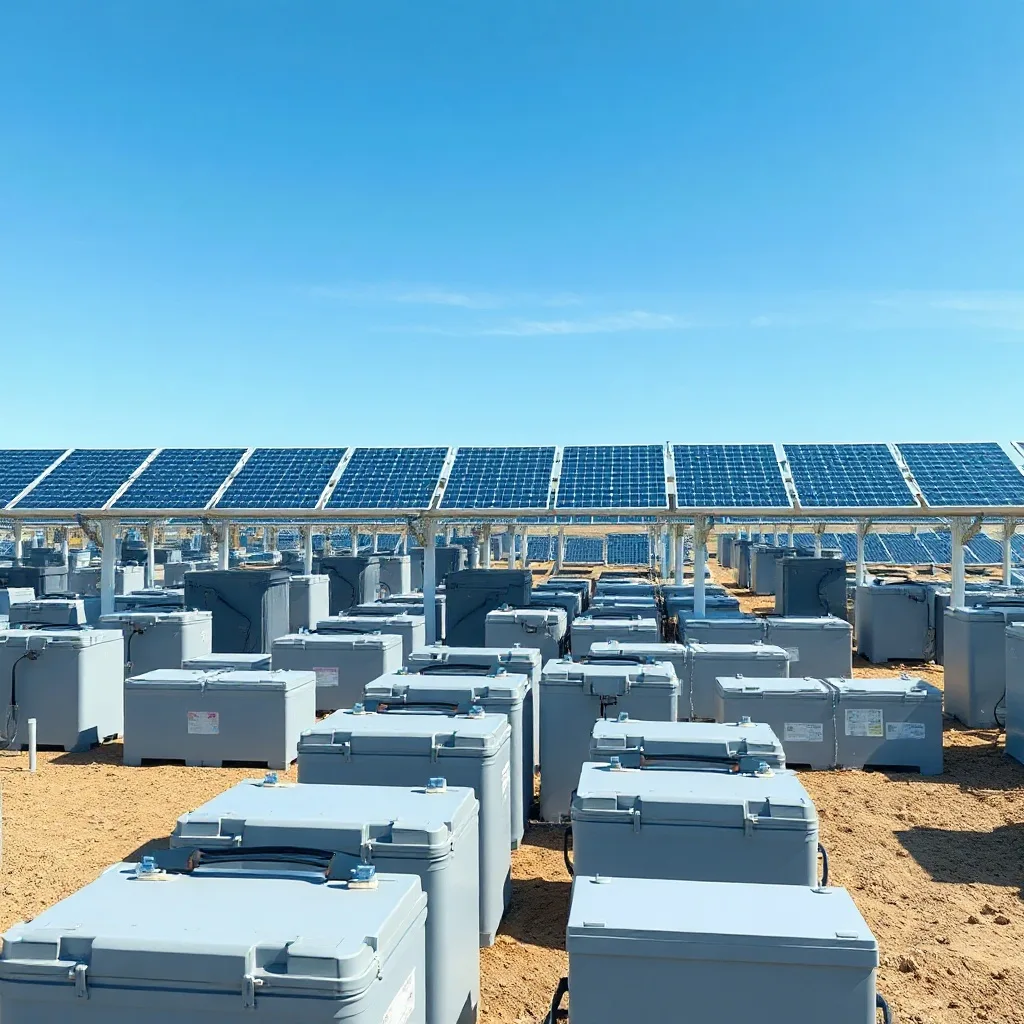
Large-scale solar farms across Europe and the United States are increasingly producing more electricity than regional grids can absorb during peak sunlight hours.
California continues facing severe duck curve pressure, where daytime solar output rises sharply and evening demand increases once solar generation declines.
Germany faces similar balancing problems during periods of extreme renewable generation. On high-production days, electricity prices can temporarily collapse because renewable electricity output exceeds real-time grid demand.
Some renewable operators are forced to curtail solar production entirely because transmission infrastructure and battery storage capacity cannot absorb the overload.
The Solar Battery Storage Crisis becomes more serious as governments accelerate aggressive decarbonization targets worldwide.
- China continues adding record photovoltaic capacity annually
- The United States is rapidly expanding utility-scale solar farms
- India is investing heavily in renewable electrification
- Saudi Arabia and the UAE are building giga-scale clean energy projects
- Europe is reducing fossil fuel dependency through renewable infrastructure expansion
Electricity generation alone does not stabilize a modern energy system.
Without scalable storage infrastructure, renewable-heavy grids become increasingly vulnerable to frequency instability, grid congestion, blackout risks, renewable curtailment, volatile electricity pricing, and transmission overload.
How the Solar Battery Storage Crisis Affects Energy Security
The Solar Battery Storage Crisis is no longer only a technical storage issue. It is becoming a national energy security concern for countries that depend heavily on renewable electricity growth.
When solar generation expands faster than battery energy storage systems, electricity markets become harder to balance. Daytime solar oversupply may reduce prices sharply, while evening shortages can increase pressure on gas plants, imported electricity, or emergency grid reserves.
This creates a difficult situation for policymakers. They want more renewable energy, but they also need stable electricity prices, reliable grid operation, and enough dispatchable capacity to handle peak demand.
Countries that solve the Solar Battery Storage Crisis early may gain a major advantage in industrial competitiveness, energy independence, and clean technology investment.
How Battery Energy Storage Systems Stabilize Grids
Traditional electrical grids were designed around centralized generation systems such as coal plants, hydroelectric dams, natural gas turbines, and nuclear facilities.
Renewable energy fundamentally changes that structure because solar and wind generation remain inherently variable.
Solar generation peaks during midday hours while residential electricity demand usually peaks later in the evening. That mismatch creates enormous balancing pressure across modern power infrastructure.
Battery energy storage systems solve this challenge by storing excess daytime electricity and discharging energy later when renewable generation declines.
Modern utility-scale battery systems now support frequency regulation, grid balancing, peak shaving, backup reliability, renewable intermittency management, EV charging demand, and AI infrastructure stabilization.
The pressure becomes even greater as artificial intelligence infrastructure expands worldwide. AI data centers consume enormous amounts of electricity, and major technology companies are aggressively securing renewable energy contracts while also increasing demand for utility-scale battery systems.
Why Lithium-Ion Batteries Dominated Storage Markets
Most modern utility-scale storage projects currently rely on lithium-ion battery technology, particularly lithium iron phosphate chemistry.
Lithium iron phosphate batteries became dominant because they offer strong thermal stability, long operational lifespan, improved safety, high charging efficiency, competitive manufacturing costs, and lower degradation rates.
Tesla Megapack systems helped accelerate utility-scale battery deployment across North America and Australia.
Meanwhile, companies such as CATL, BYD, Sungrow, Fluence, and LG Energy Solution rapidly expanded manufacturing capacity to meet growing global storage demand.
China now dominates much of the battery supply chain, including lithium processing, battery manufacturing, raw material refinement, cell production, and energy storage exports.
This dominance creates both opportunity and geopolitical risk. Western governments increasingly worry about overreliance on Chinese battery infrastructure while simultaneously needing rapid deployment to achieve climate targets.
Technical Problems Slowing Battery Expansion
Thermal Runaway Risks
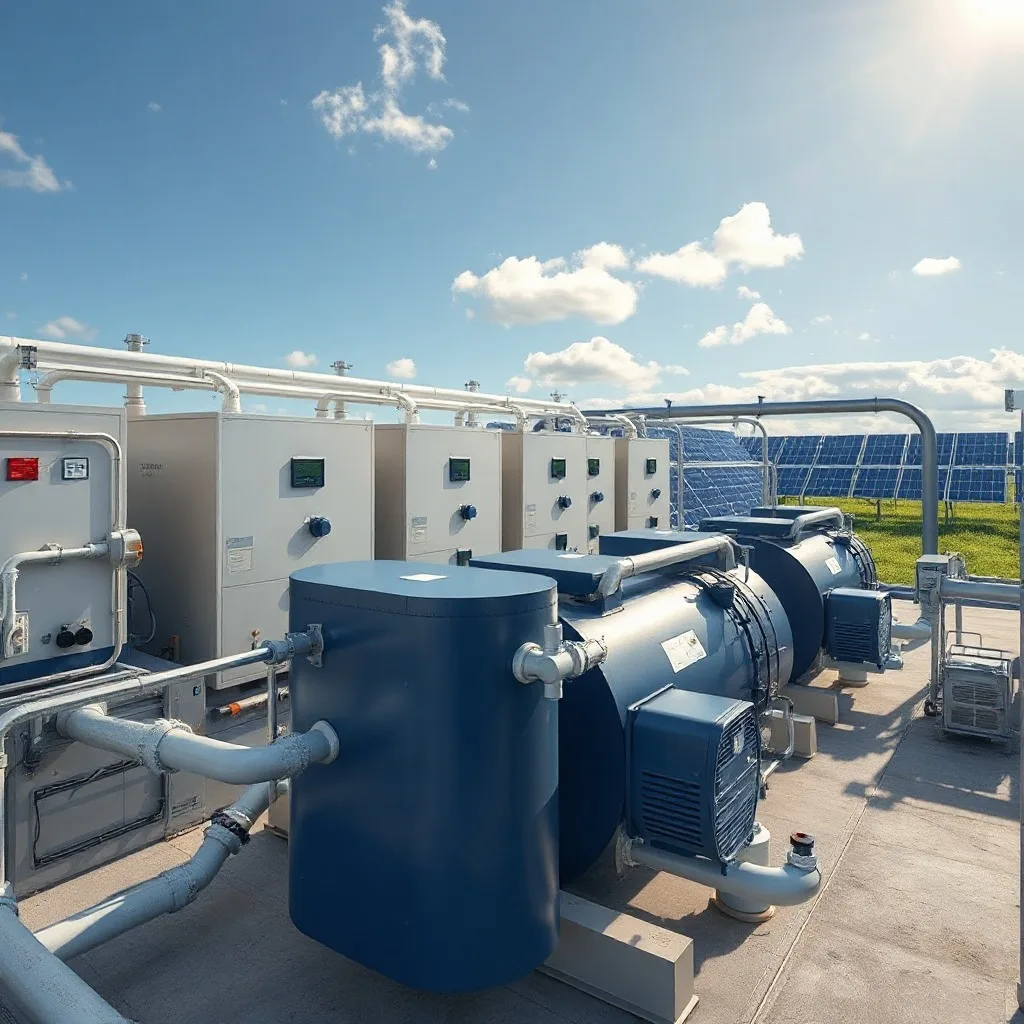
Large lithium-ion battery systems generate significant heat during charging and discharge cycles. Poor thermal management increases the risk of thermal runaway events capable of triggering dangerous battery fires.
Several battery facility incidents have intensified regulatory scrutiny across North America and Europe.
Transmission Bottlenecks
Even when battery systems exist, many regional grids still lack sufficient transmission infrastructure to move electricity efficiently between renewable generation zones and demand centers.
Transmission modernization remains one of the least discussed yet most important aspects of the clean energy transition.
Raw Material Constraints
Lithium, cobalt, nickel, and graphite demand continues rising rapidly.
Mining expansion faces environmental concerns, political instability, long permitting timelines, and geopolitical supply chain risks.
Storage Duration Limitations
Most current lithium-ion systems are optimized for short-duration storage between two and six hours.
Future renewable-heavy grids may eventually require multi-day storage, seasonal balancing, and extended backup capabilities.
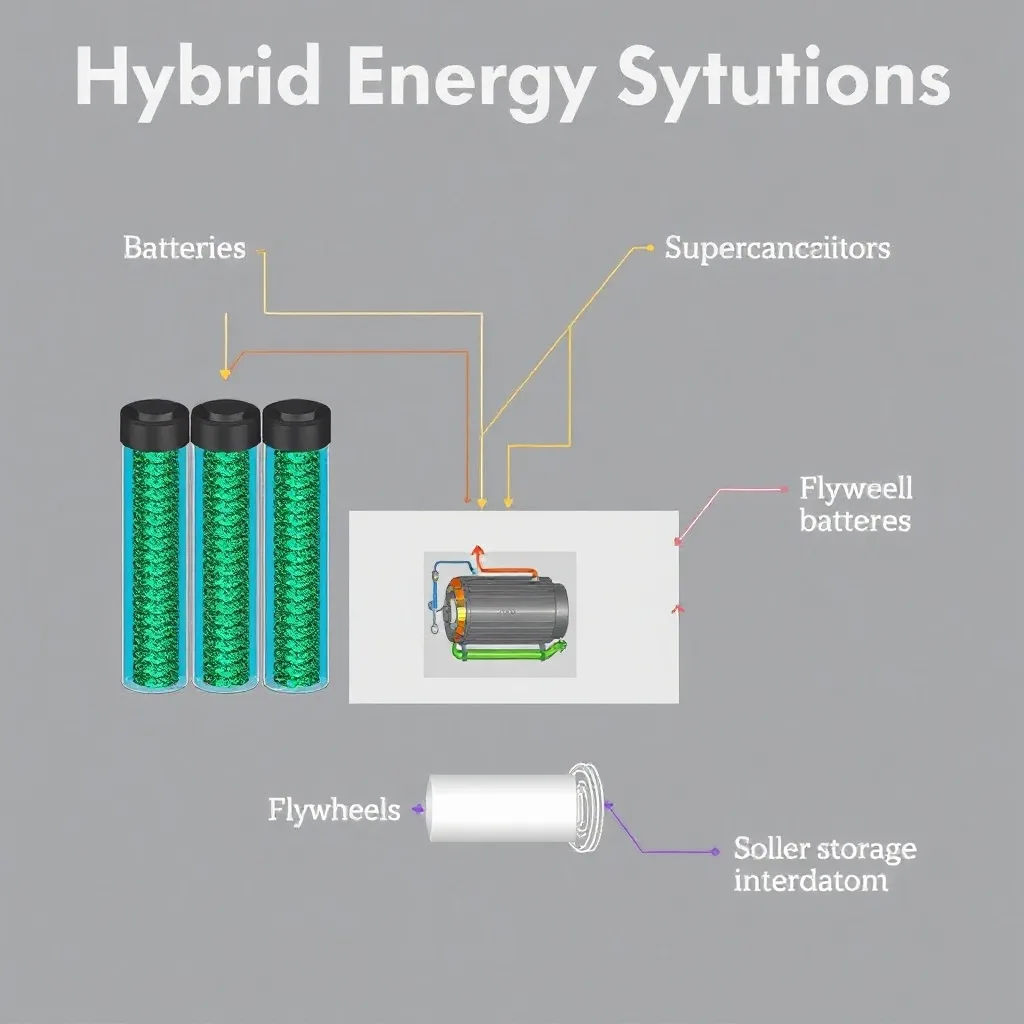
That reality is increasing interest in solid-state batteries, flow batteries, hydrogen storage, compressed air systems, and thermal energy storage.
Regional Renewable Energy Storage Analysis
United States
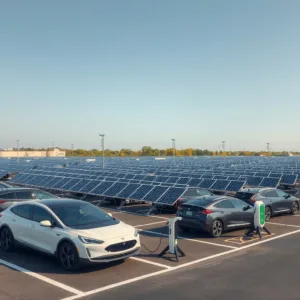
The United States represents one of the fastest-growing battery storage markets in the world. California, Texas, Arizona, and Nevada continue deploying utility-scale battery systems alongside massive solar installations.
The Inflation Reduction Act significantly accelerated energy storage investment through expanded tax incentives.
Europe
Europe’s renewable transition accelerated dramatically following geopolitical instability and natural gas supply concerns. Germany, Spain, and the Netherlands continue expanding photovoltaic deployment rapidly, yet storage infrastructure still lags behind renewable growth.
China
China remains the undisputed global leader in battery manufacturing and photovoltaic deployment. The country continues investing aggressively in mega battery projects, EV infrastructure, renewable transmission corridors, and advanced storage technologies.
Middle East
Saudi Arabia and the UAE are investing heavily in giga-scale renewable projects designed to diversify long-term energy strategies beyond oil exports. Extreme desert temperatures create unique engineering challenges for battery cooling systems and operational efficiency.
India
India’s rapidly growing electricity demand makes renewable storage infrastructure increasingly critical. The country continues pursuing aggressive utility-scale solar expansion while modernizing transmission networks and energy storage systems.
Battery Technology Comparison Table
| Technology | Main Advantage | Main Limitation |
| Lithium Iron Phosphate | Strong safety and long lifespan | Limited long-duration storage |
| Solid-State Batteries | Higher energy density | Commercial scalability challenges |
| Flow Batteries | Long-duration storage capability | Lower energy density |
| Hydrogen Storage | Seasonal storage potential | High infrastructure costs |
| Compressed Air Storage | Large-scale balancing potential | Location dependency |
Solar Battery Storage Crisis Investment Trends Toward 2030
Global investment patterns are shifting rapidly toward storage-focused infrastructure.
Institutional investors increasingly view battery systems as critical infrastructure assets rather than speculative renewable technologies.
Several major trends continue accelerating investment: electric vehicle adoption growth, AI electricity demand expansion, government clean energy incentives, decarbonization mandates, grid modernization requirements, and energy security concerns.
According to industry forecasts, the global battery energy storage market could exceed hundreds of billions of dollars by the early 2030s.
Utility operators are also beginning to recognize that future grid stability may depend more heavily on storage flexibility than generation capacity alone.
Related Renewable Energy Articles
Explore the future of photovoltaic materials: TOPCon vs Perovskite Solar Panels
Learn more about utility-scale solar infrastructure: Utility Scale Solar Energy
Discover how residential systems are evolving: How Many Solar Panels Do You Need?
Sources
Battery market analysis and renewable deployment statistics are regularly published by the International Energy Agency.
Advanced renewable energy and storage research can also be explored through the National Renewable Energy Laboratory.
Frequently Asked Questions
Why is battery storage important for renewable energy?
Battery storage allows excess renewable electricity to be stored and used later when solar or wind generation declines.
What is causing the Solar Battery Storage Crisis?
Rapid renewable deployment is outpacing energy storage infrastructure expansion, creating grid balancing and transmission challenges.
Which countries lead utility-scale battery deployment?
China, the United States, Germany, and Australia currently lead global battery storage investment and deployment.
Will battery prices continue falling?
Long-term costs may continue declining, although raw material supply risks and geopolitical factors could influence short-term pricing volatility.
What is the future of battery energy storage systems?
Battery energy storage systems are expected to become one of the most valuable infrastructure sectors of the global clean energy transition.
The Future of Renewable Energy Storage Infrastructure
The future of renewable energy infrastructure will depend heavily on how quickly countries modernize electrical grids and deploy scalable storage systems.
Battery energy storage systems are rapidly becoming essential components of modern electricity networks as renewable penetration continues increasing worldwide.
The Solar Battery Storage Crisis is expected to intensify during the late 2020s as electric vehicle adoption, AI data center expansion, and industrial electrification continue accelerating simultaneously.
Governments capable of deploying intelligent storage systems quickly may gain significant geopolitical and economic advantages as renewable electricity becomes the dominant global energy source.
The Solar Battery Storage Crisis is not slowing renewable energy adoption. Instead, it is revealing the next major investment frontier of the global clean energy economy.
The realistic takeaway for 2026 readers: the solar battery storage crisis is a deployment-speed problem, not a technology problem. Every tool needed to defuse the solar battery storage crisis already ships commercially — LFP packs, flow batteries, smarter interconnection queues. Whether the solar battery storage crisis of 2030 arrives as headline blackouts or as a quietly closed gap in the solar battery storage crisis timeline depends on how fast grids, permitting offices and manufacturers move between now and then.
What Homeowners Can Do While Grids Catch Up
Individual action will not solve a grid-scale gap, but it does insulate a household from its symptoms &mdash. And collectively, distributed batteries are already part of the answer to the solar battery storage crisis.
Install storage with solar, not after. Combined installs cost 10–20% less than retrofits, and state-level incentives increasingly reward pairing the two.
Join a virtual power plant where available. VPP enrollment turns a home battery into grid relief during exactly the peak hours the solar battery storage crisis threatens &mdash. And pays the owner for it.
Shift flexible loads. EV charging, water heating and laundry moved into solar hours reduce evening peak demand at zero hardware cost.
Size for outage reality, not fear. A battery covering the refrigerator, communications and medical loads through a typical outage costs a fraction of whole-home backup &mdash. And most households never need more.
One measure to watch as a leading indicator: interconnection queue reform. The projects waiting for grid connection today exceed the entire installed capacity of the U.S. power system, and the speed at which regulators clear that backlog will tell you &mdash. Two or three years ahead of the headlines &mdash. Whether the gap closes on schedule or becomes the defining energy story of the decade. Either way, the households and utilities that prepared early will be the ones for whom the question stayed academic.
Related Posts
Leave a Comment
Your comment will be published after it has been approved. Please send comments that do not contain slang words.