
Thermal Energy Storage
# Thermal Energy Storage
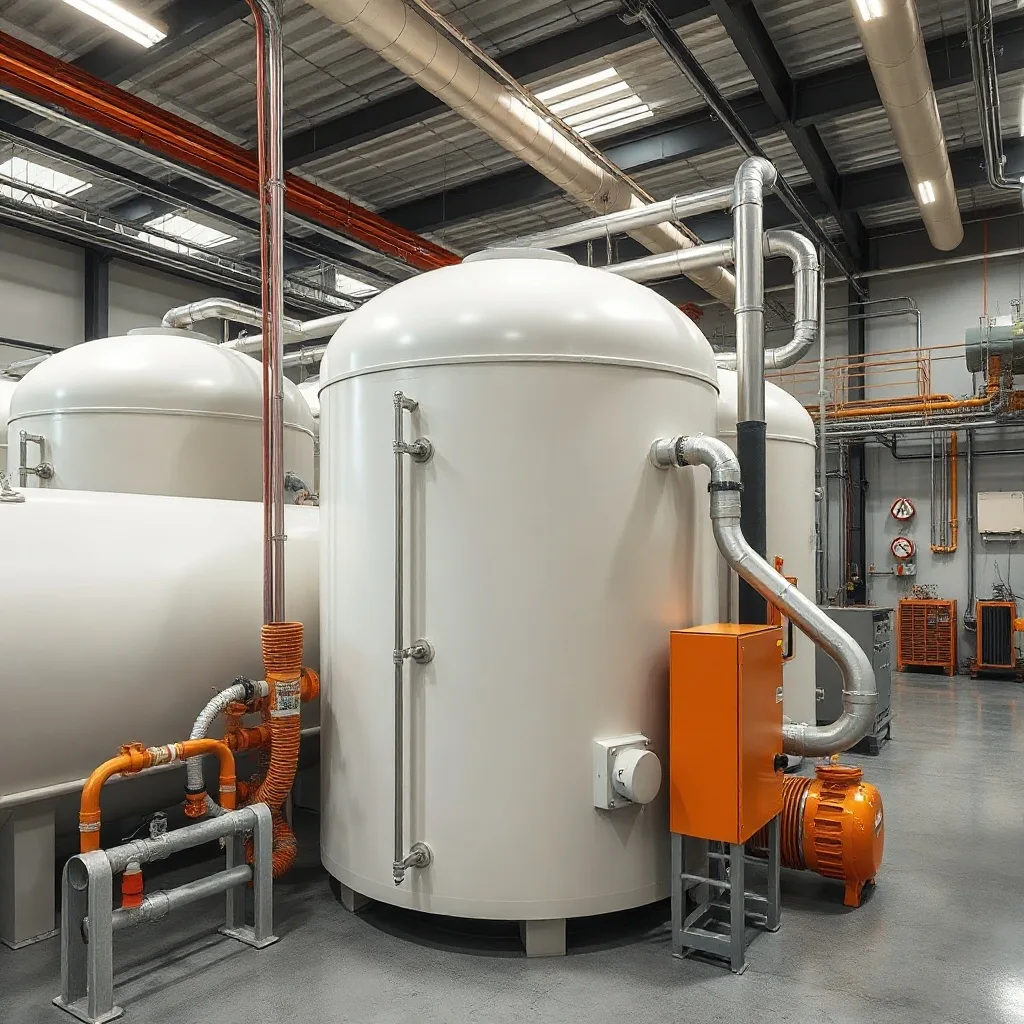
Thermal energy storage captures heat or cold for use at a later time. Instead of producing energy exactly when demand appears, a system stores surplus thermal energy and releases it when needed. This simple shift can reduce costs, stabilize energy networks, and prevent renewable electricity from being wasted.
The technology is not entirely new. People have stored heat in water, stone, and underground spaces for centuries. Modern systems, however, use engineered materials, insulated tanks, advanced controls, and large seasonal reservoirs.
Today, Thermal Energy Storage supports buildings, factories, power plants, and community heating networks. Its importance is growing as countries add variable [renewable energy] and search for practical ways to reduce fossil fuel consumption.
Fundamentals and Definitions
Thermal energy storage, often shortened to TES, is the temporary storage of energy as heat or cold. A complete system normally includes a storage medium, insulated containment, heat exchangers, pumps, sensors, and control equipment. The stored energy may remain available for several hours, several days, or an entire season.
There are three principal storage methods. Sensible heat storage changes the temperature of a material without changing its physical state. Water tanks, hot rocks, concrete blocks, and underground aquifers are common examples. The amount stored depends on the material’s mass, heat capacity, and temperature difference.
Latent heat storage uses a phase change, such as melting or freezing. Phase change materials can hold substantial energy within a narrow temperature range. Ice storage is a familiar application: water freezes during low-demand hours and later provides cooling as it melts.
Thermochemical storage relies on reversible chemical reactions or sorption processes. It may achieve higher energy density and lower standby losses than conventional systems. However, material stability, system complexity, and cost continue to limit widespread commercial adoption.
Technologies History and Real-World Applications
Early thermal storage was closely connected to food preservation, bathing, and space heating. During the twentieth century, insulated hot-water tanks became common in homes and industrial facilities. Interest accelerated after the energy crises of the 1970s, when engineers investigated solar heating, underground reservoirs, and more efficient building systems.
Water remains one of the most practical storage media because it is inexpensive, widely available, and capable of holding about 4.18 kilojoules of heat per kilogram for every degree Celsius of temperature change. Domestic cylinders may store tens or hundreds of liters, while community projects can use tanks or excavated water pits containing thousands of cubic meters. These installations often work alongside [heat pumps] and solar thermal collectors.
Large concentrating solar power plants frequently use molten nitrate salts. The salts are heated by concentrated sunlight, stored in an insulated hot tank, and later used to produce steam. Commercial plants commonly operate with hot-salt temperatures near 565 degrees Celsius. Several facilities can continue generating electricity for six to fifteen hours after direct sunlight declines.
Cold storage is equally valuable. Commercial buildings can make ice overnight when electricity demand and tariffs are lower. The ice then supports air conditioning during hot afternoon periods. In Denmark, Germany, and other European markets, water tanks and pit thermal energy storage also serve [district heating] networks. Canada’s Drake Landing Solar Community demonstrated seasonal storage by collecting summer solar heat underground and using it during winter.
Expert Recommendations and Practical Tips
Specialists generally agree that storage should not be selected by capacity alone. Temperature, discharge rate, insulation quality, operating schedule, climate, and available space all influence performance. A technically impressive system can still produce disappointing savings if it does not match the building or industrial process.
Proper planning begins with measured demand data rather than broad assumptions. Hourly or subhourly profiles reveal when excess energy exists and when stored heat or cold would be useful. Simulation can then compare tank sizes, operating temperatures, control strategies, and expected thermal losses.
Lifecycle evaluation is also essential. Water may offer lower initial cost, while phase change materials can reduce physical volume. Molten salts support high temperatures but require freeze protection and corrosion-resistant equipment. Thermochemical systems may suit long-duration storage, although many products remain at pilot or early commercial scale.
Professionals commonly recommend the following steps:
– Define the storage objective: peak reduction, renewable integration, emergency support, and seasonal heating require different designs.
– Measure the demand profile: at least one year of reliable consumption data can expose daily peaks and seasonal variation.
– Select the correct temperature range: storage media, insulation, pumps, and heat exchangers must tolerate both normal and extreme operating conditions.
– Calculate usable capacity: nominal capacity does not automatically equal deliverable energy because temperature limits and heat losses reduce practical output.
– Examine charge and discharge power: a large store may still fail if its heat exchangers cannot release energy quickly enough.
– Prioritize insulation: pipework, valves, tank connections, and access points can lose significant heat even when the main vessel is well protected.
– Review material compatibility: corrosion, leakage, phase separation, and repeated thermal cycling may shorten equipment life or contaminate storage media.
– Use predictive controls: weather forecasts, occupancy patterns, electricity prices, and generation forecasts can improve charging decisions.
– Plan routine maintenance: sensors require calibration, pumps need inspection, and water systems may need treatment against corrosion or biological growth.
– Compare full lifecycle economics: installation, maintenance, replacement, energy losses, financing, and available incentives should all enter the calculation.
A frequent mistake is oversizing. Extra capacity can increase capital cost, surface losses, and unused volume without improving results. Undersizing creates the opposite problem: the system empties before peak demand ends. Careful modeling supports both [building efficiency] and financial performance.
Another common error is treating efficiency as a single fixed number. Round-trip performance changes with storage duration, ambient temperature, operating level, and auxiliary electricity use. Pumps, fans, trace heating, and control systems should therefore be included in any credible assessment.
Frequently Asked Questions
How efficient is Thermal Energy Storage?
Efficiency depends on the technology and storage period. A well-insulated hot-water tank used over several hours may return a large share of its stored heat. Seasonal reservoirs generally experience greater losses because energy remains stored for months.
The useful result also depends on temperature quality. Heat may still exist inside a tank but become unsuitable for a process if its temperature drops below the required level. Engineers therefore consider both energy quantity and exergy, which describes the ability of energy to perform useful work.
Is thermal storage the same as battery storage?
No. Batteries store electrical energy through electrochemical reactions, while thermal systems store heat or cold. Batteries can return electricity directly, making them flexible but often more expensive per unit of energy stored.
Thermal storage is especially attractive when the final demand is heating or cooling. Converting electricity into heat, storing it, and later using that heat directly can avoid the cost and energy loss associated with reconverting it into electricity.
How long can thermal energy remain stored?
Storage duration ranges from minutes to months. Ice tanks and building hot-water vessels usually handle daily demand shifts. Larger tanks may store energy for several days, while borehole fields, aquifers, and insulated water pits can move summer heat into winter.
The practical duration depends on insulation, geometry, surrounding ground conditions, temperature difference, and system size. Large reservoirs often lose a smaller percentage of their energy because their volume grows faster than their exposed surface area.
What are phase change materials?
Phase change materials absorb or release latent heat while changing state, usually between solid and liquid. Examples include paraffin waxes, salt hydrates, fatty acids, and specially formulated organic compounds.
Their main advantage is compact storage at a relatively stable temperature. Challenges include flammability in some organic materials, corrosion in certain salts, volume changes, reduced performance after repeated cycling, and the need for effective heat transfer structures.
Can thermal storage lower energy bills?
It can, but savings are not automatic. A system may charge when electricity is inexpensive, store surplus solar heat, or reduce expensive peak demand. The strongest business cases usually combine favorable tariffs, high equipment utilization, and predictable thermal loads.
Financial performance varies by location. Electricity prices, fuel costs, climate, incentives, maintenance requirements, and financing terms all matter. A detailed feasibility study should compare the storage system with insulation, direct electrification, demand management, and other [industrial decarbonization] measures.
Is Thermal Energy Storage environmentally friendly?
Its environmental value depends on how it is charged and what technology it replaces. Storage powered by surplus wind, solar electricity, recovered industrial heat, or solar thermal collectors can reduce fossil fuel use and associated emissions.
Materials and construction still create environmental impacts. Large tanks require steel or concrete, molten salts need processing, and some phase change materials have limited recycling routes. Lifecycle assessment helps identify whether operational benefits outweigh manufacturing and disposal impacts.
What does a thermal storage system cost?
There is no universal price. A household hot-water cylinder may be relatively inexpensive, while a district-scale pit, molten-salt installation, or industrial high-temperature system requires major engineering and construction work.
Cost should be evaluated per unit of usable thermal capacity rather than physical volume alone. Installation conditions, temperature, heat exchanger power, controls, land, insulation, permits, and expected service life can substantially alter the final figure.
Conclusion
Thermal Energy Storage offers a practical way to separate energy production from energy use. Water tanks, ice systems, molten salts, phase change materials, and underground reservoirs can shift demand, capture surplus generation, and improve heating or cooling reliability.
No single technology fits every project. Water is proven and economical, phase change materials offer compact capacity, and thermochemical methods hold promise for long-duration applications. The best choice emerges from measured demand, required temperature, available space, safety needs, and lifecycle cost.
As renewable generation and electrified heating expand, thermal storage is likely to become more visible in homes, commercial buildings, factories, and city energy networks. Its greatest strength is straightforward: energy that would otherwise be wasted can be saved until it delivers real value.
For the full breakdown, see our energy storage vs generator guide. For the full breakdown, see our clean energy storage guide.
Related Posts

Leave a Comment
Your comment will be published after it has been approved. Please send comments that do not contain slang words.