
Energy Storage System Installation Cost
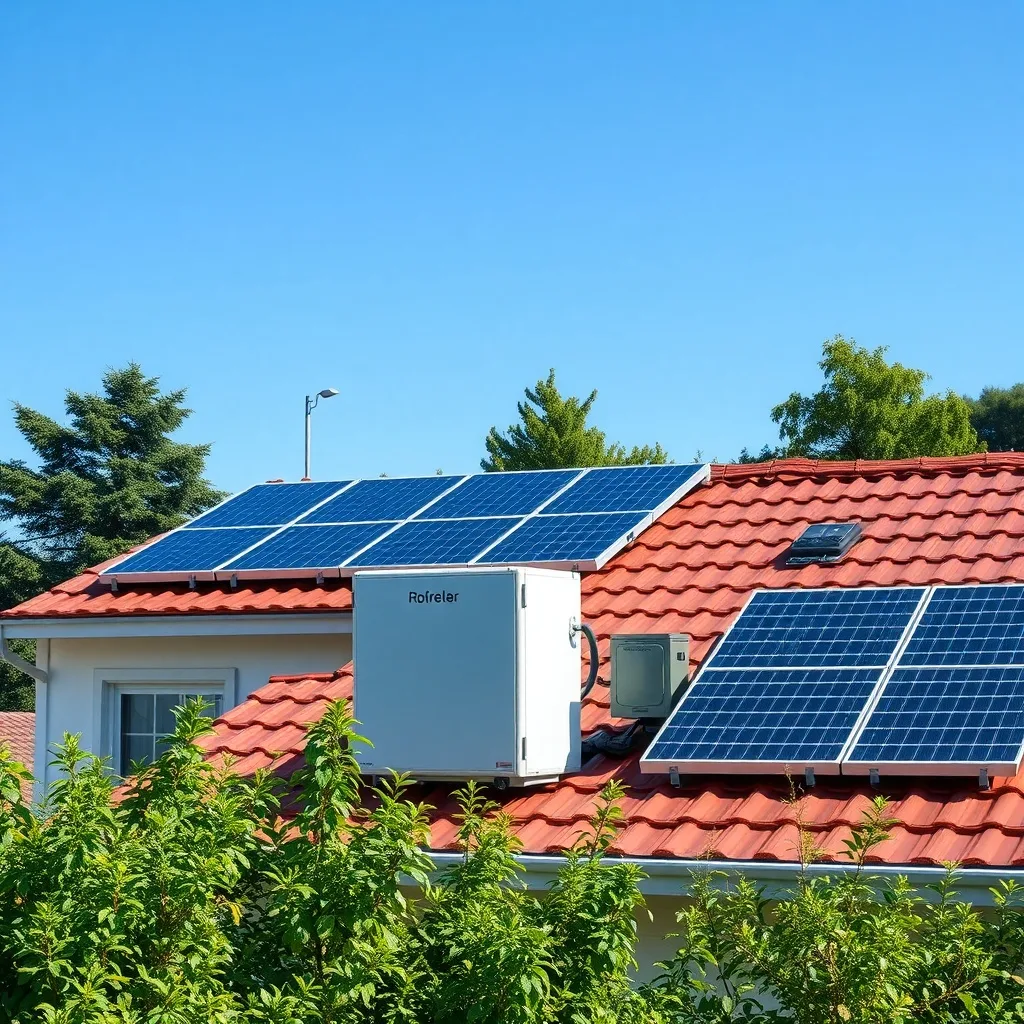
Energy Storage System Installation Cost: A Scientific 2026 Guide
The energy storage system installation cost is one of the most important variables to understand before you invest in solar power and battery backup. Yet the final figure is rarely a single number. It is the sum of engineering choices, material science, local labor rates, and policy incentives that interact in measurable ways. This guide takes a technical, evidence-based look at every layer of that price, so homeowners, engineers, and business owners can compare quotes with confidence and predict long-term returns with real numbers rather than marketing estimates.
Across the article we combine practical pricing with the physics that governs it: how battery chemistry sets cycle life, how round-trip efficiency changes lifetime savings, and how the levelized cost of storage (LCOS) reveals the true economics behind any headline price.

- A complete energy storage system installation cost usually falls between $9,500 and $30,000 before incentives.
- Batteries, inverters, and solar panels are the three dominant hardware drivers, but “soft costs” add 20–35% on top.
- Battery chemistry (NMC vs. LFP) determines cycle life, safety, and long-term value more than upfront price alone.
- Round-trip efficiency of 85–95% and depth of discharge directly change your usable capacity and payback period.
- Federal and state incentives can reduce net cost by 30% or more, shortening payback to 6–10 years.
- What Is an Energy Storage System?
- The Anatomy of the Installation Cost
- Hardware vs. Soft Costs
- Average Cost Breakdown
- Levelized Cost of Storage (LCOS)
- Sizing the System Correctly
- Return on Investment and Payback
- Regional Comparisons and Incentives
- Safety, Standards, and Certification
- How to Lower Your Cost
- Frequently Asked Questions
What Is an Energy Storage System?
An energy storage system (ESS) is an integrated set of components that captures electrical energy, stores it electrochemically, and releases it on demand. In a residential solar context, the ESS lets you keep the surplus your panels produce at midday and use it after sunset, during peak-price hours, or when the grid fails. Because the system converts, stores, and reconverts energy several times, each stage introduces losses and costs that shape the overall energy storage system installation cost.
A modern ESS is more than a battery in a box. It includes the storage cells, a battery management system (BMS), power electronics, thermal control, safety hardware, and the software that coordinates charging and discharging. Understanding each subsystem is the key to reading a quote intelligently.
The Anatomy of the Energy Storage System Installation Cost
To see where your money goes, it helps to separate the project into hardware and “balance of system” elements. The quality, efficiency, and capacity of each part measurably influence both the upfront energy storage system installation cost and the savings you realize over the following decade.
Solar Panels and Photovoltaic Technology
Solar panels convert sunlight into direct-current (DC) electricity through the photovoltaic effect, in which photons excite electrons in a silicon lattice. The efficiency of that conversion is a defining cost factor. Standard monocrystalline PERC modules convert roughly 19–22% of incident sunlight, while premium heterojunction and back-contact cells push past 22–24%. Higher efficiency means fewer panels for the same output, which reduces roof space, racking, and labor.
- Energy storage systems let you store excess energy generated by solar panels for later use, increasing self-consumption and reducing reliance on the grid.
- Panel degradation matters: quality modules lose only about 0.3–0.5% of output per year, so a 25-year warranty panel may still deliver 87–92% of its rated power at end of life.
- Temperature coefficient affects real-world yield; panels with a lower coefficient lose less power in hot climates, protecting your long-term return.
Inverters and Power Electronics
Inverters convert the DC electricity from panels and batteries into the alternating current (AC) that homes and the grid use. Their efficiency, typically 96–99% for modern units, sets how much generated energy actually reaches your appliances. Because every conversion loses a small percentage, inverter choice compounds over a system’s life.
- Solar inverters are essential for converting DC electricity produced by solar panels into usable AC electricity.
- Hybrid solar inverters combine solar and battery management in one unit, reducing hardware count and often lowering installation labor.
- String inverters cost less but a single failure affects the whole array; microinverters and power optimizers cost more yet improve performance under partial shading.
- For storage, the hybrid architecture avoids a separate battery inverter, which can trim several thousand dollars from the energy storage system installation cost.
Battery Storage: The Science of Chemistry and Cost
The battery is usually the single most expensive component, and its chemistry drives long-term value far more than its sticker price. Two lithium-ion families dominate residential storage:
- Lithium iron phosphate (LFP): chemically stable, tolerant of high temperatures, and rated for 3,000–6,000+ full cycles. LFP resists thermal runaway better, making it the safer, longer-lasting choice for most homes.
- Nickel manganese cobalt (NMC): higher energy density, so it stores more in less space, but with a shorter cycle life (around 2,000–4,000 cycles) and tighter thermal limits.
Three physical parameters translate chemistry into economics:
- Depth of discharge (DoD): the share of capacity you can safely use. LFP systems often allow 90–100% DoD, so a 10 kWh LFP pack delivers close to 10 kWh usable, while a battery limited to 80% DoD wastes a fifth of what you paid for.
- Round-trip efficiency (RTE): the ratio of energy out to energy in, typically 85–95%. At 90% RTE, storing 10 kWh returns 9 kWh; the missing kilowatt-hour is lost as heat during charge and discharge.
- Cycle life and degradation: capacity fades with use. A battery guaranteed to retain 70% capacity after 6,000 cycles will hold far more of its value than one that reaches the same threshold in 3,000 cycles.
Home battery storage therefore should be judged on usable energy over its warranted life, not on price per nameplate kilowatt-hour. A cheaper pack with low DoD, low RTE, and short cycle life can cost more per delivered kilowatt-hour than a premium unit. Independent research from the National Renewable Energy Laboratory (NREL) confirms that lifetime performance, not upfront price, decides real value.
Battery Management, Thermal Control, and Balance of System
Beyond the cells, several subsystems protect performance and safety, and each adds to the energy storage system installation cost:
- Battery management system (BMS): monitors voltage, current, and temperature at the cell level, balancing charge and preventing over-discharge that would accelerate degradation.
- Thermal management: passive or active cooling keeps cells within their optimal window, since operating above roughly 35–40 °C sharply increases the rate of capacity loss.
- Balance of system (BOS): wiring, conduit, disconnects, mounting, monitoring gateways, and enclosures. These modest-looking parts can represent 10–15% of hardware cost.
Hardware vs. Soft Costs: Where the Money Really Goes
Many buyers focus only on equipment, but “soft costs” often decide whether a project pencils out. Soft costs include permitting, interconnection fees, inspection, engineering, sales overhead, and labor. In mature markets these can account for 20–35% of the total energy storage system installation cost. Because they are largely local, two identical hardware packages can carry very different final prices depending on jurisdiction and installer efficiency.
Average Cost Breakdown
| Component | Average Cost | Impact on System Cost |
|---|---|---|
| Solar Panels | $3,000–$10,000 | Higher-efficiency modules raise upfront cost but improve lifetime yield. |
| Inverters | $1,500–$5,000 | Efficient hybrid units maximize usable energy and cut extra hardware. |
| Battery Storage | $5,000–$15,000 | Chemistry, capacity, and cycle life shape both price and long-term value. |
| Soft Costs (BOS, labor, permits) | $2,000–$6,000 | Local rates and permitting speed can swing the total significantly. |
Levelized Cost of Storage: The True Economic Metric
Headline prices can mislead, because a system that costs less today may deliver less energy over its life. Engineers use the levelized cost of storage (LCOS) to compare options fairly. LCOS spreads every lifetime cost across every kilowatt-hour the system actually delivers:
LCOS = (Total lifetime cost) ÷ (Total energy delivered over life)
Consider a simplified example. Suppose a 10 kWh battery has an installed cost of $9,000, allows 90% depth of discharge, delivers 90% round-trip efficiency, and is warranted for 5,000 cycles. Its usable energy per cycle is 10 kWh × 0.90 DoD × 0.90 RTE = 8.1 kWh. Over 5,000 cycles it delivers roughly 40,500 kWh. Dividing $9,000 by 40,500 kWh gives an LCOS near $0.22 per kWh. A cheaper battery at $7,000 but limited to 80% DoD, 85% RTE, and 3,000 cycles delivers only about 20,400 kWh, producing an LCOS closer to $0.34 per kWh. The “expensive” battery is actually the better value. This is why the energy storage system installation cost must always be read alongside performance parameters.
Sizing an Energy Storage System Correctly
Oversizing wastes money, while undersizing leaves you buying grid power at peak rates. Proper sizing follows a straightforward engineering process:
- Load analysis: tally the daily energy consumption in kilowatt-hours and identify which loads you must back up (refrigeration, medical devices, well pumps) versus optional ones.
- Days of autonomy: decide how long the system should run without sun or grid. More autonomy means more capacity and higher cost.
- Solar production: match battery capacity to realistic daily generation for your latitude, roof orientation, and seasonal sun hours.
- Power vs. energy: distinguish continuous power (kW) needed to run appliances at once from energy (kWh) needed to run them over time; both must be specified.
Right-sizing is one of the most effective ways to control the energy storage system installation cost without sacrificing reliability.
Return on Investment and Payback Period
ROI turns an upfront price into a long-term decision. To estimate it, weigh installation cost against annual savings, incentives, and component lifespan. A worked example clarifies the method.
Imagine a household installs a solar-plus-storage system for a gross energy storage system installation cost of $22,000. A 30% federal incentive reduces the net cost to $15,400. If the system offsets $2,000 of annual electricity spending through self-consumption and peak-shaving, the simple payback period is $15,400 ÷ $2,000 ≈ 7.7 years. With batteries warranted for 10–15 years and panels for 25, the system keeps generating value well beyond payback. Rising utility rates typically shorten this period further, while battery degradation slightly lengthens it, which is why efficiency and cycle life feed directly into ROI.
Regional Comparisons and Incentives
Policy can change your net energy storage system installation cost more than any single component. For that reason, local incentives deserve close study.
- United States: Federal and state programs, including solar tax credits, can substantially reduce upfront installation costs, and standalone storage now qualifies in many cases.
- European Union: Countries such as Germany and Spain run robust incentive and feed-in frameworks that accelerate renewable adoption and offset installation prices.
- China: As the world’s leading manufacturer of cells and modules, China continues to drive global component prices down through scale.
- India: Government initiatives are rapidly expanding solar capacity and reducing dependence on fossil fuels, with incentives aimed at both rooftop and utility scale.
For official incentive details, review guidance from the IRS – Residential Clean Energy Credit, and for global market context see the International Energy Agency (IEA).
Grid-Tied, Off-Grid, and Hybrid Configurations
The way your system connects to the utility grid also shapes the energy storage system installation cost. A grid-tied system with battery backup is usually the most economical, because you can draw from and export to the grid, sizing the battery only for outages and peak-shaving. An off-grid system, by contrast, must cover every kilowatt-hour on its own, so it needs larger battery capacity and generation headroom, which raises the price substantially. A hybrid configuration blends both approaches, using the grid as a safety net while maximizing self-consumption.
From an engineering standpoint, off-grid design demands careful attention to worst-case scenarios: the cloudiest week of the year, the coldest night, and the highest simultaneous load. Meeting those conditions reliably means oversizing relative to average demand, which is why remote installations often carry a higher energy storage system installation cost per kilowatt-hour of usable energy. Understanding your connection type early prevents costly redesigns later.
Safety, Standards, and Certification
Certified equipment protects both people and property, and it is increasingly required for permits and insurance. Look for systems that meet recognized safety standards such as UL 9540 for energy storage systems and UL 1973 for the batteries themselves, along with IEC standards for grid interconnection. LFP chemistry, robust BMS logic, and proper thermal management together minimize the risk of thermal runaway. Choosing certified hardware may add slightly to the energy storage system installation cost, but it protects your investment and simplifies inspection.
Factors That Influence the Final Price
- Capacity and power rating: more usable kilowatt-hours and higher continuous output raise cost proportionally.
- Chemistry and cycle life: long-life LFP packs cost more upfront but lower the cost per delivered kilowatt-hour.
- Installation complexity: roof type, electrical panel upgrades, and distance between components affect labor.
- Incentives: federal, state, and utility programs can cut net cost dramatically.
- Software and monitoring: smart controllers that optimize charging around tariffs add cost but increase savings.
How to Lower Your Energy Storage System Installation Cost
Several evidence-based strategies reduce your total price without compromising reliability. First, stack incentives by combining federal, state, and utility programs. Second, right-size the battery to your genuine backup needs rather than over-buying capacity you will rarely cycle. Third, choose a hybrid inverter to eliminate redundant power electronics. Fourth, install storage together with solar in a single project so permitting and labor are shared. Finally, request at least three itemized quotes so you can compare hardware, warranties, and soft costs line by line. Because soft costs are local, comparing installers often saves more than swapping a single component.
Future Trends in Storage Technology
The trajectory of the energy storage system installation cost points steadily downward as manufacturing scales and chemistry improves. Sodium-ion cells promise lower material costs and better cold-weather behavior. Advances in LFP energy density are narrowing the gap with NMC while retaining superior safety. Meanwhile, smarter energy-management software, vehicle-to-home integration, and virtual power plants are creating new revenue streams that improve ROI. Together these trends are expected to lower costs and expand capacity, making high-quality storage accessible to a far wider range of households and businesses.
Conclusion: Reading the Price Like an Engineer
The energy storage system installation cost is best understood not as a single figure but as the output of physics, engineering, and policy working together. Battery chemistry sets cycle life and safety, depth of discharge and round-trip efficiency determine how much of your investment you can actually use, and the levelized cost of storage exposes which option delivers the lowest cost per delivered kilowatt-hour. Layered on top are local soft costs and incentives that can move the net price by thousands of dollars in either direction. By evaluating quotes through these scientific lenses, sizing the system to your true needs, and stacking every available incentive, you can secure a solar-plus-storage investment that pays for itself and keeps delivering value for decades.
Frequently Asked Questions
What factors influence the cost of energy storage system installations?
The energy storage system installation cost depends on battery chemistry and capacity, inverter efficiency, solar-panel quality, installation complexity, and the incentives available in your region. Soft costs such as permitting and labor also play a large role.
Are there government incentives available for installing energy storage systems?
Yes. Many countries offer tax credits, rebates, and grants to encourage solar power and energy storage adoption, and these programs can offset your upfront cost by 30% or more, meaningfully shortening the payback period.
How can I calculate the return on investment (ROI) for an energy storage system?
Weigh the net installation cost against your annual energy savings, then divide to find the simple payback period. Factor in available incentives, projected utility-rate increases, round-trip efficiency, and each component’s warranted lifespan for a more accurate estimate.
How long does a home battery last?
Lifespan depends on chemistry and usage. LFP batteries commonly last 10–15 years or 3,000–6,000+ cycles while retaining most of their capacity, whereas higher-density NMC packs may reach their end-of-warranty capacity sooner.
What are the latest trends in solar technology and energy storage?
Current trends focus on higher efficiency, greater storage capacity, lower costs, and smart energy-management systems. Advances in battery chemistry, panel design, sodium-ion research, and grid integration continue to shape the future of renewable energy.
Tags: energy storage system installation cost, solar power, battery storage, solar incentives, solar panels, solar technology
Related Posts
Leave a Comment
Your comment will be published after it has been approved. Please send comments that do not contain slang words.