
Vehicle-To-Home Backup
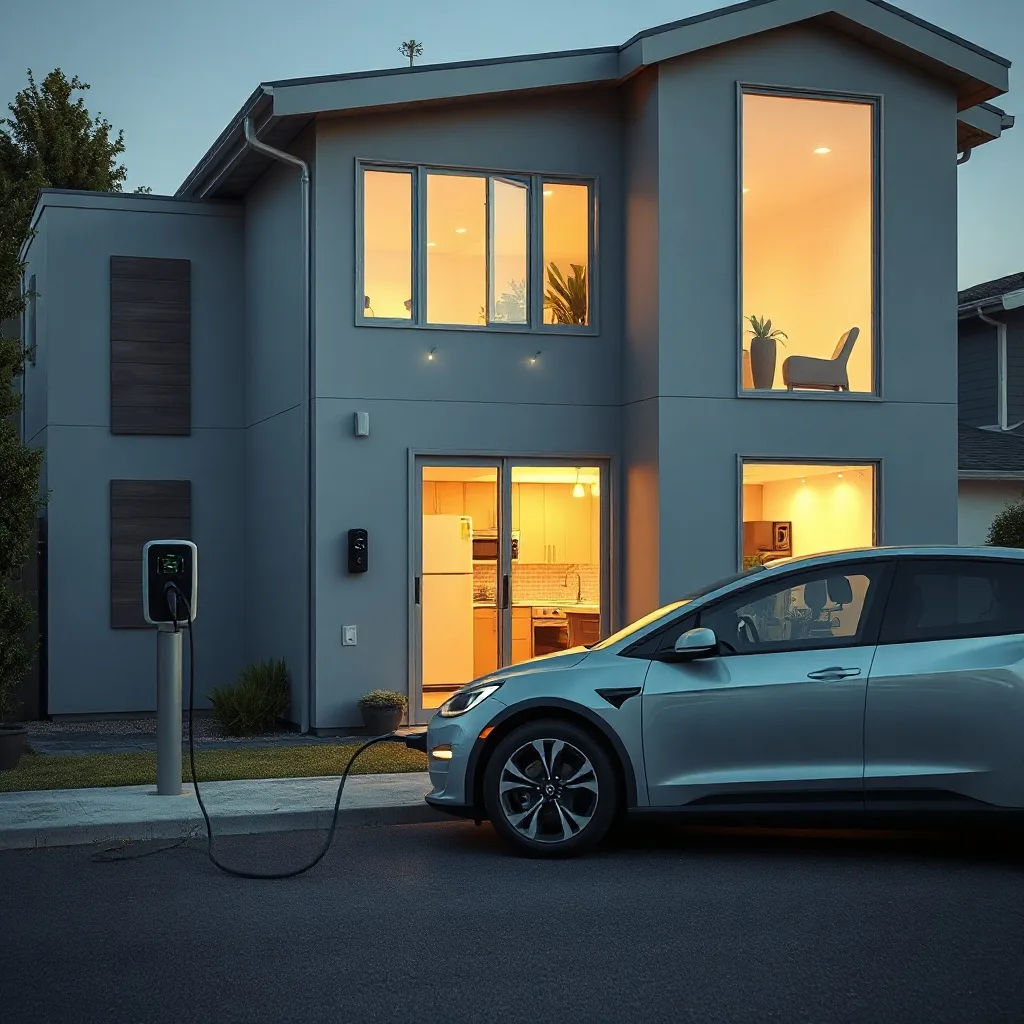
# Vehicle-to-Home Backup: Turning an Electric Car Into Emergency Power
Vehicle-to-home backup allows a compatible electric vehicle to supply electricity to a house during an outage. Instead of sitting unused in the driveway, the vehicle’s large battery can keep essential appliances, lighting, communications, and selected heating or cooling equipment operating.
The idea sounds simple, but safe operation requires more than plugging a house into a car. A complete system usually includes a bidirectional charger, compatible vehicle software, energy management controls, and equipment that disconnects the property from the utility grid.
Interest is growing as extreme weather, aging electricity networks, and rising energy costs affect households. Vehicle-to-home technology can strengthen resilience while making better use of an EV battery that may store several times more energy than a typical residential battery.
Vehicle-to-Home Backup Concepts and Definitions
Vehicle-to-home backup, commonly shortened to V2H, is a form of [bidirectional charging]. A conventional charger moves electricity in one direction, from the grid to the vehicle. A bidirectional system can reverse that flow and send stored electricity from the EV battery into a home.
V2H should not be confused with vehicle-to-load, or V2L. V2L generally powers individual devices through an onboard outlet or adapter. It may run a refrigerator, computer, or portable tool, but it does not normally energize household circuits through the electrical panel.
Vehicle-to-grid, known as V2G, goes one step further. It allows a vehicle to return energy to the public electricity network, potentially supporting grid stability or participating in utility programs. V2H primarily serves the property, while V2G involves utility coordination, metering, and market rules.
Battery capacity and power output are also different measurements. Capacity, expressed in kilowatt-hours, indicates how much energy is stored. Power, measured in kilowatts, determines how many appliances can operate at once. A large battery may provide long runtime, yet the system’s output limit still controls whether high-demand equipment can start.
The technology developed from early electric vehicle research and Japanese disaster-resilience programs. CHAdeMO-equipped vehicles, particularly the Nissan Leaf, demonstrated bidirectional capability before many competing models. More recent systems increasingly use CCS-based hardware and communication standards such as ISO 15118-20.
V2H is now moving from limited pilot projects into commercial home energy products. Ford, General Motors, Tesla, and several charging equipment manufacturers have introduced or announced compatible solutions. Availability still depends on the vehicle model, region, electrical codes, software, and approved installation equipment.
How a Vehicle-to-Home Backup System Works
During normal operation, the bidirectional charger replenishes the EV battery from the grid or a connected solar installation. When the utility supply fails, an automatic transfer device isolates the home from external power lines. This anti-islanding step protects utility workers and prevents electricity from flowing into damaged infrastructure.
The energy management system then directs battery power toward approved household circuits. Some installations support a critical-load panel containing refrigeration, lighting, internet equipment, medical devices, and selected outlets. More powerful systems may support most of a home, provided simultaneous demand remains below the inverter’s output.
A household using roughly 20 to 30 kilowatt-hours per day could theoretically obtain multiple days of limited backup from an EV with a 70 to 130 kilowatt-hour battery. Actual runtime varies substantially. Outdoor temperature, battery reserve settings, conversion losses, appliance demand, and the need to preserve driving range all affect the result.
A Ford F-150 Lightning paired with approved home integration equipment is one widely discussed real-world example. Its extended-range battery can provide substantial emergency energy, although Ford’s advertised runtime estimates assume controlled household consumption. GM Energy offers a similar approach for selected Ultium-based vehicles, while Tesla Powershare connects compatible Cybertruck models with supported home equipment.
Not every EV marketed with external power capability supports full V2H. Some Hyundai and Kia models, for instance, provide useful V2L output but may not energize a home electrical panel through an approved residential system in every market. Compatibility must therefore be confirmed for the exact model year, trim, charger, and location.
V2H can also complement [solar energy systems]. During a prolonged outage, a properly designed setup may use daytime solar generation to serve household loads or replenish storage. This function is not automatic in every installation, because many standard grid-tied solar inverters shut down when utility power disappears.
Compared with [home battery storage], an electric vehicle often offers greater capacity for money already spent on transportation. The trade-off is availability. A stationary battery remains at the property, whereas an EV cannot protect the house while it is being driven elsewhere.
Battery degradation is a common concern, but occasional emergency discharge is unlikely to create the same wear as constant deep cycling. Battery age, chemistry, temperature, charging speed, and depth of discharge matter more than the simple number of power-flow reversals. Warranty terms should still be reviewed because coverage differs among manufacturers.
Expert Recommendations and Practical Tips
Energy specialists generally advise homeowners to begin with electrical needs rather than vehicle battery size. A realistic load assessment prevents expensive equipment from being installed without a clear understanding of what it can support.
Professional planning is especially important for homes with electric heating, well pumps, air conditioners, workshops, or medical equipment. These loads may have high starting currents even when their average consumption appears manageable.
– Confirm complete compatibility: the vehicle, model year, software, charger, inverter, transfer equipment, and electrical panel must be approved to operate together.
– Calculate critical loads first: refrigeration, communications, lighting, medical devices, and water systems usually deserve priority over optional appliances.
– Compare power as well as capacity: battery kilowatt-hours indicate potential runtime, while inverter kilowatts determine how much equipment can run simultaneously.
– Preserve driving range: a minimum battery reserve allows the vehicle to remain useful if evacuation, medical travel, or emergency transport becomes necessary.
– Hire a qualified electrician: an experienced professional should evaluate panel capacity, grounding, permits, conductor sizing, and code compliance.
– Require safe grid isolation: approved transfer equipment must prevent backfeeding, which can injure line workers and damage household systems.
– Review local rules: utility approval, inspections, interconnection requirements, and incentives vary by municipality, state, province, and country.
– Test the system regularly: a scheduled outage simulation can reveal communication failures, software problems, or overloaded circuits before an emergency.
– Manage large appliances: electric water heaters, ovens, clothes dryers, and central air conditioners can quickly reduce runtime or exceed output limits.
– Examine warranty conditions: owners should confirm whether bidirectional use affects vehicle, battery, charger, or installation coverage.
– Plan for cold weather: low temperatures can reduce available battery energy and increase household heating demand at the same time.
– Coordinate solar carefully: the installer must verify whether solar generation can remain active during an outage and recharge the vehicle safely.
A professional [EV charging installation] assessment should also consider cable routing and parking arrangements. The vehicle may need to remain connected throughout an outage, so the charger’s location must be practical during heavy rain, snow, flooding, or high winds.
Cybersecurity deserves attention as well. Connected chargers exchange information with vehicles, mobile applications, manufacturers, and sometimes utilities. Strong account passwords, current firmware, secure home networking, and controlled user permissions reduce unnecessary exposure.
Homeowners should avoid unofficial adapters or improvised connections. A portable cable running from a vehicle outlet to a household receptacle can cause dangerous backfeeding. Only listed equipment designed for the intended power flow should connect an EV to permanent home wiring.
Frequently Asked Questions About Vehicle-to-Home Backup
How long can an electric vehicle power a home?
Runtime depends on usable battery capacity and household consumption. If a vehicle provides 80 kilowatt-hours of usable energy and the home consumes 20 kilowatt-hours per day, the mathematical maximum is about four days. Conversion losses, reserve settings, temperature, and changing loads will reduce that figure.
A household can extend runtime by operating only essential circuits. Turning off electric water heating, clothes dryers, ovens, pool pumps, and unnecessary cooling may make a major difference. Manufacturer estimates should be treated as scenarios rather than guaranteed results.
Can every electric vehicle provide V2H power?
No. The vehicle must support bidirectional energy transfer through compatible hardware and software. A large battery alone does not provide V2H capability. The charger, communication protocol, inverter, and transfer equipment must also work together.
Some vehicles offer only V2L through an outlet. Others contain bidirectional hardware but cannot yet use it because certified chargers, software, or local approvals are unavailable. Buyers interested in backup power should request written compatibility details instead of relying on general sales claims.
Is vehicle-to-home backup safe?
A certified and professionally installed system can provide safe backup power. The essential safeguard is electrical isolation from the utility grid during an outage. This function prevents the vehicle from energizing public lines that workers may believe are inactive.
Safety also depends on permits, inspections, grounding, overcurrent protection, ventilation, weather-resistant equipment, and manufacturer-approved components. Improvised wiring should never be treated as a substitute for an integrated system.
Does V2H damage the EV battery?
Every charge and discharge cycle contributes some battery wear, but the effect depends on how the battery is used. Occasional shallow discharge during outages usually creates less stress than frequent deep cycling, extended exposure to high temperatures, or repeated rapid charging.
A sensible system can retain a reserve and limit the depth of discharge. Owners should follow manufacturer guidance and examine warranty language, particularly when the vehicle is used for regular energy-price optimization rather than occasional emergency backup.
How much does a V2H installation cost?
Costs vary widely because homes require different equipment and electrical work. A project may include a bidirectional charger, inverter, automatic transfer device, energy management controller, permits, panel upgrades, and labor. Complex installations can cost considerably more than an ordinary Level 2 charger.
Available incentives may reduce the expense. Some governments and utilities support resilient energy systems, managed charging, or panel modernization. Homeowners should obtain itemized quotations and compare the total installed cost rather than the charger price alone.
Can V2H operate with a generator?
A generator and V2H system may coexist, but they require carefully designed transfer controls. Two independent power sources must not energize the same circuits without equipment designed to coordinate them. An electrician should establish operating priorities and prevent unsafe interaction.
A combined resilience plan can be useful during long outages. The EV may provide quiet overnight power, while a generator supplies heavy loads or restores battery energy where approved. Fuel storage, ventilation, noise, and carbon monoxide safety remain important.
Is V2H better than a stationary home battery?
Neither option is universally better. An EV may offer much greater capacity and can serve both transportation and backup needs. A stationary battery, however, remains connected to the property and may integrate more predictably with solar generation and daily energy management.
Some households may eventually use both. A smaller stationary battery can handle routine solar shifting and brief interruptions, while the vehicle contributes additional capacity during longer emergencies.
Conclusion
Vehicle-to-home backup changes the role of an electric car. The vehicle becomes a mobile energy resource capable of supporting essential household functions when the grid fails. Its large battery can offer meaningful resilience, especially where outages are frequent or severe.
The strongest results come from careful planning. Vehicle compatibility, inverter output, critical-load selection, grid isolation, permits, battery reserves, and professional installation all influence performance. Marketing claims about whole-home runtime mean little unless daily energy demand is understood.
V2H is not yet a universal plug-and-play feature. Standards are developing, product availability remains uneven, and local regulations can slow installation. Even so, commercial systems from major automakers show that the technology has moved beyond experimental demonstrations.
For a household already considering an EV, V2H may add practical value without requiring a separate large battery. When combined with load management, solar generation, and a sound [emergency preparedness] plan, it can turn a parked vehicle into a dependable part of the home’s energy strategy.
We take this further in our can solar panels charge tesla at home? guide.
Related Posts



Leave a Comment
Your comment will be published after it has been approved. Please send comments that do not contain slang words.