
Off-grid solar battery guide
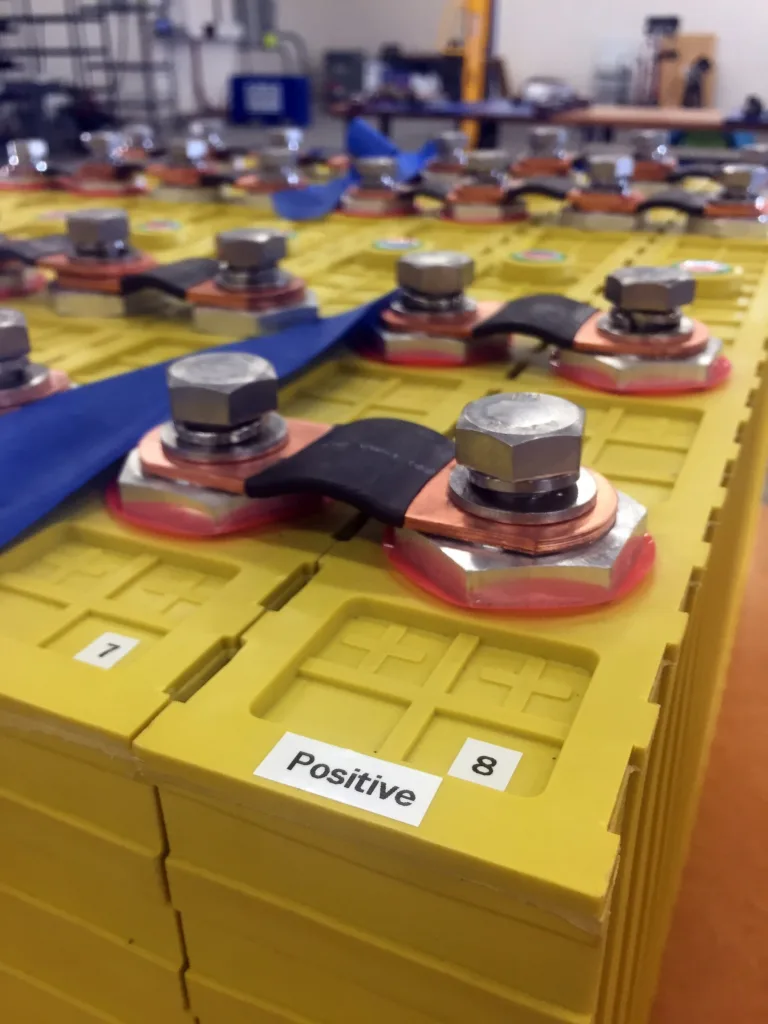
An off-grid battery bank is the part of the system that decides whether the lights stay on. Panels only generate while the sun is up. The battery is what carries you through the night, and through a run of cloudy days.
That makes battery sizing the highest-stakes decision in an off-grid build. Undersize it and you run a generator constantly. Oversize it and you spend thousands on capacity you never draw.
This guide covers the chemistries in real use and how to size a bank from actual load data. It explains what depth of discharge really means. It also covers the wiring and safety rules that off-grid installs get wrong most often.
Table of Contents
- Why Off-Grid Batteries Are Sized Differently
- The Chemistries That Matter
- Battery Chemistries Compared
- Depth of Discharge and Usable Capacity
- Sizing a Bank From Real Load Data
- Days of Autonomy and the Generator Question
- Temperature: The Factor Most Builds Underestimate
- Wiring, Fusing, and Safety
- Maintenance by Chemistry
- Common Mistakes
- Frequently Asked Questions
- Conclusion
Why Off-Grid Batteries Are Sized Differently
A grid-tied backup battery and an off-grid battery bank are not the same product decision, even when the hardware overlaps.
A backup battery only has to bridge occasional outages. The grid recharges it between events. If it runs flat, you draw from the utility instead.
An off-grid bank has no such fallback. It cycles deeply every single day, and it has to survive a stretch of bad weather with only the array to refill it. That means more capacity relative to daily load, and a chemistry rated for daily deep cycling.
The Chemistries That Matter
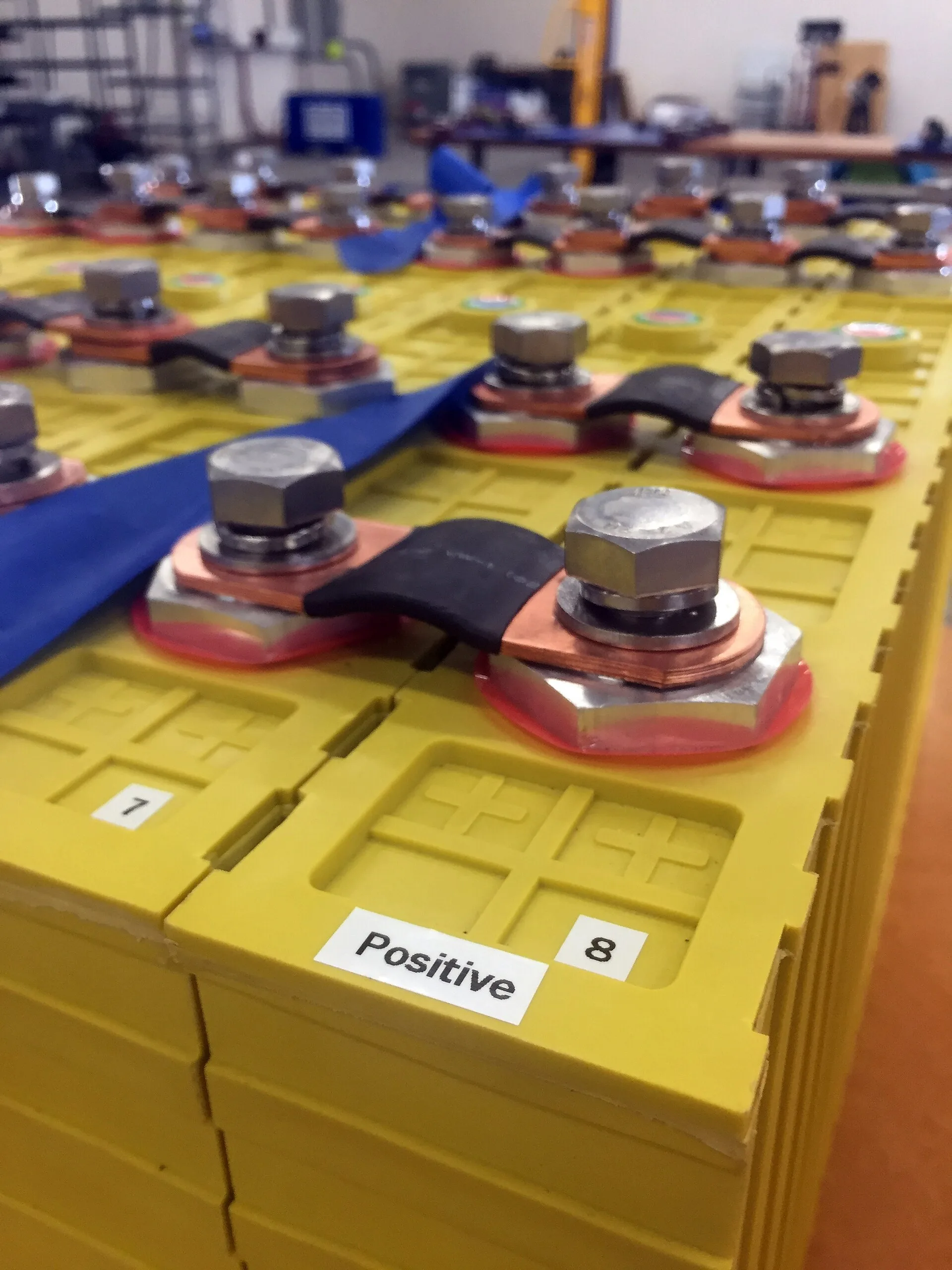
Lithium iron phosphate (LFP). This has become the default for new off-grid builds. It tolerates deep daily discharge, delivers thousands of cycles, and needs no maintenance. It weighs roughly half what lead-acid does for the same usable capacity. The upfront cost is higher.
Flooded lead-acid (FLA). The traditional off-grid battery, and still the cheapest per nameplate kWh. It requires regular watering, proper ventilation, and careful discharge management. Cycle life is a fraction of LFP.
Sealed lead-acid: AGM and gel. No watering required and less ventilation demand than flooded. Cost sits between FLA and LFP. Cycle life is better than flooded but still well below lithium.
Sodium-ion. Worth watching rather than specifying today. Sodium is far more abundant than lithium, which points to lower material cost long term. It currently trails LFP on energy density and has a much shorter residential track record.
The practical shortlist for most new off-grid projects is LFP or, on a tight budget, flooded lead-acid. The choice is less about chemistry preference than about whether you will reliably perform maintenance.
Battery Chemistries Compared
| Chemistry | Usable depth of discharge | Typical cycle life | Maintenance | Relative upfront cost |
|---|---|---|---|---|
| LFP (lithium iron phosphate) | 80–100% | 2,000–5,000+ | None | Highest |
| AGM / gel | ~50% | 500–1,000 | Minimal | Medium |
| Flooded lead-acid | ~50% | 300–500 | Regular watering and equalization | Lowest |
| Sodium-ion | High | Promising, limited field data | None | Emerging |
These are typical ranges, not manufacturer guarantees. Confirm the specific figures on the datasheet for the product you are quoted.
Depth of Discharge and Usable Capacity
This is where most off-grid sizing goes wrong, and the error is expensive.
Nameplate capacity is not usable capacity. Lead-acid banks should generally not be discharged past about 50% if you want reasonable cycle life. LFP tolerates 80% to 100% routinely.
The practical consequence is large. A 10 kWh lead-acid bank gives you roughly 5 kWh of usable energy. A 10 kWh LFP bank gives you 8 kWh or more.
So a lead-acid bank needs roughly double the nameplate capacity to deliver the same usable power. That closes much of the apparent price gap between the two chemistries, and it doubles the weight and floor space required.
Always size on usable kWh, never on nameplate. Ask any supplier for the usable figure in writing.
Sizing a Bank From Real Load Data
Off-grid sizing starts with an honest load audit. Guessing produces a system that disappoints.
List every appliance, its rated wattage, and the realistic hours it runs per day. Multiply and sum to get daily watt-hours. A 50 W fridge running continuously is 1,200 Wh per day on its own.
Then apply three adjustments. Add inverter conversion losses. Add the depth of discharge limit for your chemistry. Add a buffer of at least 20% for the loads you forgot, because there are always loads you forgot.
Worked example. A daily load of 6 kWh with an LFP bank at 80% usable depth needs about 7.5 kWh of nameplate capacity for a single day. For three days of autonomy, that becomes roughly 22.5 kWh. The same requirement in lead-acid at 50% usable depth needs about 36 kWh nameplate.
Size the array to match. A bank that cannot be refilled by the array in a normal day is a generator schedule, not a solar system.
Days of Autonomy and the Generator Question
Days of autonomy is how long the bank can carry your load with no solar input at all. It is the number that decides bank size more than any other.
Two or three days is the common design target. It covers a typical run of overcast weather in most climates without pushing capacity to absurd levels.
Designing for a full week of autonomy on batteries alone is almost never economic. The bank cost rises steeply, and the extra capacity sits unused for most of the year.
The standard solution is a hybrid design. Size solar and battery for two to three days, then keep a generator for genuinely extended low-sun stretches. A propane or gas generator used a handful of times a year costs far less than the battery capacity it replaces.
How well the inverter manages that generator matters as much as the generator itself. Automatic start on low state of charge is one requirement. So is simultaneous load supply and battery charging. Configurable run-time limits are the third. Together they separate a well-integrated system from a manual workaround. Our off-grid inverter guide covers what to look for.
Temperature: The Factor Most Builds Underestimate
Battery capacity and lifespan are both temperature dependent, and off-grid sites are often harsher than suburban ones.
Cold reduces available capacity. A bank that delivers its rated output at 25°C may deliver noticeably less near freezing. This matters most in winter, when solar production is already at its lowest.
Lithium has a specific cold-weather constraint. Most LFP batteries must not be charged below roughly 0°C without damage. Quality systems include a battery management system that blocks charging below that threshold, and better ones include integrated heating.
Heat is the other side. Sustained high temperatures accelerate degradation in every chemistry. An insulated, ventilated battery enclosure is not a luxury on an off-grid site.
If you winter camp or occupy the property year-round at high latitude, size around your worst realistic month rather than an annual average.
Wiring, Fusing, and Safety
Undersized wiring is the most common and most dangerous mistake in DIY off-grid builds.
Wire that is too thin for the current and distance heats up under load. It wastes power as resistance. In the worst case it starts a fire.
Battery banks deliver enormous short-circuit current. A single 12 V lithium bank can push thousands of amps into a dead short. That is why every circuit needs protection.
Fuse every circuit close to the battery. Panel to charge controller, charge controller to battery, and battery to inverter all need an appropriately rated fuse or breaker. Size the protection to the wire, not just to the component.
Use a proper voltage-drop calculator for your specific current and cable run. Do not match whatever gauge came in a kit, which was probably sized for a shorter run than yours.
Ventilation is chemistry-specific. Flooded lead-acid outgasses hydrogen during charging and requires real ventilation. Sealed and lithium chemistries do not, but still need airflow for thermal management. The overview of stand-alone power systems covers the broader safety context.
Maintenance by Chemistry
Flooded lead-acid needs the most attention. Check electrolyte levels regularly and top up with distilled water. Clean terminals of corrosion. Perform periodic equalization charges as the manufacturer specifies. Skipping any of these shortens life sharply.
AGM and gel need no watering. Keep terminals clean and connections tight. Avoid chronic deep discharge, which is what kills them early.
LFP needs essentially no routine maintenance. Check connections for vibration loosening once or twice a year. Keep firmware current on the battery management system, since manufacturers occasionally release charge-algorithm improvements.
Across every chemistry, monitor state of charge. A sudden unexplained change in charging behavior is usually the first sign of a loose connection or a failing cell, well before capacity visibly drops.
Common Mistakes
Sizing on nameplate instead of usable capacity. This is the single most frequent error. It leaves lead-acid systems roughly half the size the owner believed they were buying.
Mixing old and new batteries in one bank. The weakest cell constrains the whole string. Adding a new battery to an aged bank drags the new one down rather than lifting the old ones up.
Mixing chemistries or capacities. Different chemistries have different charge profiles and voltages. A single charge controller cannot serve both correctly.
Ignoring the inverter surge rating. A well pump or compressor draws several times its running wattage at startup. An inverter sized only for running load will trip, and a sagging battery bank makes it worse.
Buying the battery before auditing the load. Capacity should follow from measured consumption. Choosing a battery first and hoping it fits the load is how systems end up either short or overpriced.
Frequently Asked Questions
How many batteries do I need for an off-grid cabin?
There is no universal answer, because it depends entirely on daily load. Audit your appliances first, then size for two to three days of autonomy at your chemistry’s usable depth of discharge. A modest cabin might need 10 kWh usable; a full-time home considerably more.
Is lithium worth the extra cost over lead-acid?
Usually yes over the full life of the system. Lithium delivers far more usable capacity per nameplate kWh and many times the cycle life. Cost per usable kWh delivered over the battery’s life generally favors lithium once you account for lead-acid’s shorter lifespan and 50% depth limit.
Can I add more batteries later?
Sometimes, but plan for it from the start. Adding new batteries to an aged bank is generally a poor idea, since the older units limit the whole string. If expansion is likely, choose a modular system designed for it and buy the initial capacity accordingly.
How long do off-grid batteries last?
Flooded lead-acid commonly gives 3 to 6 years in daily-cycling service. AGM tends to run somewhat longer. LFP frequently reaches 10 to 15 years or more. Depth of discharge and operating temperature affect all of these substantially.
Do I still need a generator with a large battery bank?
Most experienced off-grid owners keep one. It is cheaper to cover rare extended cloudy stretches with a generator than to buy battery capacity that sits idle most of the year. Treat it as backup, not as a primary source.
Can lithium batteries be charged in freezing weather?
Generally no, not below roughly 0°C, without risking damage. Quality systems block charging below that threshold automatically. If your site sees hard freezes, specify a battery with integrated heating or an insulated conditioned enclosure.
What happens if I regularly discharge below the recommended depth?
Cycle life drops, often steeply. A lead-acid bank routinely taken to 80% discharge may last a fraction of its rated cycles. The battery still works day to day, which is why the damage usually goes unnoticed until capacity has visibly faded.
Conclusion
An off-grid battery bank is sized from measured load, not from a product page.
Start with a real load audit. Convert it to usable kWh using your chemistry’s depth of discharge limit. Add two to three days of autonomy and a buffer, then plan a generator for the rare weeks the array cannot keep up.
For most new builds, LFP is the straightforward choice. It costs more upfront and delivers more usable capacity, more cycles, and no maintenance. Flooded lead-acid remains viable on a tight budget, but only if you will genuinely do the watering and equalization it requires.
Monitoring Is Not Optional Off-Grid
On a grid-tied system, poor visibility costs you a little efficiency. Off-grid it costs you power.
You are making daily decisions with no safety net. Can you run the washing machine today? Does tomorrow’s forecast mean you should conserve? Is a panel string underperforming, or was it just cloudy?
A proper battery monitor answers those questions with a state-of-charge reading based on current flow in and out. A simple voltage reading does not, because battery voltage under load tells you very little about remaining capacity.
For remote or seasonal properties, cellular or satellite-connected monitoring is worth the cost. It lets you check system status without a site visit, and it flags a problem before you arrive to a dead bank.
See our residential solar battery options for how this plays out in practice. This is covered separately in our home battery backup during outages guide.
Your charge controller choice affects how much of that bank you can actually refill, so read MPPT vs PWM charge controllers.
Related Posts
Leave a Comment
Your comment will be published after it has been approved. Please send comments that do not contain slang words.