
Clean Energy Storage
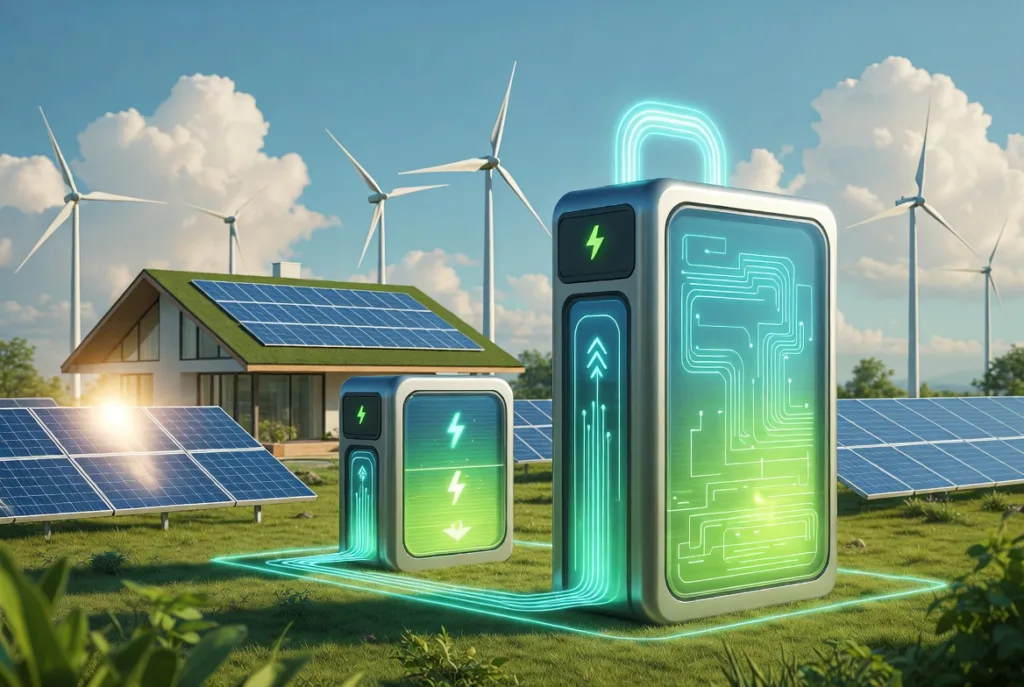
Clean energy storage is the piece that makes renewable generation genuinely reliable — without it, solar and wind’s variability limits how much they can displace fossil fuel generation on their own.
Table of Contents
- Why Clean Generation Needs Storage
- Storage Across Different Scales
- Scale Comparison
- What’s Driving Storage Growth
- Frequently Asked Questions
Why Clean Generation Needs Storage
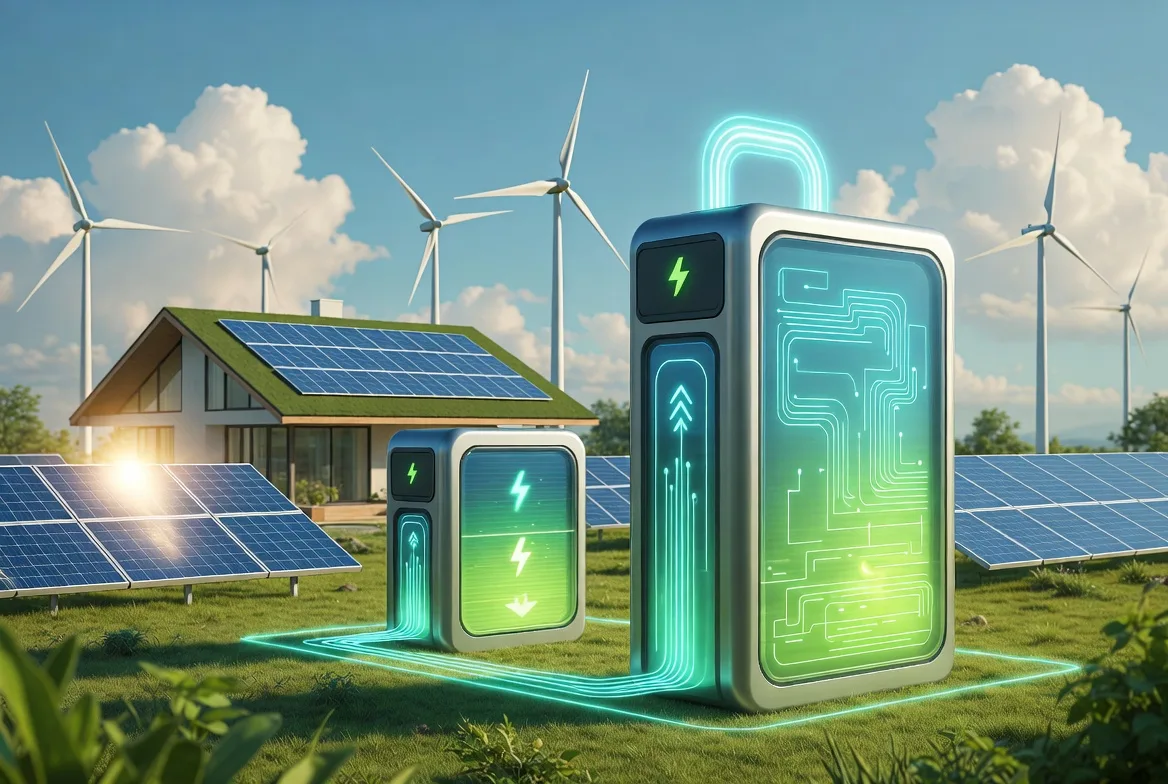
Solar and wind generate power on nature’s schedule, not demand’s schedule — solar peaks midday, wind varies unpredictably. Storage bridges this gap, capturing excess generation for use when the sun isn’t shining or wind isn’t blowing, which is what actually lets renewable sources displace a larger share of fossil fuel generation reliably.
Storage Across Different Scales
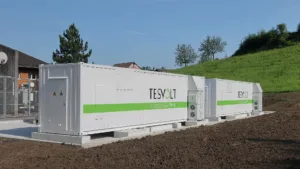
Home battery systems handle daily solar shifting for individual households. Utility-scale storage, paired with solar and wind farms, provides the same function at grid scale, plus additional grid-stability services home systems don’t. Both serve the same fundamental purpose — decoupling when clean energy is generated from when it’s actually used.
Scale Comparison
| Scale | Primary Purpose |
|---|---|
| Home battery | Daily solar shifting, backup power |
| Commercial/business storage | Demand charge reduction, backup |
| Utility-scale/grid storage | Grid stability, time-shifting at scale |
What’s Driving Storage Growth
Falling battery costs, driven largely by manufacturing scale from the EV industry, have made storage economically viable at a scale that wasn’t true even a decade ago. Growing renewable generation share on the grid also increases storage’s value proposition — the more variable generation you add, the more valuable storage becomes for managing that variability.
Frequently Asked Questions
Why can’t solar and wind work well without storage?
They generate on nature’s schedule, not demand’s — storage bridges the gap between when power is generated and when it’s actually needed.
Is storage growth mainly driven by home batteries or utility-scale?
Both are growing, but utility-scale storage represents a larger and faster-growing total capacity addition currently.
Does more storage mean less need for fossil fuel backup plants?
Yes, that’s storage’s core grid value — reducing reliance on fossil fuel “peaker” plants for managing demand fluctuations.
Is battery storage the only clean energy storage technology?
The dominant one today, though pumped hydro and emerging technologies like flow batteries also play a role, particularly at grid scale.
How does home storage relate to the bigger grid storage picture?
Same fundamental function at different scale — both decouple clean energy generation timing from actual usage timing.
For the home-scale application, see our energy storage system comparison. For grid-scale specifics, see our grid scale energy storage guide.
Our renewable energy storage future guide works through the details.
Related Posts
Leave a Comment
Your comment will be published after it has been approved. Please send comments that do not contain slang words.