
Solar Panel Efficiency World Record
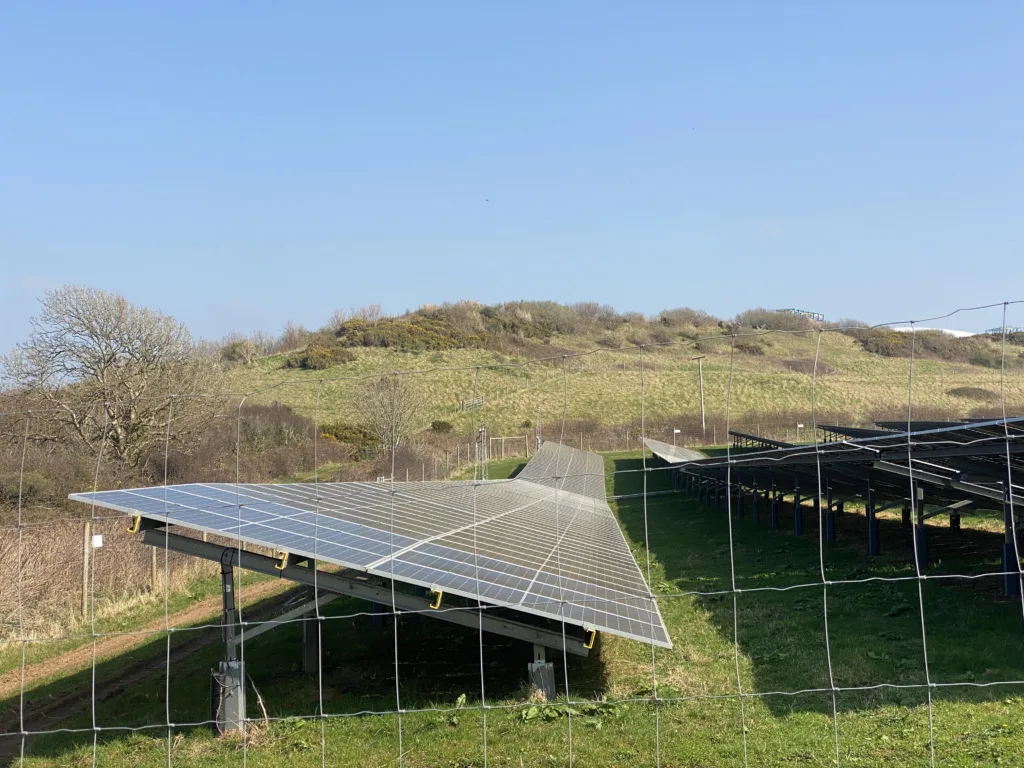
Solar panel efficiency records make headlines regularly, but the gap between a lab-record cell and what a homeowner can actually buy and install is large and consistently misunderstood. This guide separates the two clearly. It covers current world-record efficiency figures and what is actually commercially available today. It also explains why efficiency alone should not drive a buying decision the way marketing sometimes suggests.
This guide covers current lab-record efficiency by technology, and commercially available efficiency ranges. It explains why the gap between the two exists and persists. It also covers how much efficiency should actually matter for a typical buying decision.
Table of Contents
- Current Lab-Record Efficiency
- What’s Actually Commercially Available
- Why the Lab-to-Commercial Gap Exists
- Lab Record vs. Commercial Reality Compared
- How Much Efficiency Should Actually Matter to You
- Theoretical Efficiency Limits
- Efficiency Timeline: How Fast Records Have Moved
- Regional and Application-Specific Needs
- Temperature Coefficient: The Overlooked Factor
- STC vs. Real-World Performance
- Common Mistakes When Following Efficiency Headlines
- Frequently Asked Questions
Current Lab-Record Efficiency
The highest efficiency figures in solar research come from multi-junction cells. These stack several different semiconductor materials to capture more of the light spectrum, and are tested under concentrated light in laboratory conditions. They have exceeded 45% in research settings. That is far above anything commercially relevant to a rooftop installation. For single-junction and practical tandem technologies more relevant to eventual residential use, perovskite-silicon tandem lab records have exceeded 33%, still well above commercial single-junction silicon’s roughly 22-24% ceiling.
What’s Actually Commercially Available
Commercially available residential panels in 2026 generally range from about 19% for standard mono-PERC to around 22 to 23% for premium TOPCon and HJT panels. That is a meaningful range. It is much narrower than lab-record headlines suggest. See our best solar panel brands guide for specific current commercial products and their actual efficiency ratings.
Why the Lab-to-Commercial Gap Exists
Several factors separate a lab-record cell from a shipping commercial product. Lab cells are often small, a few square centimeters rather than full panel size. They are tested under ideal controlled conditions, not real-world weather and temperature variation. And they are made using processes not yet proven at high-volume, cost-effective commercial scale. Closing that gap is where most of the multi-year delay comes from. A lab breakthrough has to be manufactured reliably, affordably, and at full panel size, while maintaining durability. Only then does a research announcement become an actual buyable product.
Lab Record vs. Commercial Reality Compared
| Category | Efficiency | Buyable Today? |
|---|---|---|
| Multi-junction lab record (concentrated light) | 45%+ | No – specialized research/space applications only |
| Perovskite-tandem lab record | 33%+ | No – pilot/early commercial stage |
| Premium commercial HJT/TOPCon | 22-24% | Yes – widely available |
| Standard commercial mono-PERC | 19-21% | Yes – widely available, better value |
How Much Efficiency Should Actually Matter to You
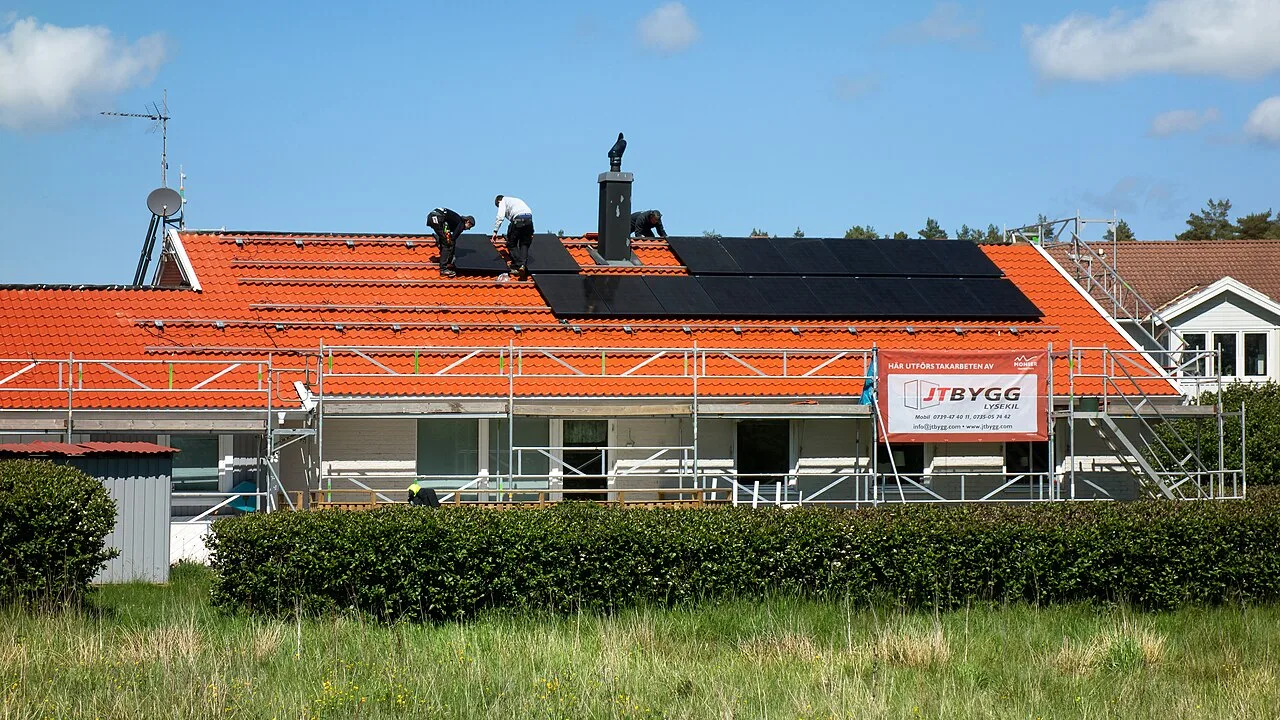
Efficiency matters most when roof space is genuinely constrained – higher efficiency means more total system capacity from the same physical area. On a roof with ample unused space, total system output often matters more than per-panel efficiency. You can simply add more panels. A lower-efficiency, lower-cost panel option can be the better value there. Don’t let an efficiency percentage alone drive a purchase decision without first assessing whether your specific roof is actually space-constrained.
Theoretical Efficiency Limits
Single-junction silicon cells have a well-established theoretical maximum efficiency around 33%, known as the Shockley-Queisser limit. That is why multi-junction and tandem approaches are necessary to meaningfully exceed the ceiling, stacking multiple materials to capture more of the spectrum. Current commercial single-junction panels at 22 to 24% are already fairly close to their theoretical maximum. Further single-junction silicon gains will likely be incremental rather than dramatic. Tandem and multi-junction approaches represent the more significant future efficiency frontier.
Efficiency Timeline: How Fast Records Have Actually Moved
Commercial silicon panel efficiency has improved gradually but steadily over the past two decades. It moved from roughly 14 to 16% in the mid-2000s to today’s 19 to 24% range. That improvement took many years of incremental manufacturing and cell-design refinement, not a single breakthrough. This historical pace is useful context for evaluating current headlines. Efficiency gains in mature single-junction silicon have generally arrived in fractions of a percentage point per year of commercial availability. Isolated lab-record announcements sometimes imply much more dramatic jumps.
Regional and Application-Specific Efficiency Needs
| Situation | Efficiency Priority |
|---|---|
| Small urban roof, limited space | High – maximize output per square foot |
| Large rural roof or ground-mount with ample space | Low – total system value matters more than per-panel efficiency |
| Commercial rooftop with HVAC/equipment obstructions | Moderate-high – usable area is already constrained by obstructions |
| Utility-scale ground installation | Low-moderate – land cost and total project economics typically outweigh per-panel efficiency |
This context matters because efficiency marketing tends to apply a one-size-fits-all higher-is-better framing. That does not reflect how differently efficiency factors into value depending on the specific site.
Temperature Coefficient: The Overlooked Efficiency Factor
A panel’s headline efficiency rating is measured under Standard Test Conditions, at 25 degrees C cell temperature. Real-world panel operating temperature in direct sun is often significantly higher. Every panel loses some efficiency as it heats up. The rate is specified by its temperature coefficient, typically expressed as a percentage per degree C. A panel with slightly lower headline STC efficiency but a better temperature coefficient can outperform a higher-STC panel in a genuinely hot climate. This is a commonly overlooked factor. It matters more in places like the US Southwest than the headline efficiency percentage alone.
How Manufacturers Report Efficiency: STC vs. Real-World
STC testing conditions use 25 degrees C and a specific standardized light intensity and spectrum. Those do not match real rooftop operating conditions. Actual field performance therefore runs somewhat below the STC-rated efficiency. That is normal and expected, not a sign of a defective panel or a misleading spec. Some manufacturers also publish a separate NOCT rating, for Nominal Operating Cell Temperature. It is tested under conditions closer to typical real-world operation. It gives a more realistic performance expectation than STC alone, if you want to dig into the datasheet detail.
Common Mistakes When Following Efficiency Headlines
- Confusing lab-record headlines with buyable product specs – always check whether a cited efficiency figure is a commercial product rating or a research result.
- Prioritizing efficiency over total value on an unconstrained roof – more panels at lower efficiency can beat fewer panels at higher efficiency, cost-adjusted.
- Assuming efficiency gains will continue at the same pace as recent decades – single-junction silicon is approaching its theoretical ceiling; future gains increasingly require fundamentally different (tandem/multi-junction) approaches.
- Waiting for lab-record efficiency to reach commercial availability – the gap commonly takes years to close; current commercial technology is the financially sound choice for most buyers today.
Frequently Asked Questions
What is the most efficient solar panel you can actually buy today?
Premium commercial HJT and TOPCon panels reach roughly 22-24% efficiency as of 2026 – well below lab-record figures, which apply to research cells not yet available as buyable products.
Why can’t I buy a 45%-efficient solar panel if that’s the world record?
That record comes from multi-junction cells tested under concentrated light in specialized lab/research applications (like space use), not commercially viable rooftop panel technology – the buyable-product ceiling is currently much lower.
Is there a theoretical maximum efficiency for silicon solar panels?
Yes – single-junction silicon has a well-established theoretical limit (the Shockley-Queisser limit) around 33%; current commercial panels at 22-24% are already fairly close to that ceiling.
Should I always buy the highest-efficiency panel available?
Not necessarily – efficiency matters most on a space-constrained roof. On a roof with ample space, total system value (more panels at a lower per-panel cost) can be the better choice.
How much will commercial panel efficiency improve in the next few years?
Single-junction silicon gains will likely be incremental given how close current products already are to the theoretical ceiling. Larger jumps will likely come from tandem/multi-junction technology like perovskite-silicon as it matures toward commercial availability.
Why does my panel’s actual output seem lower than its rated efficiency?
Normal – the headline efficiency is measured under Standard Test Conditions (25°C), while real rooftop operating temperature is typically higher, and every panel loses some output as it heats up per its temperature coefficient.
Does temperature coefficient matter more than efficiency percentage in hot climates?
It can be just as important – a panel with a slightly lower headline efficiency but a better temperature coefficient can outperform a higher-efficiency panel with a worse temperature coefficient in a genuinely hot climate.
Conclusion
Solar panel efficiency world records are a useful signal of where research is headed. They are a poor guide to what is actually buyable today. Commercial panels top out well below lab-record headlines. And efficiency alone should not drive a buying decision without first assessing whether your roof is actually space-constrained. See our best solar panel brands guide and perovskite solar cells guide for related depth.
Further reading: NREL – Best Research-Cell Efficiency Chart and Wikipedia – Solar cell efficiency.
Efficiency figures differ sharply by panel construction. Our thin film vs monocrystalline comparison explains the tradeoff behind those numbers.
Related Posts


Leave a Comment
Your comment will be published after it has been approved. Please send comments that do not contain slang words.