
Solar Panel Grounding and Bonding: What Actually Fails Inspection
Quick answer: Bonding ties every metal part of the array together so they are all at the same potential. Grounding connects that bonded network to earth. They are not the same job, and confusing them is the most common reason a solar inspection fails. Anodised aluminium frames do not conduct through their coating, so proper bonding hardware must bite through it.
What this guide covers
- Bonding versus grounding
- Why it matters more on solar than on other circuits
- The hardware that does the work
- Component roles at a glance
- Ground faults and arc faults
- Lightning and surge protection
- What fails inspection
- FAQ
Bonding versus grounding
Bonding is the electrical connection between metal parts that are not meant to carry current. Module frames, racking rails, mounting feet, enclosures and conduit are all bonded together.
The purpose is to make sure that if a live conductor ever touches metal, every metal part rises to the same voltage at the same instant. That equal potential is what stops someone from becoming the path between two pieces of metal at different voltages.
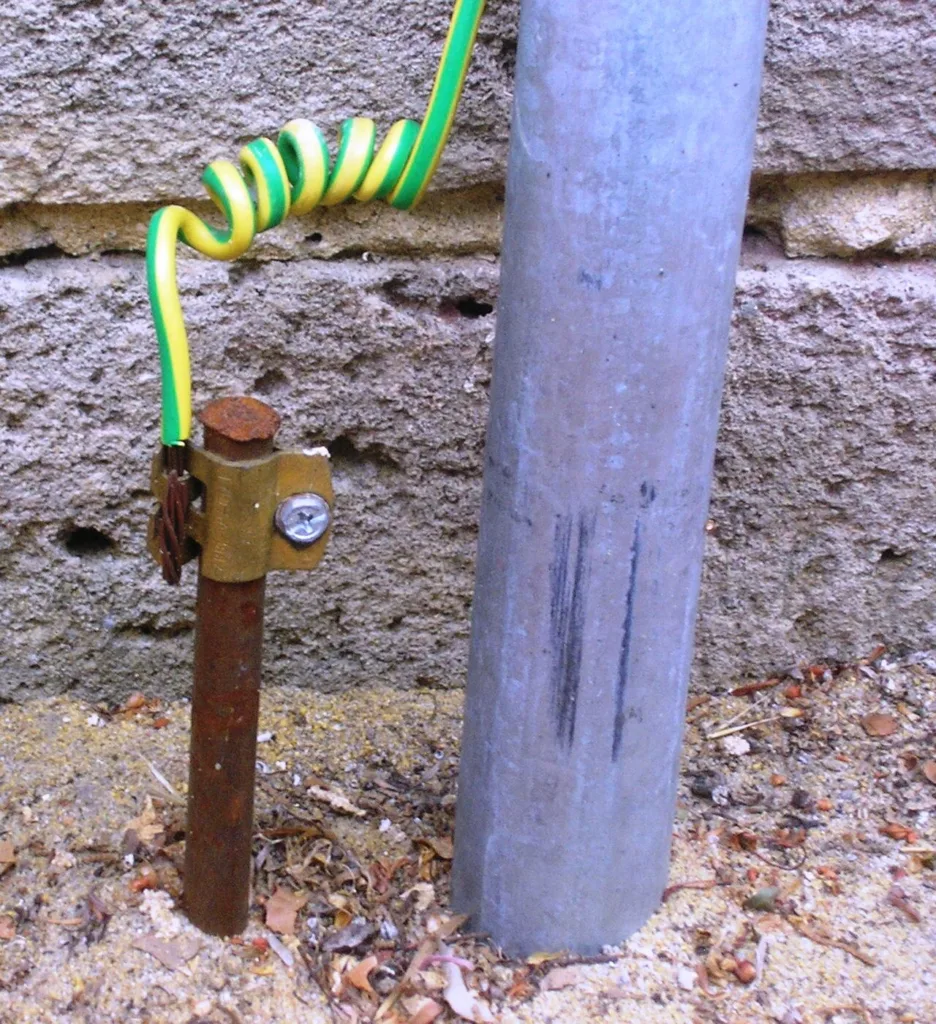
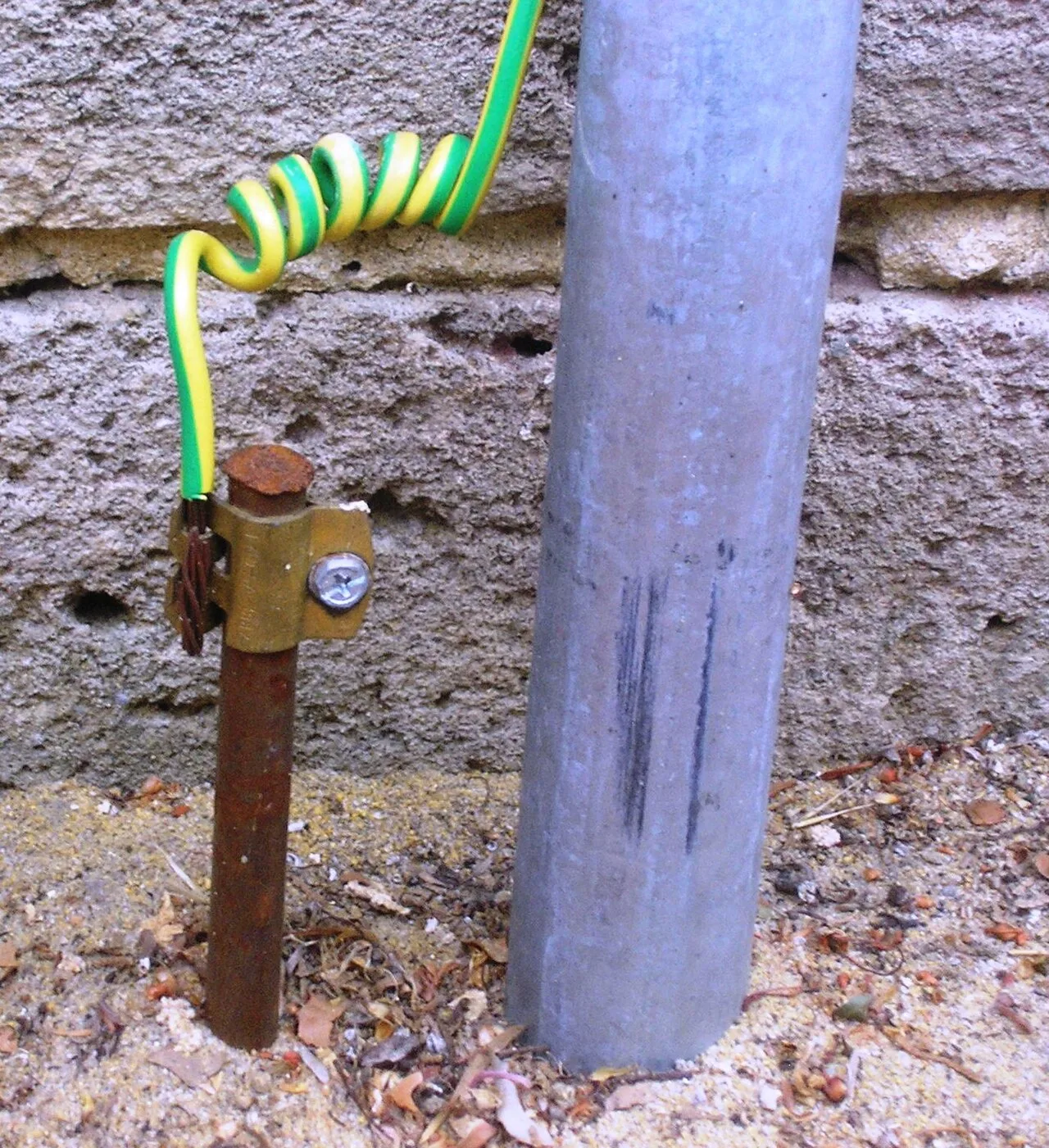
Grounding is the connection of that bonded network to the earth itself, through a grounding electrode such as a rod, a plate or the building’s existing electrode system.
Bonding protects people from touch potential. Grounding gives fault and surge energy a reference and a path. You need both, and one does not substitute for the other.
Why it matters more on solar than on other circuits
A solar array is unusual in three ways, and each one raises the stakes.
First, it is energised whenever the sun is up. You cannot switch off a photovoltaic module. Turning off the inverter or opening a breaker does not de-energise the panels themselves.
Second, it is a large metal structure on a roof, exposed to weather, thermal cycling and ultraviolet light for decades. Connections that are merely adequate at commissioning degrade.
Third, module frames are anodised. That oxide layer is a good insulator. Two aluminium parts bolted together are not electrically connected unless something cuts through the coating.
That third point surprises people. A tight bolt is a mechanical connection, not necessarily an electrical one.
The hardware that does the work
Bonding washers. Stainless steel washers with sharp raised points that bite through anodising when torqued. They are listed for the specific frame and rail combination and must be installed at the stated torque.
Integrated bonding racking. Most modern racking is listed to UL 2703, meaning the system itself is evaluated for bonding as well as mechanical load. Clamps and splices carry the bond, so no separate washer is needed at those points.
Equipment grounding conductor. A dedicated conductor, usually bare or green, that runs with the circuit conductors and connects the array to the equipment grounding system at the inverter and service.
Lugs and clips. Listed lay-in lugs or grounding clips attach the conductor to rails and frames. They must be rated for direct burial or outdoor use where applicable, and rated for aluminium if that is what they touch.
Grounding electrode conductor. The conductor from the grounding electrode system to the equipment. For most residential installs the array bonds to the existing electrode system at the main service rather than to a new isolated rod.
Never invent a bonding path. Every listed component has an evaluated method, and using it is what the listing covers.
Component roles at a glance
| Component | Job | Common failure |
|---|---|---|
| Bonding washer | Cut through anodising between frame and rail | Under-torqued, reused, or omitted |
| Listed clamp | Mechanical hold plus bond | Used outside its listed module range |
| Rail splice | Continue the bond between rail sections | Non-bonding splice used by mistake |
| Equipment grounding conductor | Carry fault current back to the source | Undersized or spliced outside an enclosure |
| Lay-in lug | Terminate the conductor to metal | Steel hardware against aluminium, corrosion |
| Surge protective device | Divert transient energy | Installed with long, looping leads |
Ground faults and arc faults
Modern inverters include ground fault detection and interruption. The inverter monitors for current leaking to the grounded system and shuts down when it exceeds a threshold.
Current code also requires direct current arc fault protection on photovoltaic circuits. An arc across a loose connection in a high-voltage DC circuit does not self-extinguish the way an alternating current arc does, which is why this protection exists.
Both features depend on a correctly bonded array. If the bonding network is broken somewhere on the roof, a fault on the isolated section may not be detected at all.
Nuisance trips are usually a symptom worth chasing rather than a fault to be reset. Moisture in a connector, a pinched conductor under a clamp, or a damaged module backsheet are the usual causes. See inverter troubleshooting for a diagnostic order.
Lightning and surge protection
Bonding and grounding are not lightning protection. This distinction gets blurred in sales conversations.
A grounding electrode gives fault current a reference. It does not attract or safely dissipate a direct lightning strike, and it is not designed to.
What genuinely helps is surge protection. Surge protective devices at the inverter and at the main service panel clamp transient overvoltages from nearby strikes and grid events. Those induced surges, not direct strikes, cause most solar equipment damage.
Installation detail matters more than the device rating. Keep the leads short and straight. A surge device with long looping conductors loses much of its effectiveness because the inductance of the lead limits how fast it can act.
In genuinely high-exposure locations a separate lightning protection system, designed to its own standard, is a different and additional scope of work.
What fails inspection
Missing bonding jumpers across rail splices. Inspectors check this specifically because it is so easy to miss.
Bonding washers reused after disassembly. The points deform on first torque. A reused washer may not bite.
Hardware mismatch causing galvanic corrosion. Steel against aluminium in a wet roof environment corrodes and the bond degrades within a few years.
Undersized equipment grounding conductor. Size follows the overcurrent protection, and there are specific allowances for photovoltaic circuits.
Exposed conductor damage. A bare conductor dragged across a rail edge over thermal cycles eventually parts.
No labelling. Disconnects, conductors and the point of interconnection all require specific durable labels. Missing labels are a common re-inspection item. See grid codes for the wider compliance set.
FAQ
What is the difference between bonding and grounding?
Bonding connects metal parts to each other so they share the same potential. Grounding connects that network to earth. Both are required.
Do solar panel frames need to be grounded?
They must be bonded into the array’s equipment grounding system. The method depends on whether the racking is listed for integrated bonding.
Can I bolt panels to rails and call it bonded?
No. Anodised aluminium is an insulator. A listed bonding washer, clamp or jumper must penetrate the coating.
Does a ground rod protect my system from lightning?
No. Grounding is a fault-current reference. Surge protective devices at the inverter and service panel are what limit transient damage.
Who sizes the grounding conductor?
The system designer, following the current National Electrical Code and the requirements of your local authority having jurisdiction.
Is this a DIY job?
Bonding and grounding are exactly where DIY installs most often fail inspection. If you are self-installing, have the design reviewed before you build.
How often should bonding be checked?
Include it in periodic inspection, especially after any roof work, module replacement or storm damage.
Where to go next
Read string sizing for the design step before this one, connector types for the other common wet-connection failure, and the inspection checklist for ongoing checks.
Code requirements are set by the National Fire Protection Association in the National Electrical Code, with system safety background from the National Renewable Energy Laboratory.
Related Posts


Leave a Comment
Your comment will be published after it has been approved. Please send comments that do not contain slang words.