
Commercial Solar Inverters
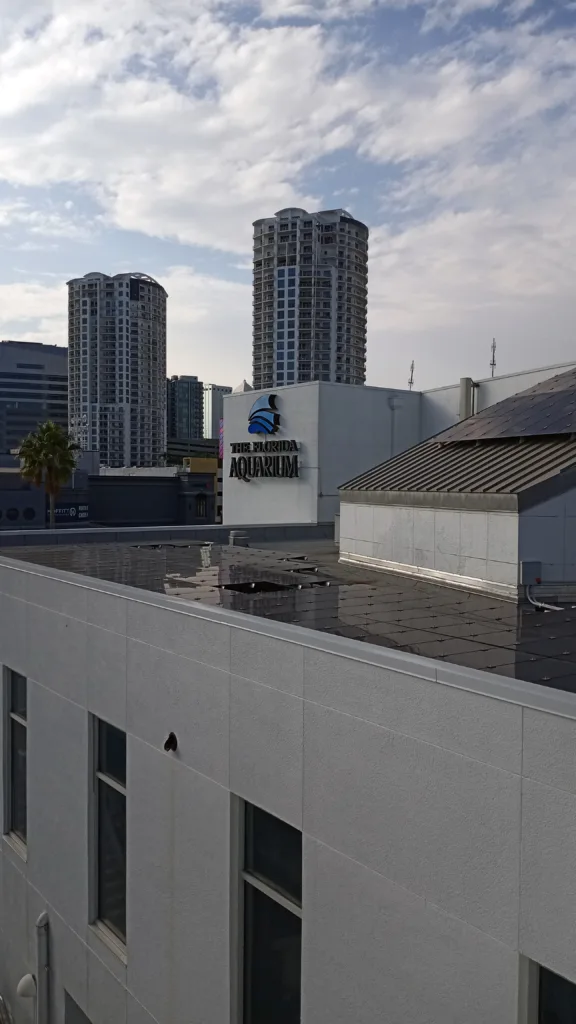
Commercial solar inverters differ from residential units in ways that go well beyond size – three-phase output, higher DC input voltage windows, different certification requirements, and monitoring/service expectations built around a facilities team rather than a single homeowner. Choosing the wrong class of inverter for a commercial installation is expensive to fix after the fact. The scale involved makes it far costlier than the same mistake on a residential roof.
This guide covers what actually separates commercial solar inverters from residential ones. It covers the main categories on the market, meaning central, string, and power optimizer or microinverter architectures at commercial scale. It covers key specs. It also covers what to check before a facilities or operations team signs off on a proposal.
Table of Contents
- How do commercial inverters differ from residential?
- What is the difference between central, string, and power optimizer inverters?
- What specs matter for commercial solar inverters?
- How do I size an inverter for commercial loads?
- Why does three-phase power matter for commercial solar?
- What monitoring and service should I expect?
- How much do commercial solar inverters cost?
- What are popular commercial inverter brands?
- Interconnection and Utility Approval
- Repowering: Replacing an Aging Inverter
- Which inverter is best for my facility type?
- Common Commercial Inverter Issues
- Financing a Commercial Inverter
- Commercial vs. Utility-Scale
- How do I read inverter efficiency ratings?
- How do I choose an inverter for a commercial project?
- What are common commercial inverter mistakes?
- Frequently Asked Questions
How do commercial inverters differ from residential?
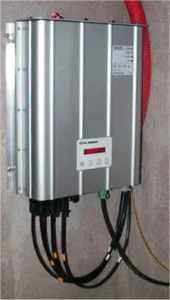
A commercial solar inverter is typically built for higher continuous output. It handles three-phase electrical service, standard in most commercial buildings and uncommon in residential. It has a wider DC input voltage window, to accommodate longer strings of panels across large roof or ground-mount arrays. Its certifications also align with commercial interconnection requirements, which can differ from residential-focused UL 1741 listings. Commercial units are generally designed around remote monitoring and service contracts. They are not built for a homeowner checking an app occasionally. Uptime matters differently when a facility’s operating budget depends on it.
What is the difference between central, string, and power optimizer inverters?
| Architecture | How It Works | Best Fit |
|---|---|---|
| Central inverter | One large inverter handles the entire array’s DC-to-AC conversion | Large, unshaded ground-mount or single-orientation rooftop arrays; utility-scale and large commercial |
| String inverter | Multiple mid-size inverters each handle one “string” (a series of panels) | Mid-size commercial roofs, especially with some shading or multiple roof orientations |
| Power optimizer / microinverter | Per-panel or per-small-group power electronics, often paired with a central or string inverter | Complex roof geometries, partial shading, projects wanting panel-level monitoring/diagnostics |
Central inverters generally offer the lowest cost per watt at commercial scale but concentrate risk (one failure affects the whole array). String architectures spread that risk across multiple units and simplify partial-shading losses, at a moderately higher cost per watt. See our hybrid inverter buying guide for the equivalent residential-scale comparison.
What specs matter for commercial solar inverters?
- Continuous power rating – matched to the array’s DC capacity and the facility’s interconnection agreement.
- Maximum DC input voltage – determines how long a single string of panels can run before requiring a combiner, affecting wiring cost across a large roof.
- Efficiency (CEC weighted) – commercial-grade units commonly reach 98%+ at scale, a meaningful difference over a large system’s lifetime output.
- Ingress protection (IP) rating – relevant for outdoor/rooftop mounting in varied climates.
- Grid support functions – reactive power control and ride-through capability are increasingly required by utility interconnection agreements for larger commercial systems.
- Warranty and service contract terms – commercial buyers should weigh a manufacturer’s service network and response-time commitments, not just the warranty length on paper.
How do I size an inverter for commercial loads?
Commercial inverter sizing starts from actual facility load data, not a rule of thumb. Ideally that means 12 months of interval data from the utility or building management system. A facility’s peak demand, load shape across the day, and any demand-charge exposure all factor into array size and inverter architecture choice. Oversizing relative to available roof or land area wastes capital. Undersizing relative to available panel capacity leaves production on the table during peak sun hours. See our commercial solar ROI guide for how sizing interacts with the broader financial picture, including demand-charge reduction.
Why does three-phase power matter for commercial solar?
Most commercial buildings run on three-phase electrical service, which most commercial-grade inverters are built to match natively – unlike the single-phase service standard in most US homes. Installing a single-phase inverter on three-phase service (or vice versa) is not a simple swap. It typically requires different equipment entirely. That is why using a bigger version of a residential inverter is not a workable shortcut. The rule holds for any genuinely commercial-scale project, even a small one.
What monitoring and service should I expect?
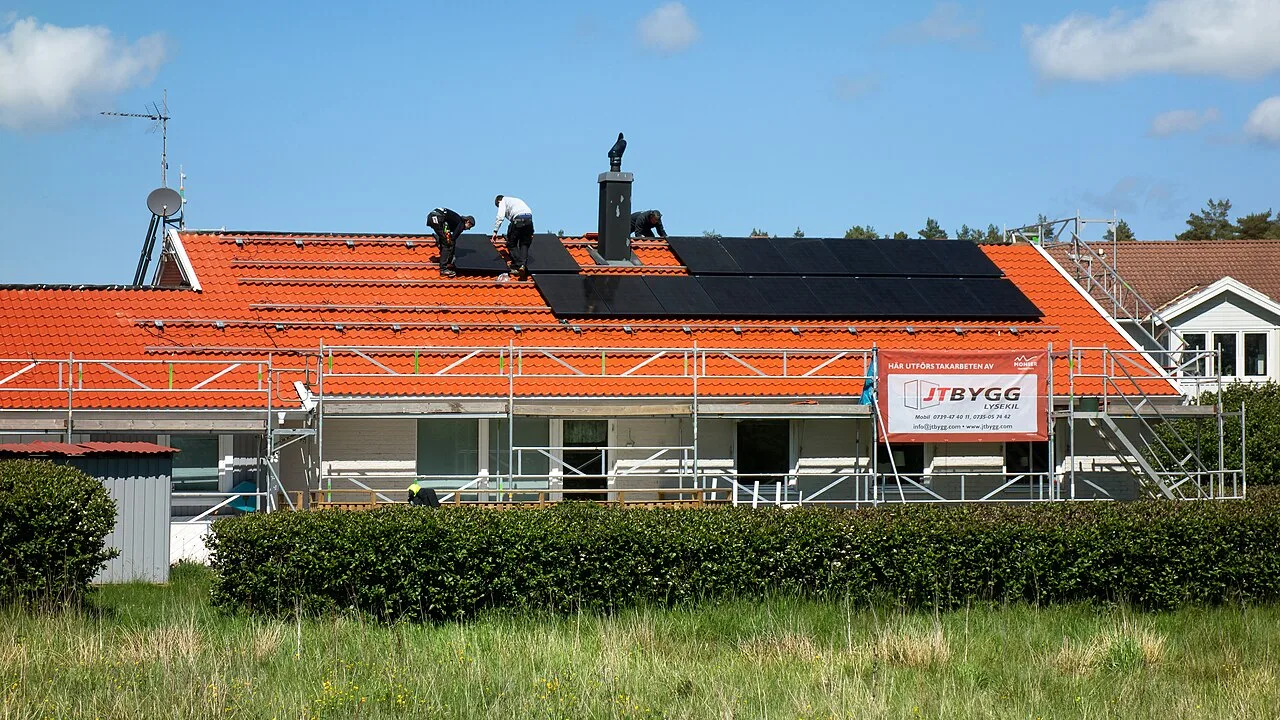
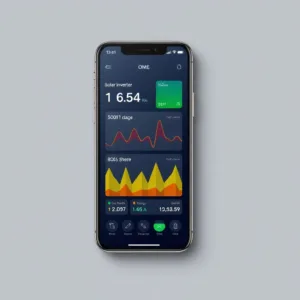
Commercial installations typically warrant a monitoring platform with facility-manager-level reporting (production trends, fault alerts, performance-ratio tracking against the original proposal’s estimate) rather than a simple consumer app. Ask specifically about alert routing, meaning who gets notified on a fault and how fast. Ask about typical response time under any service contract. Ask whether monitoring data can integrate with an existing building management system, if the facility has one.
How much do commercial solar inverters cost?
| System Scale | Typical Inverter Cost (equipment only) |
|---|---|
| Small commercial (25-75kW) | $4,000-$12,000 |
| Mid-size commercial (75-250kW) | $12,000-$35,000 |
| Large commercial / small utility-adjacent (250kW-1MW) | $35,000-$120,000+ |
These are equipment-only ranges. Full installed system cost, including racking, wiring, labor, and any switchgear upgrades, runs considerably higher and varies by site conditions.
How do I choose an inverter for a commercial project?
- Match architecture to roof/site complexity – central for simple large arrays, string or optimizer-based for complex geometries or partial shading.
- Confirm three-phase compatibility with the facility’s actual electrical service.
- Model against real interval load data, not an average estimate.
- Weigh service network and response commitments alongside warranty length.
- Ask whether grid-support functions required by your utility’s interconnection agreement are built in or need an add-on.
What are popular commercial inverter brands?
No single brand is objectively best for every commercial project. The right choice depends on scale, architecture, and service network in your region. These names still come up repeatedly in commercial procurement.
- SMA Sunny Tripower / Sunny Central – German engineering, string and central options spanning small commercial through utility scale.
- Sungrow – broad commercial and utility-scale lineup, competitive pricing, rapidly expanding global service network.
- Huawei – strong string-inverter presence internationally, smart string architecture with panel-level optimization built in.
- SolarEdge – power optimizer architecture popular where panel-level monitoring and shade mitigation are priorities.
- Schneider Electric / Conext – established industrial electrical brand with commercial and light-industrial solar inverter lines.
- Fronius – Austrian manufacturer with a long track record in commercial string inverters and a reputation for build quality, though (like any brand) not immune to field issues – see our note on Fronius inverter troubleshooting for common error codes and fixes.
How does utility approval work for commercial solar?
Commercial interconnection is generally a more involved process than residential. Utilities often require an engineering study for larger systems. Additional protective relay equipment may be mandated, depending on system size relative to the local grid segment. Approval timelines commonly run weeks to several months rather than days. Larger commercial and light-industrial-scale projects sometimes trigger a full interconnection study process similar to (though smaller than) what utility-scale projects undergo. Build interconnection lead time into the overall project timeline from the start. A common mistake is assuming a commercial system will be live shortly after physical installation completes. The utility approval step frequently ends up the longest part of the calendar.
What is repowering a commercial inverter?
Commercial inverters commonly need replacement or major service around the 10 to 15 year mark. That is often before the panels themselves need any attention. This repowering decision point is worth planning for rather than treating as a surprise. Repowering can be an opportunity to upgrade to a more efficient or better-monitored unit than what was originally specified. That is especially true if the facility’s load profile has changed since the original installation. Added equipment, EV charging, and expanded operations all shift it. Budget for this as a known mid-life capital expense during initial financial planning. The original inverter cost is not the system’s only inverter-related expense over a 25-year-plus panel life.
Which inverter is best for my facility type?
| Facility Type | Typical Load Pattern | Common Architecture Choice |
|---|---|---|
| Warehouse / distribution center | Large simple roof, steady daytime shift usage, often high demand charges | Central or large string inverters, simple array geometry |
| Office building | Weekday daytime concentration, complex roof with HVAC equipment/obstructions | String or power-optimizer architecture to manage partial shading around rooftop equipment |
| Retail / big-box store | Extended daily hours, moderate demand charges | String inverters, sized to available roof area |
| Manufacturing facility | High, steady load with significant motor-driven equipment | Central or string, often paired with grid-support functions given equipment-driven demand spikes |
What issues do commercial inverters commonly have?
Across brands and architectures, a few issues generate most service calls on commercial systems. Nuisance grid-fault trips occur in areas with less stable utility power quality. Cooling-fan failures affect air-cooled units in dusty or high-heat environments. Communication and monitoring dropouts are common, and are often a networking issue rather than the inverter itself. DC arc-fault detection false positives round out the list, particularly on older string wiring as it ages. A facilities team that knows these common categories in advance can triage a fault report faster before escalating to a formal service call. Not every alert requires an on-site visit. Many communication or nuisance-trip issues resolve with a remote reset or firmware update.
How do I finance a commercial inverter upgrade?
Commercial inverter costs are typically financed as part of the broader solar project rather than separately. The options are a cash purchase, a commercial solar loan, or a PPA or lease structure where a third party owns the equipment. See our small business solar ROI guide for how financing structure affects who captures the tax credit and MACRS depreciation benefit discussed in our depreciation guide – the inverter is a capital cost within that larger calculation, not typically evaluated as a standalone purchase decision.
Where does commercial solar end and utility-scale begin?
There is no single hard line between the categories. Commercial solar generally refers to systems roughly in the 25kW to 1 or 2MW range, serving a single building or campus’s own load. Utility-scale systems are typically several MW and up. They are built primarily to sell power into the grid rather than serve one facility’s consumption. The inverter equipment and interconnection process both shift noticeably above roughly the 1MW mark, moving toward the central, grid-scale inverter and substation-adjacent equipment covered in our utility-scale solar guide – a large commercial buyer approaching that size threshold should budget for a meaningfully more complex interconnection process than a typical mid-size commercial project.
How do I read inverter efficiency ratings?
Two efficiency figures commonly appear on commercial inverter datasheets and are easy to conflate. Peak efficiency is the best-case number under ideal lab conditions. CEC weighted efficiency uses a California Energy Commission formula that weights efficiency across a realistic range of operating loads. The second is generally the more meaningful figure for real-world comparison. A datasheet leading with peak efficiency alone can make two otherwise similar inverters look more different than they are. Always compare CEC weighted efficiency. Ask the manufacturer for it directly if it is not listed alongside the peak figure.
What are common commercial inverter mistakes?
- Treating a large residential inverter as a substitute for a genuinely commercial-grade unit – phase compatibility and duty-cycle expectations differ.
- Sizing off average monthly usage instead of interval/peak data – misses demand-charge reduction opportunity and can undersize for real peak load.
- Ignoring service network quality when comparing warranty lengths – a 15-year warranty from a manufacturer with poor regional service response is a weaker deal than it looks on paper.
- Not confirming grid-support/ride-through requirements with the utility before finalizing equipment – can force a costly change order later in larger interconnection cases.
Frequently Asked Questions
Can a residential inverter be used for a small commercial building?
Generally not recommended once the building runs three-phase service or the array exceeds residential-scale output – commercial-grade inverters are built for that electrical service and duty cycle specifically.
What is the difference between central and string inverters at commercial scale?
A central inverter handles the whole array in one unit (lower cost per watt, concentrated risk). String inverters split the array across several units (more resilient to partial failure and shading, moderately higher cost).
Do commercial solar inverters need a service contract?
Not strictly required, but strongly recommended for anything beyond a small system – facilities generally can’t absorb unplanned downtime the way a homeowner tolerates a residential inverter fault, so ask about service response commitments during procurement, not after a failure.
How long do commercial solar inverters last?
Typically 10-15 years before a likely replacement or major service, similar to residential-scale units, though duty cycle and climate exposure affect real-world lifespan meaningfully.
Does a commercial inverter need to support three-phase power?
If the building’s electrical service is three-phase (the norm for most commercial buildings), yes – single-phase equipment is not compatible without a different interconnection approach entirely.
What causes most commercial inverter service calls?
Nuisance grid-fault trips, cooling-fan issues in harsh environments, monitoring/communication dropouts, and DC arc-fault false positives on aging wiring are the most common categories – not all require an on-site visit.
Who finances commercial inverter replacement at end of life?
Usually the building/system owner, budgeted as a known mid-life capital expense; PPA or lease structures shift this responsibility to the third-party system owner instead.
Conclusion
Commercial solar inverter selection comes down to three things. Match architecture and electrical-service compatibility to the actual facility. Model against real interval load data. And weigh service network quality alongside the spec sheet. See our commercial solar ROI guide and depreciation benefits guide for the financial side of the same decision.
Further reading: U.S. Department of Energy – Solar Integration: Inverters and Grid Services Basics and Wikipedia – Solar inverter.
See our three phase solar inverters guide for how this plays out in practice. There is more detail on this in our best solar inverters 2026 guide.
Related Posts
Leave a Comment
Your comment will be published after it has been approved. Please send comments that do not contain slang words.