
Three Phase Solar Inverters

Three-phase solar inverters match the three-phase electrical service standard. That is the standard in most commercial buildings. In many countries outside the US, it also covers a large share of residential properties. Choosing between single-phase and three-phase equipment is not really a choice. It is determined by which electrical service your building already has. Understanding the distinction still helps set expectations when comparing quotes or reading spec sheets.
This guide explains what three-phase power actually means and when it applies. It covers how three-phase inverters differ technically from single-phase units. It also covers what to check before assuming a quote’s equipment matches your actual electrical service.
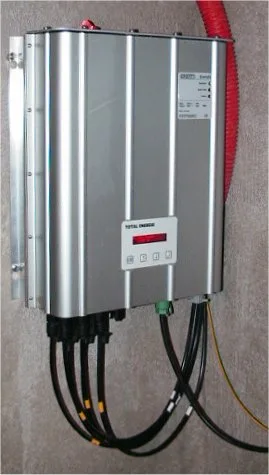
Table of Contents
- What does three-phase power actually mean?
- Who actually has three-phase service?
- How do three-phase inverters differ technically from single-phase?
- How do single-phase and three-phase inverters compare?
- How can I check which service I have?
- How does three-phase vary between the US and elsewhere?
- What do three-phase inverters cost?
- Split-Phase vs. Three-Phase Confusion
- Grid Interconnection Requirements
- What wiring and grounding considerations apply?
- What are common mistakes with three-phase inverters?
- Frequently Asked Questions
What does three-phase power actually mean?
Three-phase electrical service delivers power via three alternating current waveforms, offset from each other. Standard single-phase residential service, common in the US, uses a single waveform. This provides smoother, more consistent power delivery, which matters for larger motors and industrial equipment. It also delivers higher total power capacity through the same wiring, compared to single-phase at an equivalent voltage. A three-phase solar inverter is built specifically to synchronize with and feed power back into this type of electrical service. It is not simply a bigger single-phase inverter.
Who actually has three-phase service?
In the US, the large majority of residential homes run single-phase service. Most commercial, industrial, and larger multi-family buildings run three-phase. That is the main reason three-phase inverters mostly come up in commercial solar contexts in the US. In much of Europe and many other regions, three-phase service is standard even for many residential properties. Three-phase residential inverters are therefore far more common in those markets than in the US. Always confirm your actual electrical service type rather than assuming from general regional patterns. Check your specific property’s service. Exceptions exist in both directions.
How do three-phase inverters differ technically from single-phase?
- Internal circuitry – three-phase inverters have additional power electronics to manage and balance output across all three phases simultaneously.
- Balanced output requirement – many utilities require three-phase inverters to export roughly balanced power across all three phases, a constraint single-phase equipment doesn’t have.
- Higher typical power ratings – three-phase units commonly start where larger single-phase units top out, reflecting the commercial/industrial contexts they’re usually deployed in.
- Different certification requirements – grid interconnection standards for three-phase equipment can differ from single-phase-focused residential certifications.
How do single-phase and three-phase inverters compare?
| Factor | Single-Phase | Three-Phase |
|---|---|---|
| Typical context | US residential, small commercial | Commercial, industrial, EU/international residential |
| Typical power range | Up to roughly 15-20kW | From roughly 10-15kW up through utility scale |
| Power delivery smoothness | Single waveform, less smooth under heavy motor loads | Three offset waveforms, smoother delivery, better for large motors |
| Equipment compatibility | Not compatible with three-phase service | Not compatible with single-phase service |
How can I check which service I have?
The most reliable way to confirm is checking your electrical panel, and a licensed electrician or your utility can confirm definitively. Your utility bill sometimes indicates service type as well. Three-phase panels typically have a visibly different busbar and breaker configuration than single-phase panels. This is not something to diagnose yourself without electrical expertise. Never assume based on building type or region alone. Always have this confirmed before ordering equipment, since a mismatched inverter is not a simple return – it requires the correct equipment for your actual service.
How does three-phase vary between the US and elsewhere?
This is one of the more significant differences between US and international solar markets. The US grid was built around split-phase service, a variant of single-phase, for residential customers. Much of Europe, parts of Asia, and Australia use three-phase service more broadly, including many residential properties. This affects inverter selection and available equipment lineups alike. Some manufacturers offer far more residential three-phase options in international markets than in their US product lines. Local demand drives that.

What do three-phase inverters cost?
Three-phase inverters are not inherently more expensive per kW than comparable single-phase units at the same power class. Cost differences mostly reflect deployment scale. Three-phase equipment tends to be deployed at larger, commercial-scale power ratings. The phase technology itself adds little cost. See our commercial solar inverters guide for cost ranges by system scale, which is the more relevant cost framework than phase type alone.
What is the difference between split-phase and three-phase?
US residential single-phase service is technically split-phase. Two 120V legs are derived from a single phase, delivering 240V for larger appliances. It is still fundamentally single-phase power, not three-phase. This causes genuine confusion since a 240V circuit might sound like it should need “three-phase” equipment to someone unfamiliar with the distinction – it doesn’t. Standard US residential solar inverters, even those handling 240V output, are single-phase (split-phase) equipment, not three-phase. Confirm this distinction explicitly with your installer if terminology in a quote seems ambiguous. The difference between 240V and three-phase is a common point of confusion. Clear it up before equipment is ordered.
What are grid interconnection requirements for three-phase systems?
Utilities interconnecting a three-phase solar system often apply additional requirements beyond standard residential interconnection. These are almost always commercial or larger installations. Requirements can include engineering review for systems above a certain size relative to the local grid segment. Specific protective relay equipment is sometimes required. So are the balanced-phase export requirements mentioned earlier. These requirements exist to protect grid stability, given the larger power levels typically involved. They generally mean a longer interconnection timeline than a small residential single-phase system. Budget for this in project planning rather than assuming residential-scale interconnection speed applies. See our commercial solar inverters guide for the fuller interconnection process this fits into.
What wiring and grounding considerations apply?
Three-phase inverter installations generally involve more complex wiring than single-phase equivalents. Additional conductors are needed for the extra phases. Grounding and neutral configuration requirements also vary with your specific electrical system design, such as delta versus wye three-phase configurations, which matter to your electrician but aren’t something a homeowner or business owner typically needs to evaluate directly). This is squarely licensed-electrician territory. The practical takeaway for a buyer is straightforward. Three-phase installations typically require more specialized electrical labor than single-phase residential work. That is part of why installer experience with commercial and three-phase projects specifically matters when comparing quotes.
What are common mistakes with three-phase inverters?
- Assuming a “bigger” single-phase inverter can substitute for three-phase equipment – the two are not interchangeable regardless of power rating.
- Not confirming actual electrical service before ordering equipment – always verify with an electrician or your utility, not by assumption.
- Assuming US market patterns apply internationally, or vice versa – residential three-phase prevalence varies enormously by country.
- Overlooking balanced-output requirements some utilities impose on three-phase interconnections – ask your installer whether this affects your specific design.
Frequently Asked Questions
Can I convert my single-phase inverter to three-phase, or vice versa?
No – these require fundamentally different equipment. There is no field conversion between the two, you need the correct inverter type for your actual electrical service from the start.
Do most US homes have three-phase or single-phase service?
The large majority of US residential homes have single-phase (specifically split-phase) service. Three-phase is mostly found in commercial, industrial, and some larger multi-family buildings in the US context.
Is three-phase power “better” than single-phase for a home?
Not inherently better for typical residential loads – it offers smoother power delivery, more relevant for large motors and industrial equipment than typical household appliances. It’s a matter of what service your building actually has, not a general upgrade.
How do I know if my commercial building has three-phase service?
Check with a licensed electrician or your utility directly – don’t assume based on building type. Most (not all) larger commercial buildings do have it, but always confirm your specific property.
Are three-phase inverters harder to install than single-phase?
They generally require similar core installation skill. Interconnection and balanced-output requirements can add complexity, depending on your utility’s specific rules. An installer experienced with commercial-scale or three-phase work specifically is worth seeking out.
Is US residential 240V service the same as three-phase?
No. Standard US residential service is split-phase, meaning two 120V legs from a single phase combining to 240V for larger appliances. That is fundamentally different from three-phase power, even though both involve higher voltages than a single 120V leg.
Does a three-phase solar system take longer to get utility approval?
Often yes – larger three-phase systems (typically commercial-scale) commonly require additional engineering review and interconnection steps beyond standard residential approval, extending the typical timeline.
Conclusion
Three-phase versus single-phase inverter selection is not really a choice. Your building’s actual electrical service determines it. Confirm that with an electrician or your utility before any equipment is ordered. See our commercial solar inverters guide for the fuller commercial equipment comparison this fits into.
Further reading: Wikipedia – Three-phase electric power and U.S. Department of Energy – Solar Integration: Inverters and Grid Services Basics.
String limits apply just as strictly on larger services; see solar string sizing.
Related Posts



Leave a Comment
Your comment will be published after it has been approved. Please send comments that do not contain slang words.