
Solar Inverter Types
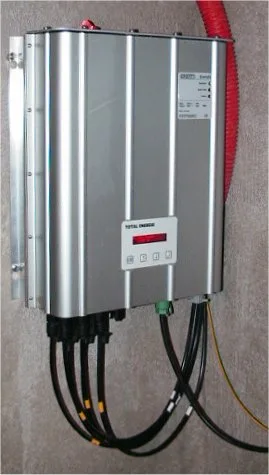
Solar inverter types span more categories than most buyers realize going in – beyond the string vs. microinverter architecture question, there are grid-tied, hybrid, and off-grid functional categories, plus central and string-vs-central distinctions at commercial scale. Understanding the full landscape helps place any specific product quote in context.
This guide gives a complete overview of solar inverter types. It covers them by architecture, meaning how they physically connect to panels, and by function, meaning what they are designed to do. That lets you place any specific product before diving into a narrower comparison.
Table of Contents
- Types by Function
- Types by Architecture
- Types by Scale
- Full Comparison Table
- How to Narrow Down Which Type You Need
- Emerging Inverter Categories
- How Inverter Types Have Evolved
- How to Read an Inverter Datasheet
- Certifications Explained
- Regional Type Prevalence
- Common Mistakes
- Frequently Asked Questions
Types by Function
| Type | What It Does |
|---|---|
| Grid-tied (string) inverter | Converts solar DC to AC and exports/imports with the grid; no battery capability |
| Hybrid inverter | Grid-tied function plus integrated battery management and backup capability |
| Off-grid inverter | Built for standalone operation with no grid connection at all, higher surge capacity, generator integration |
| Battery inverter/charger (retrofit) | Added to an existing grid-tied system to add battery capability without replacing the original inverter (AC-coupled) |
See our best hybrid solar inverter guide and best off-grid solar inverters guide for deep dives on the two most commonly compared functional categories.
Types by Architecture
Independent of function, inverters also differ by how they physically connect to the panel array. String inverters use one central unit per string of panels. Microinverters use one small unit per panel. Power optimizers take a hybrid approach, with per-panel optimization feeding into one central inverter. See our string vs. microinverter comparison for the detailed tradeoffs between these three.
Types by Scale
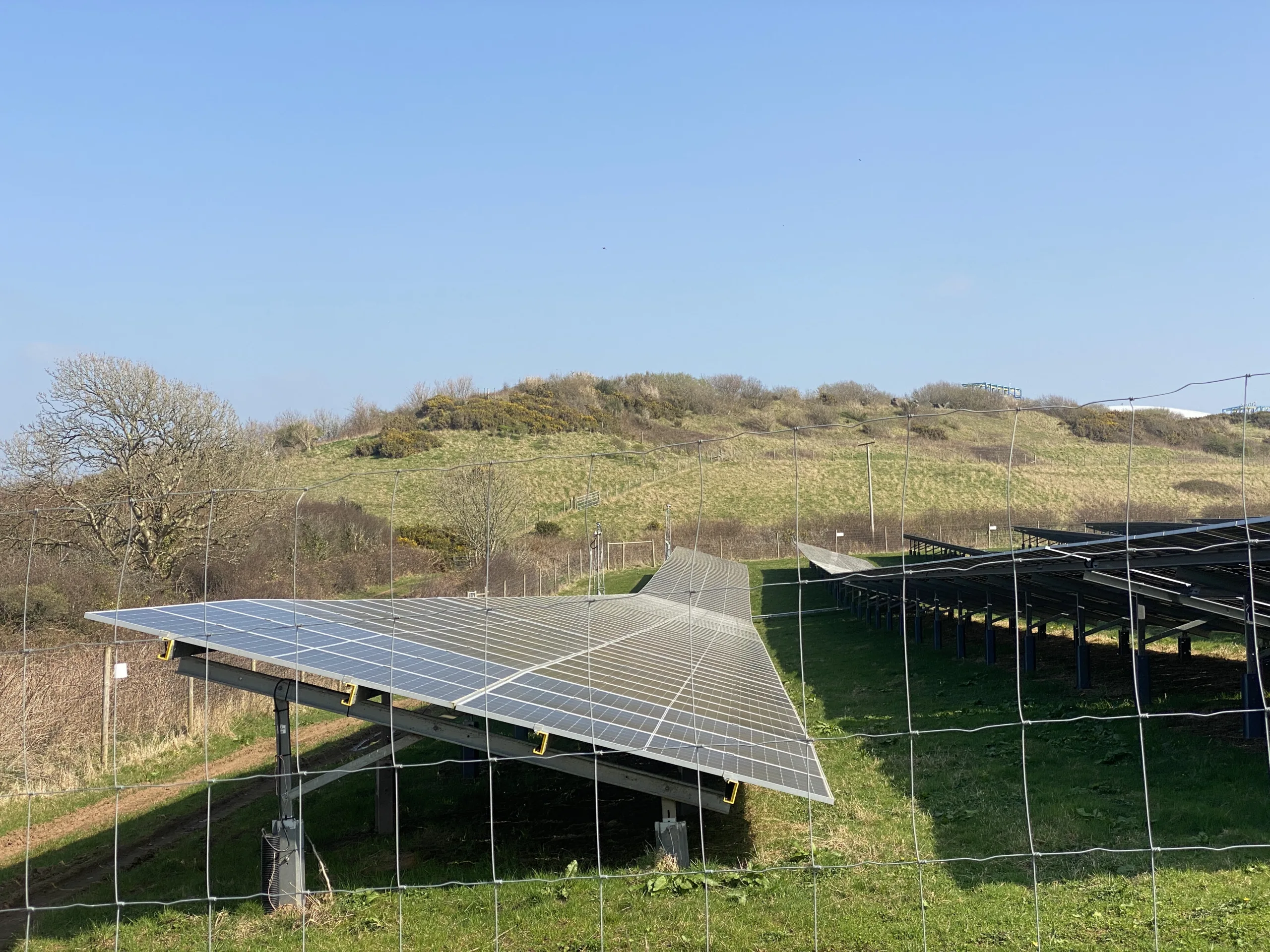
Inverters also differ by intended deployment scale. Residential units are typically single-phase in the US, in the 3 to 15kW range. Commercial units are often three-phase, in the 15kW to 1MW range; see our commercial solar inverters guide. Utility-scale central inverters run to multiple MW and are deployed at solar farms; see our utility-scale solar guide. Equipment at each scale is purpose-built – a utility-scale central inverter isn’t simply a larger version of a residential unit, and vice versa.

Full Comparison Table
| Type | Typical Scale | Battery Support | Grid Requirement |
|---|---|---|---|
| String (grid-tied) | Residential-commercial | No (without AC-coupled add-on) | Required |
| Microinverter | Residential-small commercial | Varies by product line | Required |
| Hybrid | Residential-commercial | Yes, integrated | Optional (grid-tied with backup) |
| Off-grid | Residential-light commercial | Yes, required | Not required |
| Central (utility-scale) | Multi-MW solar farms | Separate grid-scale storage systems, not integrated | Required |
How to Narrow Down Which Type You Need
- Decide function first: grid-tied only, backup-capable hybrid, or full off-grid independence.
- Then decide scale: residential, commercial, or utility – determined by your actual property and load, not a choice.
- Then decide architecture: string, microinverter, or optimizer – driven mainly by roof shading/complexity.
- Finally compare specific products within that narrowed category on efficiency, warranty, and brand service network.
Emerging Inverter Categories
A few newer categories are worth knowing as the market evolves. EV-integrated inverters manage solar, battery, and EV charging together as one coordinated system. Virtual-power-plant-ready inverters carry software designed to participate in utility demand-response and VPP programs. These are not yet universal categories every buyer needs to evaluate. They are increasingly common in newer hybrid inverter product lines. Ask about them if EV charging or VPP participation is relevant to your household. See our technology trends guide for more on where this is headed.
How Inverter Types Have Evolved
Early residential solar in the 2000s relied almost exclusively on basic string inverters with no battery integration. Battery cost at the time was one reason. The other was a market focused purely on offsetting daytime grid usage. Microinverters emerged as a mainstream option through the 2010s, addressing shading limitations that basic string inverters couldn’t handle well. Hybrid inverters became increasingly standard through the late 2010s and 2020s, as battery costs fell enough to make storage a realistic mainstream addition. Today, hybrid capability is close to a default expectation for new residential quotes. That holds even for buyers not adding a battery immediately, simply to keep the option open without a costly retrofit later.
How to Read an Inverter Datasheet
| Spec | What to Look For |
|---|---|
| Continuous AC output power | Should match or exceed your actual expected load, not just panel capacity |
| Max DC input voltage/current | Must be compatible with your specific panel string configuration |
| CEC weighted efficiency | The realistic real-world efficiency figure, more meaningful than peak efficiency alone |
| Surge rating | Relevant if running motor-driven equipment (well pumps, HVAC compressors) |
| Battery voltage window (hybrid/off-grid only) | Must match your chosen or planned battery’s voltage specifications |
| Certifications (UL 1741, IEEE 1547, etc.) | Confirms the unit meets grid-interconnection and safety standards relevant to your jurisdiction |
A datasheet packed with impressive-sounding numbers is only useful once you know which specs apply to your category. Function, architecture, and scale all shape that. The same efficiency percentage means something different for a residential string inverter than for a utility-scale central unit.
Certifications Explained, Briefly
UL 1741 is the primary US safety and grid-interconnection standard for inverters. It covers anti-islanding, meaning automatic disconnection from the grid during an outage for lineworker safety. It also covers general electrical safety. IEEE 1547 covers grid interconnection requirements more broadly, including the grid-support functions increasingly required for larger commercial and utility-scale systems. Outside the US, equivalent standards apply, with IEC 62109 common internationally. Confirm which certification framework applies to your jurisdiction. A unit certified for one region’s standards is not automatically compliant elsewhere.
Regional Type Prevalence
Which inverter types dominate a given market reflects local electrical service standards and historical adoption patterns. The US residential market leans heavily toward single-phase hybrid and string inverters. Much of Europe sees more three-phase residential units given local electrical service standards. And China and other major manufacturing hubs produce across essentially every category at scale, supplying global markets. This affects which specific products are locally available. It sometimes affects pricing and lead times too. Not every manufacturer stocks every category equally in every region.
Common Mistakes
- Confusing function and architecture as the same decision – they’re independent choices (a hybrid inverter can use string, micro, or optimizer architecture).
- Assuming any “hybrid” inverter is off-grid-capable – many hybrid units are backup-focused, not built for continuous standalone operation.
- Shopping for a residential-scale product when your actual need is commercial-scale – or vice versa, over-buying commercial equipment for a residential application.
- Not clarifying which type a quote actually includes – “inverter” alone doesn’t specify function, architecture, or scale; ask for the specific product and category.
Frequently Asked Questions
What’s the difference between a hybrid and an off-grid inverter?
A hybrid inverter typically manages solar, battery, and grid together but is often designed around occasional backup rather than continuous standalone operation. A true off-grid inverter is built for indefinite operation with no grid at all, with higher surge capacity and generator integration.
Can one inverter type be upgraded to another later?
Not directly in most cases – function (grid-tied vs. hybrid vs. off-grid) and architecture (string vs. micro) are largely fixed at installation. Adding battery capability to an existing grid-tied string inverter later usually requires an AC-coupled add-on rather than converting the original unit.
Do all inverter types support solar panels from any brand?
Generally yes for panel compatibility, since inverters are largely brand-agnostic on the DC input side within voltage and current specs. Battery compatibility is more brand and model specific. Always confirm compatibility for the specific combination you are planning.
Is a more expensive inverter type always better?
No – the right type depends on your specific function, scale, and roof needs, not price alone. An off-grid-rated unit is more expensive but pointless for a simple grid-tied residential system with no backup requirement.
What type of inverter do most new residential solar installs use today?
Hybrid inverters have become the default recommendation for new installs where storage is part of the plan, even if added later. Their integrated battery-management design beats retrofitting a separate battery inverter afterward.
What does UL 1741 certification mean?
This is the primary US safety and grid-interconnection standard for inverters. It covers anti-islanding, meaning automatic grid disconnection during an outage, plus general electrical safety. Look for it on any US-market inverter.
Are inverter types different in other countries?
The core categories are globally consistent: grid-tied, hybrid, off-grid, and string, micro, or optimizer architectures. Which types are most common and locally available varies by region. Electrical service standards and market maturity drive that.
Conclusion
Solar inverter types break down along three largely independent dimensions: function, architecture, and scale. Understanding all three places any specific product quote in the right context. That comes before comparing on price or brand alone. See our best hybrid solar inverter guide, best off-grid solar inverters guide, and string vs. microinverter comparison for deep dives on each dimension.
Further reading: Wikipedia – Solar inverter and U.S. Department of Energy – Solar Integration: Inverters and Grid Services Basics.
Once you know the types, work through all our inverter guides.
Related Posts


Leave a Comment
Your comment will be published after it has been approved. Please send comments that do not contain slang words.