
Flow Battery Systems
# Flow Battery Systems
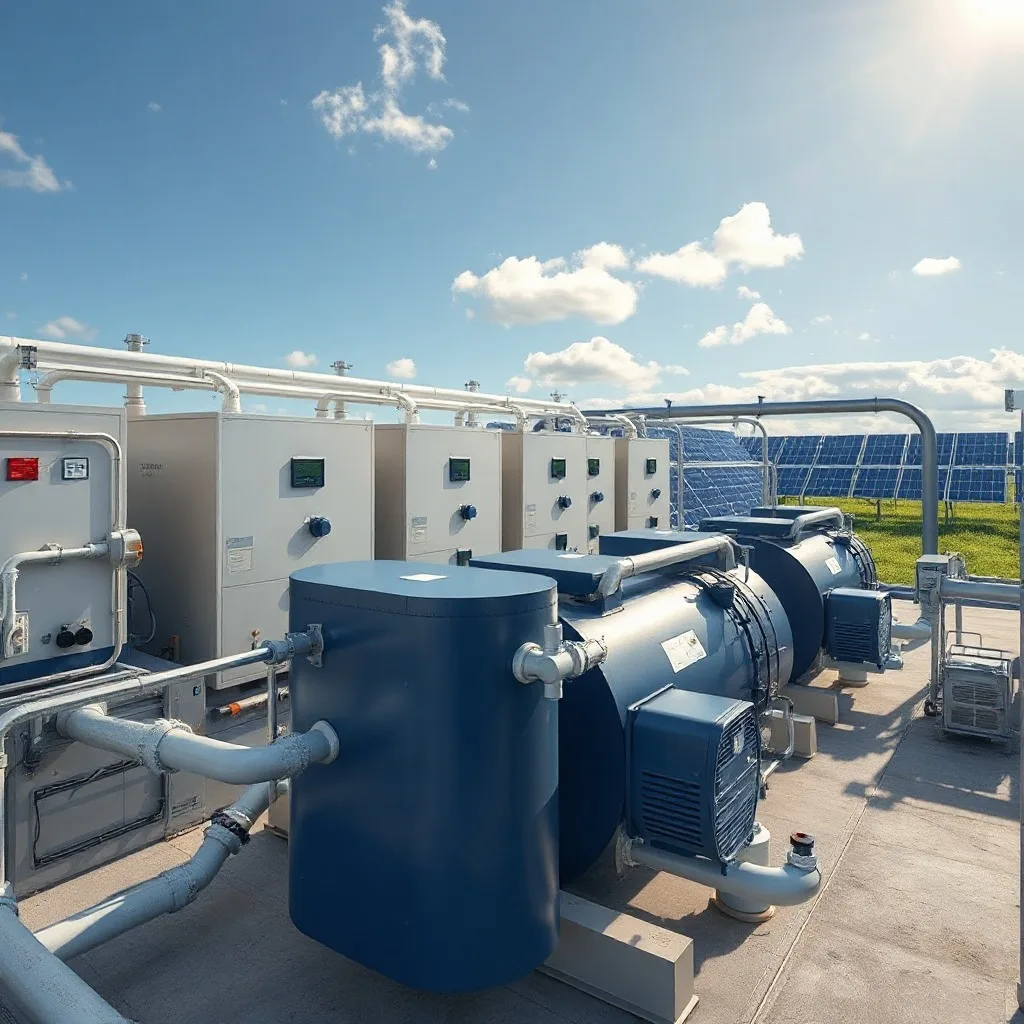
Flow Battery Systems store electricity in liquid electrolytes held inside external tanks. Unlike conventional batteries, they separate energy capacity from power output, making them especially useful when solar or wind power must be stored for several hours.
Interest is rising as utilities search for durable alternatives to lithium-ion technology. Flow batteries are not ideal for every project, but their long service life, flexible capacity, and low fire risk make them strong candidates for [renewable energy storage].
The technology has moved beyond laboratory research. Commercial installations now support power grids, factories, remote communities, and microgrids. Yet chemistry selection, project design, maintenance, and operating conditions still determine whether an installation delivers genuine value.
Fundamental Concepts and Definitions
A flow battery contains two liquid electrolytes stored in separate tanks. Pumps move these liquids through an electrochemical cell stack, where ions cross a membrane and electrons travel through an external circuit. Charging reverses the reaction, allowing the same electrolyte to be reused.
Energy capacity primarily depends on tank size and electrolyte volume. Power output depends on the size and number of cells in the stack. This separation is a defining advantage. A project developer can increase storage duration by installing larger tanks without redesigning the entire power section.
Efficiency varies by chemistry and system design. Many commercial systems achieve round-trip efficiencies of roughly 65 to 85 percent. Lithium-ion batteries often deliver higher efficiency, but flow batteries can tolerate frequent cycling with relatively limited capacity loss. Some designs are expected to operate for 20 years or more when pumps, membranes, and other components receive proper maintenance.
These characteristics suit stationary projects that require daily cycling or extended discharge. A flow battery can help shift midday solar production into the evening, reduce peak demand, stabilize a local network, or supply backup electricity. Its controls can also connect with [battery management systems] to monitor temperature, flow rate, pressure, voltage, and state of charge.
Chemistries Development and Real-World Applications
Modern flow battery research accelerated during the 1970s, when energy security concerns encouraged governments and laboratories to investigate large-scale storage. Vanadium redox technology gained particular attention during the 1980s. Because both electrolyte sides use vanadium in different oxidation states, accidental mixing does not permanently contaminate the system in the same way it can with some mixed-element chemistries.
Vanadium redox flow batteries are now among the most established options. Their electrolyte can remain useful for many years and may retain residual value after the project ends. However, vanadium prices can fluctuate, and the equipment requires tanks, pumps, piping, sensors, and a relatively large installation area. These factors can raise initial costs and complicate projects with limited space.
Alternative chemistries attempt to improve cost, supply security, or energy density. Zinc-bromine batteries can provide comparatively compact storage, although zinc plating and bromine handling require careful engineering. Iron-based systems use abundant materials and may support longer discharge periods. Organic and hydrogen-bromine designs are also being studied, but their commercial maturity varies.
Large flow battery installations have appeared in China, Japan, Europe, Australia, and the United States. They are used beside wind and solar farms, at industrial facilities, and within [microgrid design] projects. Remote communities may benefit because the batteries can reduce diesel generator use. Utilities can also use them for frequency support, voltage control, congestion management, and [grid resilience].
Economics depend on more than the purchase price. Developers normally compare the levelized cost of storage across the full operating life. A system with a higher initial cost may become competitive if it completes thousands of deep cycles without major capacity replacement. Revenue stacking, where one battery performs several grid services, can further improve the business case.
Still, oversizing a system does not guarantee success. Poorly matched pumps can consume excessive auxiliary power, while incorrect electrolyte temperatures can reduce performance. Membrane degradation, leaks, precipitation, corrosion, and sensor failures must also be considered. A realistic feasibility study should therefore examine site conditions, duty cycle, expected degradation, maintenance access, and local electricity tariffs.
Safety is another important distinction. Most aqueous flow batteries use water-based electrolytes and are less prone to thermal runaway than many lithium-ion cells. That does not make them risk-free. Certain electrolytes can be acidic, corrosive, or toxic, so projects need secondary containment, ventilation, leak detection, emergency procedures, and suitable protective equipment. Local [energy storage safety] rules remain essential.
Expert Recommendations and Practical Tips
Specialists generally advise project owners to begin with the required service rather than a preferred chemistry. A battery designed for two-hour peak reduction faces different technical and financial conditions from one expected to discharge for ten hours during a grid outage.
Independent testing is equally important. Nameplate capacity alone does not show how much energy will reach the customer after pump consumption, inverter losses, temperature control, and standby loads are included. Warranty terms should reflect the intended number and depth of cycles.
– Define the operating objective: identify whether the system will provide energy shifting, backup power, demand reduction, grid services, or several functions.
– Calculate usable capacity: account for inverter losses, pumping demand, reserve margins, discharge limits, and expected system aging.
– Match duration to the application: flow batteries become more attractive when projects require frequent cycling and several hours of discharge.
– Review electrolyte supply: examine material availability, price volatility, recycling options, ownership terms, and end-of-life value.
– Verify performance independently: request field data from comparable climates and operating profiles rather than relying only on laboratory results.
– Examine auxiliary consumption: pumps, cooling equipment, heaters, sensors, and control systems can materially reduce net efficiency.
– Plan containment carefully: tanks and piping should be positioned so that leaks can be detected, isolated, and managed safely.
– Confirm maintenance access: technicians need adequate room to inspect pumps, valves, membranes, cell stacks, and electrical equipment.
– Evaluate warranty details: check guaranteed capacity, efficiency, availability, response time, exclusions, and responsibility for electrolyte servicing.
– Model total project economics: include construction, financing, land, replacements, maintenance, insurance, electricity losses, and decommissioning.
– Consider climate conditions: extreme heat or cold can affect electrolyte viscosity, reaction rates, precipitation risk, and balance-of-plant requirements.
– Check supplier strength: long project lifetimes require dependable technical support, replacement parts, software updates, and credible financial backing.
A common mistake is comparing battery technologies only by cost per kilowatt-hour. That figure can ignore power electronics, site preparation, fire protection, degradation, maintenance, and the number of useful cycles. A more balanced analysis considers the delivered cost of each discharged megawatt-hour.
Another error is assuming that flow batteries require no maintenance because their electrolytes do not age like conventional electrodes. Pumps and seals remain mechanical components. Membranes, pipes, sensors, and inverters also need inspection. Preventive maintenance can protect efficiency and reduce unexpected downtime.

Frequently Asked Questions
How are flow batteries different from lithium-ion batteries?
Lithium-ion batteries store active materials inside sealed cells. Flow batteries keep most of their active material in external electrolyte tanks and circulate it through a cell stack. This architecture allows energy capacity and power output to be sized more independently.
Lithium-ion technology is compact, efficient, widely available, and well suited to electric vehicles or short-duration storage. Flow batteries generally need more space but can offer long cycle life, deep discharge capability, and reduced thermal runaway risk. The better option depends on duration, location, cycling frequency, safety requirements, and project economics.
How long can a flow battery supply electricity?
Discharge duration depends mainly on electrolyte volume and tank size. Commercial systems are often designed for approximately four to twelve hours, although shorter and longer configurations are possible.
A larger tank can extend duration, provided the cell stack, pumps, and power conversion equipment are properly designed. This flexibility is useful for renewable energy projects that must cover evening demand or prolonged periods of low generation.
Do flow batteries lose capacity over time?
They can experience performance decline, but the mechanisms differ from those of sealed batteries. Electrolyte imbalance, membrane crossover, contamination, precipitation, and component wear may reduce available capacity or efficiency.
Some systems allow electrolyte rebalancing or servicing, which can restore part of the lost performance. Cell stacks, pumps, membranes, and inverters may require repair or replacement during a long project life. Buyers should examine both capacity warranties and maintenance obligations.
Are flow batteries environmentally friendly?
Their environmental impact depends on chemistry, material sourcing, manufacturing, electricity mix, operating life, and end-of-life management. Long service life and reusable electrolytes can reduce the need for frequent battery replacement.
However, mining and processing vanadium or other active materials still create environmental impacts. Corrosive electrolytes require careful transport and containment. A credible assessment should use life-cycle data and include recycling, refurbishment, electrolyte recovery, and site restoration.
Are flow batteries safe for buildings and industrial sites?
Many aqueous systems have low flammability and are less likely to experience thermal runaway. This can be valuable near factories, critical infrastructure, or populated areas. Nevertheless, low fire risk does not eliminate chemical and electrical hazards.
Designers must evaluate electrolyte toxicity, acidity, gas generation, spill scenarios, ventilation, electrical isolation, and emergency access. Compliance with local codes and a site-specific hazard analysis are necessary before installation.
Why are flow batteries not used everywhere?
Their main limitations include low energy density, a large physical footprint, system complexity, and relatively high upfront costs. Pumps and thermal controls create auxiliary loads, while immature supply chains can make financing and servicing more difficult.
Lithium-ion technology also benefits from massive manufacturing scale. Flow batteries are more likely to succeed where durability, safety, long discharge duration, and frequent cycling matter more than compact size.
What should a buyer ask a supplier?
The buyer should request verified round-trip efficiency, usable capacity, expected annual degradation, auxiliary power demand, response time, operating temperature limits, and availability guarantees. References from comparable operating projects are especially valuable.
Questions should also cover electrolyte ownership, replacement parts, remote monitoring, maintenance schedules, spill response, software support, recycling, and decommissioning. A strong contract defines how performance will be measured and who pays when guarantees are missed.
Conclusion
Flow Battery Systems offer a practical route to long-duration, stationary energy storage. Their external tanks make capacity expansion flexible, while their ability to withstand repeated deep cycling can support renewable power, industrial energy management, and resilient local grids.
They are not a universal replacement for lithium-ion batteries. Space requirements, auxiliary consumption, chemical handling, and initial costs can limit adoption. Performance also varies significantly among chemistries and suppliers.
A successful project begins with a clearly defined operating need and a full life-cycle analysis. When developers evaluate safety, field performance, maintenance, supply chains, and delivered energy cost together, flow batteries can become a durable part of a cleaner and more dependable electricity system.
Related Posts
Leave a Comment
Your comment will be published after it has been approved. Please send comments that do not contain slang words.