
Solar Mounting Systems Guide
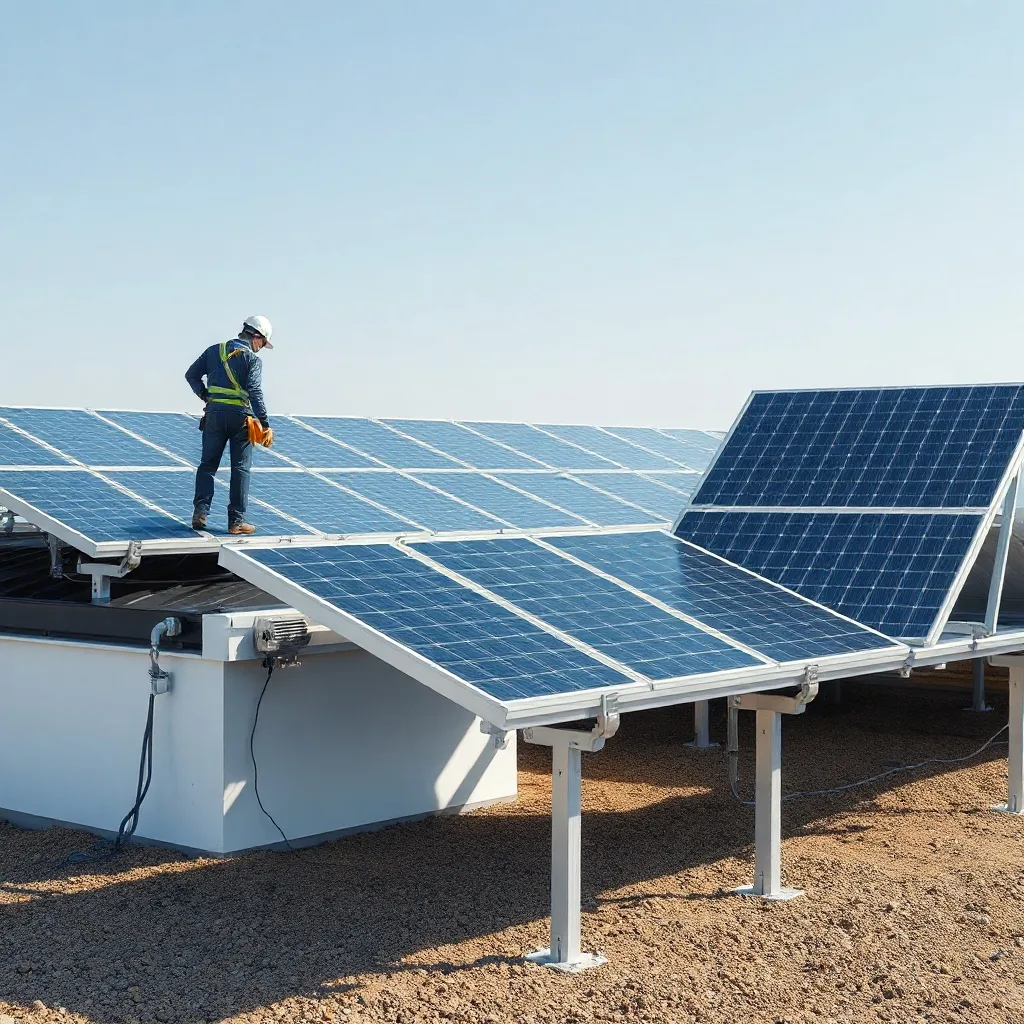
Solar mounting systems do far more than hold photovoltaic modules in place. They determine how safely an array handles wind, snow, rain, corrosion, and decades of temperature changes. A poor mounting decision can reduce energy output, damage a roof, or create avoidable structural risks.
Modern systems include rooftop racks, ground-mounted frames, pole mounts, trackers, and specialized structures for flat roofs or solar carports. Each solution must match the installation site, module dimensions, local climate, and building requirements.
A reliable design also balances cost with long-term performance. Panel orientation, tilt, ventilation, roof penetrations, material compatibility, and maintenance access all influence whether the installation remains productive over its expected 25 to 30-year service life.
Fundamental Concepts and Definitions
Solar mounting systems are structural assemblies that secure photovoltaic modules to roofs, land, poles, or purpose-built surfaces. A typical system uses rails, clamps, brackets, fasteners, flashing, foundations, or ballast. These components transfer environmental loads from the panels to the supporting structure.
Fixed-tilt mounts hold modules at a permanent angle. They are common because they contain few moving parts, require limited maintenance, and work for residential and commercial projects. The selected tilt often reflects latitude, seasonal production goals, roof geometry, and drainage requirements. Understanding [solar panel efficiency] also helps designers evaluate how orientation, heat, and shading affect output.
Rooftop racking connects an array to a sloped or flat roof. On sloped roofs, attachments usually penetrate structural rafters or trusses. Proper flashing and sealant protect those penetrations from water. Installers must also consult a [roofing materials guide], since asphalt shingles, standing-seam metal, tile, and membrane roofs require different attachment methods.
Ground mounts place panels on steel or aluminum frames supported by driven piles, ground screws, concrete footings, or ballasted foundations. They provide greater freedom over tilt and orientation than most roofs. However, they require suitable land, geotechnical assessment, trenching, and protection from vegetation or accidental impact.
Tracking mounts move modules to follow the sun. Single-axis trackers typically rotate from east to west and can increase annual production in suitable locations. The gain varies with latitude, terrain, weather, and the ratio of direct to diffuse sunlight. Their moving components also introduce additional costs and maintenance requirements.
Aluminum is widely used for rails because it is lightweight and corrosion resistant. Stainless steel is common for fasteners and hardware. Galvanized steel provides high structural strength in many ground-mounted systems. Engineers must prevent incompatible metals from creating galvanic corrosion, especially in wet or coastal environments.
Structural loading is another essential concept. Mounts must resist uplift, downward pressure, sliding, and twisting caused by wind. Snow loads can add substantial weight, while seismic forces matter in earthquake-prone regions. Local building codes and site-specific engineering determine the required attachment spacing, foundation depth, and component strength.
Choosing the Right Solar Mounting System
The roof or land available usually narrows the choice first. A structurally sound, unshaded roof may support a compact rooftop array without occupying extra property. A weak, shaded, or poorly oriented roof can make [ground-mounted solar arrays] the more practical option, provided the site has enough open space.
Sloped-roof systems generally use rails attached to rafters or another approved structural member. Rail-based racking is flexible and familiar to many installers. Rail-less systems use fewer long components and can reduce material use, but they require precise alignment because each attachment helps establish the module plane.
Standing-seam metal roofs may accept non-penetrating clamps that grip the seams. This method can preserve the roof membrane when the roof manufacturer approves the clamp. Corrugated or exposed-fastener metal roofs normally need attachments designed for their profiles and structural supports.
Tile roofs require extra care. Installers may use replacement flashing tiles, hooks, or approved brackets. Tiles should not carry structural loads because they can crack under pressure. The mounting hardware must transfer forces to the roof structure while maintaining weather protection.
Flat commercial roofs often use ballasted systems. Concrete blocks or other engineered weights hold the array in place with few roof penetrations. Although this sounds simple, excessive ballast can overload the building. Wind exposure, roof height, edge zones, membrane compatibility, drainage, and friction must all be included in the engineering review.
Ground-mounted systems work well when owners need easier cleaning, flexible orientation, or room for future expansion. Fixed frames are relatively straightforward, while trackers can produce more electricity from the same module capacity. A tracker is not automatically the better investment, however. Added production must justify its motors, controls, foundations, and maintenance.
Site conditions influence foundation design. Driven piles can be economical in suitable soil, while ground screws may help on uneven sites or where removal could be required later. Concrete foundations may be appropriate for weak soil or unusual loads. A geotechnical investigation can reveal rock, expansive clay, groundwater, and corrosion concerns before construction begins.
Orientation and spacing affect both output and land use. In the Northern Hemisphere, south-facing modules often maximize annual generation, although east-west layouts may better match morning and afternoon demand. Rows must be separated enough to control inter-row shading during low winter sun angles.
Solar racking has evolved alongside module technology. Early photovoltaic projects often relied on customized steel frames. Standardized rails, clamps, flashing products, and modular ground systems later reduced installation time. Current designs increasingly favor preassembled parts, shared structural components, bifacial compatibility, and faster wire management.
The final selection should consider total lifecycle value rather than hardware price alone. Labor, engineering, roof repairs, corrosion protection, vegetation control, replacement parts, and energy production can matter more than a small difference in initial racking cost. Local rules covered by the [solar permitting process] may also limit setbacks, array height, attachment methods, or fire-access pathways.
Expert Recommendations and Practical Tips
– Verify structural capacity early: a qualified professional should confirm that the roof, framing, soil, or foundation can support dead loads and environmental forces.
– Use site-specific wind and snow data: generic assumptions may underestimate corner uplift, drifting snow, high-altitude exposure, or coastal storm conditions.
– Match attachments to the surface: hardware approved for one roof covering may be unsuitable for tile, membrane, corrugated metal, or standing-seam construction.
– Locate structural members accurately: roof attachments should connect to rafters, trusses, purlins, or other approved supports rather than relying only on roof decking.
– Protect every penetration: compatible flashing should direct water away from the opening, while sealants should serve as secondary protection instead of the only barrier.
– Confirm module compatibility: clamps must fit the module frame, remain inside manufacturer-approved clamping zones, and meet the required torque specification.
– Maintain drainage and ventilation: adequate clearance helps rainwater flow, limits debris accumulation, and allows air to cool the back of the modules.
– Control corrosion risks: designers should select compatible metals and appropriate coatings for humid, industrial, agricultural, or salt-air environments.
– Plan cable management with the racking: conductors should not touch sharp edges, rest on the roof, hang loosely, or remain exposed to unnecessary sunlight and movement.
– Include safe maintenance access: technicians need practical routes for inspection, cleaning, electrical testing, vegetation control, and emergency response.
– Avoid unnecessary roof loads: tools, stacked modules, ballast, and workers can create temporary concentrated loads that exceed normal operating conditions.
– Document torque values and attachment locations: installation records make inspections easier and help future technicians understand how the system was assembled.
– Coordinate with the roof warranty provider: unauthorized penetrations or incompatible products may affect coverage, especially on commercial membrane roofs.
– Review shading across the entire year: nearby trees, chimneys, parapets, neighboring buildings, and future construction can change expected production.
– Inspect the finished installation: a structured review should check fasteners, flashing, clamps, bonding, wire supports, row alignment, and required setbacks.
– Establish a maintenance schedule: owners can use a [solar maintenance checklist] to monitor loose hardware, corrosion, vegetation, drainage, and signs of water intrusion.
One frequent mistake is selecting a mount based only on appearance or price. A low-cost rack can become expensive if installation takes longer, specialized tools are required, or replacement parts are difficult to obtain.
Another error involves mixing components from different manufacturers without engineering approval. Rails, clamps, splices, and fasteners form a tested structural system. Substituting apparently similar hardware may change load capacity, electrical bonding, corrosion resistance, or warranty coverage.
Overtightening fasteners is equally risky. Excessive torque can deform module frames, damage roof materials, strip threads, or weaken connections. Insufficient torque may allow movement. Calibrated tools and documented specifications provide a more dependable result than judgment by feel.
Frequently Asked Questions
What is the best solar mounting system for a house?
There is no universal best option. The right system depends on roof condition, material, slope, orientation, structural capacity, shading, wind exposure, and local regulations.
A conventional rail-based system is often practical for asphalt-shingle roofs. Standing-seam metal roofs may support approved seam clamps, while tile roofs need specialized hooks or replacement flashing products. If the roof is unsuitable, a ground mount may offer better access and orientation.
Do solar mounting systems damage roofs?
A properly designed and installed system should not damage a sound roof. Problems usually result from missed structural members, broken tiles, poor flashing, incompatible sealants, excessive loading, or careless foot traffic.
Roof condition should be inspected before installation. If replacement will be needed soon, completing that work first can prevent the cost of removing and reinstalling the array.
How long does solar racking last?
Quality racking is generally designed to serve for the operating life of the photovoltaic system, often 25 years or longer. Actual durability depends on material quality, coatings, environmental exposure, installation accuracy, and maintenance.
Coastal salt, agricultural ammonia, industrial pollution, and standing water can accelerate corrosion. Periodic inspections help identify loose components, coating damage, or material reactions before they become structural concerns.
What tilt angle should solar panels use?
The best angle depends on latitude, roof shape, shading, energy-use patterns, and seasonal priorities. An angle near local latitude may provide balanced annual output in some fixed installations, but it is not a universal rule.
Commercial flat-roof arrays often use lower tilt angles to reduce wind loads and fit more modules on the available area. Steeper angles can improve winter production and snow shedding but may require wider row spacing.
Are ground-mounted panels better than rooftop panels?
Ground-mounted panels offer design flexibility, easier maintenance, and better opportunities for ideal orientation. They may also allow higher airflow around modules, which can support performance in hot weather.
Rooftop systems conserve land and often require shorter electrical runs. They can be more economical when the roof is structurally suitable and receives strong sunlight. The better option depends on site limitations and lifecycle cost.
Do mounting systems need electrical grounding?
Metal racking and module frames generally require approved bonding and grounding methods under applicable electrical codes. Listed clamps, bonding jumpers, grounding lugs, and compatible hardware can create a continuous electrical path.
Requirements vary by jurisdiction and equipment design. A qualified installer should follow the module, inverter, and racking manufacturers’ instructions together with current electrical regulations.
Can solar panels withstand strong winds?
Engineered photovoltaic arrays can withstand significant wind forces when the racking, attachments, modules, and supporting structure are correctly designed. Wind resistance is not determined by panel strength alone.
Roof edges and corners often experience higher uplift than central areas. Attachment spacing may therefore change across an array. Exposed hills, coastal sites, tall buildings, and hurricane regions require particularly careful calculations.
How much do solar mounting systems cost?
Cost varies according to system type, roof material, engineering requirements, labor rates, foundations, terrain, and wind or snow loads. Residential rooftop racking is usually a smaller portion of the overall solar project cost, while tracker foundations can represent a substantial investment.
The lowest initial quote is not always the least expensive choice. Owners should compare warranties, installation labor, expected maintenance, structural documentation, and long-term energy production.
Conclusion
Solar mounting systems are a structural foundation for reliable photovoltaic generation. Their role extends beyond holding modules at an attractive angle. They protect roofs, resist environmental loads, support electrical safety, and influence how easily an array can be maintained.
A successful project begins with site assessment and ends with documented inspection. Roof condition, soil properties, wind, snow, drainage, corrosion, module specifications, and code requirements all deserve attention before hardware is selected.
When engineering and installation quality guide the decision, rooftop racks, fixed ground mounts, and trackers can all provide durable results. The most suitable system is the one that fits the site, protects the supporting structure, and delivers dependable energy throughout the array’s working life.
This is covered separately in our solar tracking systems.
Wiring routed across a roof needs as much planning as the racking itself. Our solar cable management guide covers routing, securing, and protecting DC runs.
Racking is one piece of the hardware picture; see the panels and hardware topic guide.
Related Posts
Leave a Comment
Your comment will be published after it has been approved. Please send comments that do not contain slang words.