
What Happens to Solar Panels After 25 Years?
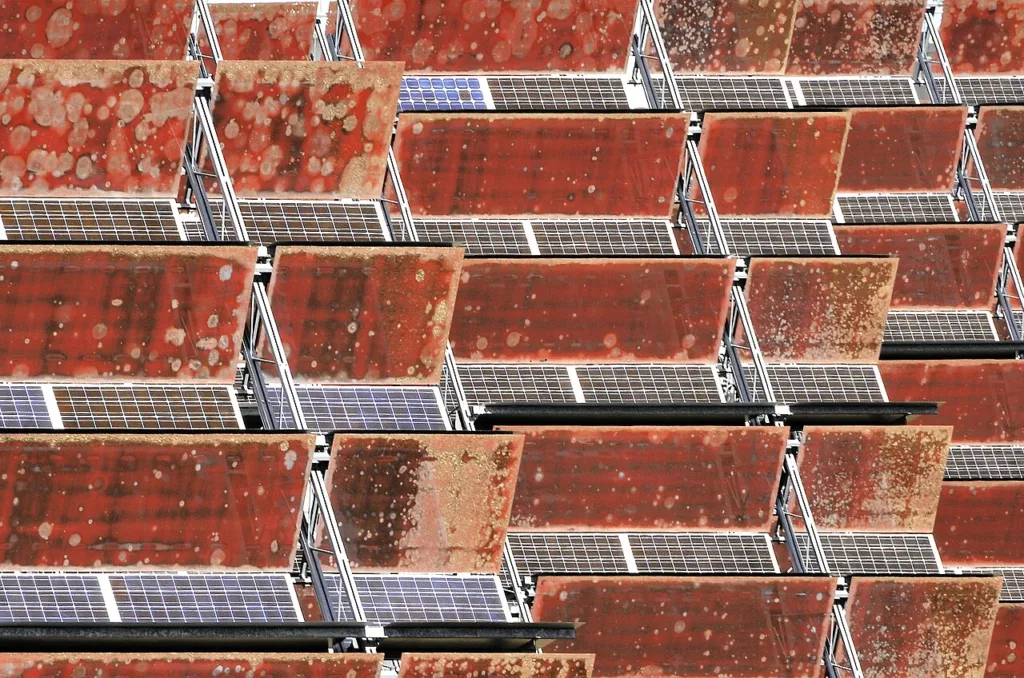
Quick answer: A twenty five year warranty is not an expiry date. Most panels keep producing well beyond it, typically at around eighty five to ninety percent of their original output. What ends is the manufacturer’s guarantee, not the physics. By then you will almost certainly have replaced the inverter at least once, and the real decision is whether to keep the array, repower it with new modules, or take it down.
What this guide covers
- What the 25-year warranty actually promises
- The degradation maths
- Expected output by year
- How panels actually fail with age
- The inverter goes first
- Keep, repower or remove
- Recycling and disposal
- Planning for it now
- FAQ
What the 25-year warranty actually promises
Panels carry two separate warranties, and confusing them causes most of the misunderstanding.
The product warranty covers defects in materials and workmanship. Terms vary widely, commonly from ten to twenty five years depending on the manufacturer and tier.
The performance warranty is the famous twenty five year one. It does not promise the panel will still work. It promises the panel will still produce at least a stated percentage of its rated output at year twenty five, often somewhere in the low to mid eighties.
Read that again, because it is the key point. The manufacturer is guaranteeing a floor, not an endpoint. A panel producing at eighty seven percent in year twenty six is performing normally, is simply out of warranty, and is worth keeping.
Our warranty claims guide explains how to actually use these documents when something does go wrong.
The degradation maths
Panels lose a small amount of output every year. The mechanism is gradual and well studied.
Long-running field studies have found a median degradation rate for crystalline silicon panels of roughly half a percent per year across a large sample of installations. Modern premium modules are typically warranted at lower rates, often around a quarter to four tenths of a percent annually after the first year.
Many panels also show a slightly larger drop in the first year, sometimes one to two percent, before settling into the slower long-term rate. That first-year settling is normal and is built into most warranty curves.
The arithmetic compounds. At half a percent per year, a panel retains roughly eighty eight percent of its output after twenty five years. At a quarter of a percent, it retains around ninety four percent.
Neither figure is a cliff. There is no mechanism that makes a panel stop at twenty five years. See degradation rates for the underlying detail.
Expected output by year
| Year | At 0.25 percent per year | At 0.50 percent per year | At 0.80 percent per year |
|---|---|---|---|
| 10 | About 97 percent | About 95 percent | About 92 percent |
| 15 | About 96 percent | About 93 percent | About 89 percent |
| 20 | About 95 percent | About 90 percent | About 85 percent |
| 25 | About 94 percent | About 88 percent | About 82 percent |
| 30 | About 93 percent | About 86 percent | About 79 percent |
These are smooth curves. Real arrays are lumpier, because individual panels fail at different times and shading changes as trees grow.
How panels actually fail with age
When a panel does fail, it is usually a materials problem rather than the silicon wearing out.
Backsheet degradation. The polymer layer on the rear of the panel can crack or chalk after long ultraviolet and heat exposure. Cracking allows moisture in, which is what actually kills the cell.
Encapsulant browning and delamination. The clear layer bonding the cells to the glass can discolour, reducing light transmission, or separate, letting moisture reach the cells.
Junction box and diode failure. The box on the back holds bypass diodes. Diodes fail, sometimes shorted, and the panel then loses a section of its output permanently.
Corrosion of interconnects. Moisture ingress corrodes the ribbons joining cells, raising resistance and creating hot spots.
Potential-induced degradation. A voltage-driven effect that can reduce output in certain string configurations. Modern modules and inverters largely mitigate it.
Microcrack propagation. Cracks from shipping, installation or hail can spread over years of thermal cycling.
Most of these are visible or detectable. An infrared scan and a panel-level production check will find the affected modules quickly.
The inverter goes first
Long before the panels become an issue, the inverter will need replacing.
String inverters typically carry warranties in the ten to twelve year range, sometimes extendable. Microinverters are commonly warranted for twenty five years, closer to the panels.
So a twenty five year old system has usually had at least one inverter replacement already. Budget for that as a normal running cost rather than a failure, and read inverter replacement cost for what it involves.
One practical warning. Replacing an inverter after twenty years may mean the original model is long discontinued. A modern replacement has to match the existing string voltages and current, which is not always straightforward. Keep the plan set, because a designer will need it.
Keep, repower or remove
At the end of the warranty period you have three realistic options.
Keep it. If the array still produces near its modelled curve and the roof is sound, this is usually the right answer. The energy is free, the equipment is paid for, and nothing needs doing.
Repower it. Replace the modules and reuse what you can. Panel efficiency has improved substantially, so newer modules can fit more capacity into the same roof area.
Repowering has a catch worth knowing early. Modern panels are physically larger and electrically different from twenty five year old ones. The existing racking may not accept them, and the wiring and code requirements will have changed. Treat repowering as a new installation that happens to reuse a roof, not as a swap.
Remove it. Sensible only if the roof needs replacing and you do not want solar afterwards, or if the array is genuinely failing. Removal leaves penetrations that must be sealed properly by a roofer.
One more consideration. If the system is on a legacy export tariff, changing it may end that arrangement. Check with the utility before repowering, because a grandfathered net metering agreement can be worth more than the extra output.
Recycling and disposal
A silicon panel is mostly glass and aluminium by weight, with smaller amounts of silicon, copper, silver and polymer.
Technically, most of that mass is recyclable. The glass and the frame are straightforward. Recovering the silicon and the silver is harder, because the layers are laminated together deliberately to survive decades of weather.
The economics are the real constraint. In many places recycling a panel costs more than sending it to landfill, which is why collection volumes have lagged behind what is technically possible.
Policy is moving. The European Union treats panels as electronic waste with producer take-back obligations. In the United States the picture is a patchwork, with some states introducing their own rules while others have none. Several manufacturers and installers now operate voluntary take-back schemes.
Practical advice for a homeowner. Ask your installer whether they take modules back. Check your state’s rules before assuming landfill is legal. Consider the second-hand market, since a working panel at eighty five percent output still has value to someone building an off-grid shed. Our guide to panel recycling technology covers the processes in more depth.
Planning for it now
Three habits make the twenty five year decision easy when it arrives.
Keep the paperwork. Plan set, equipment models, serial numbers, warranty certificates and the interconnection agreement. A future designer will need all of it.
Keep the data. Export your production history periodically. Monitoring platforms get retired, and a system without history is hard to value or diagnose.
Sync the roof. If the roof will need replacing during the array’s life, do it before the panels go on, or plan for a removal and reinstall cycle.
Do those three things and a twenty five year old system is an asset with a known condition, not a mystery on your roof.
FAQ
Do solar panels stop working after 25 years?
No. The performance warranty ends, but panels typically keep producing at roughly eighty five to ninety percent of their original output and continue past that.
How much output will I have lost by year 25?
Usually between six and eighteen percent, depending on the module’s degradation rate and the climate.
What fails first on a solar system?
Almost always the inverter. String inverters are commonly warranted for ten to twelve years and are normally replaced at least once.
Is it worth replacing old panels with new ones?
Sometimes. Newer panels fit more capacity into the same area, but racking, wiring and code requirements will have changed, so treat it as a new installation.
Can solar panels be recycled?
Technically yes, and most of the mass is glass and aluminium. The barrier is cost rather than chemistry, and collection infrastructure varies a lot by region.
Will replacing my panels affect net metering?
It can. Modifying a system sometimes ends a legacy export arrangement. Ask the utility before you commit.
What should I do with panels that still work?
Sell or donate them. A module at eighty five percent output is useful for sheds, cabins and off-grid projects.
Where to go next
Read degradation rates for the underlying research, performance diagnosis if output has dropped suddenly, and panel brands if you are comparing warranty terms before buying.
Long-term field degradation research is published by the National Renewable Energy Laboratory, with end-of-life guidance from the U.S. Department of Energy.
Related Posts
Leave a Comment
Your comment will be published after it has been approved. Please send comments that do not contain slang words.