
Essential Installation Parts

The essential installation parts of a solar system are the panels, the inverter, the mounting structure, the DC and AC wiring, the disconnects and overcurrent protection, the grounding system, the meter and the monitoring gateway. Panels get the attention, but roughly half of a residential system’s cost and most of its failures sit in everything else. This guide lists each part, explains what it does, gives the specification points that matter, and flags the items that most often fail inspection or cause faults later.
Table of Contents
- The Parts List at a Glance
- Generation: Panels and Inverters
- Structure: Racking, Rails and Roof Attachments
- Wiring, Connectors and Conduit
- Protection: Disconnects, Fuses, Breakers and Grounding
- Metering, Monitoring and Storage Add-Ons
- FAQ
The Parts List at a Glance
A grid-tied solar system has about a dozen categories of parts. The table shows each one, its job and the specification detail to check when comparing quotes.
| Part | What it does | Specification points to check |
|---|---|---|
| Solar panels | Convert sunlight to DC electricity | Wattage, efficiency, temperature coefficient, product and performance warranty length |
| Inverter (string, micro or hybrid) | Converts DC to grid-synchronised AC | Rated AC output, MPPT inputs and voltage window, efficiency, rapid-shutdown compliance, warranty |
| DC optimisers (optional) | Per-panel power tracking and shutdown | Compatibility with the inverter, maximum panel wattage |
| Racking and rails | Hold panels at the chosen tilt and orientation | Aluminium or steel, wind and snow load rating, corrosion class |
| Roof attachments and flashings | Anchor rails to rafters without leaks | Flashing type for the roof material, lag bolt size, spacing |
| PV wire and cable | Carry DC from panels to inverter | Sunlight and wet rated, 90 °C or higher, correct gauge for the run |
| Connectors | Join panel leads and extensions | Same brand as panel leads or listed as compatible |
| Combiner box (larger systems) | Merge strings with fusing | Fuse size per string, NEMA outdoor rating |
| DC and AC disconnects | Isolate the system for service and emergencies | Rated voltage and current, lockable, labelled, visible location |
| Overcurrent protection | Fuses and breakers that clear faults | Correct size for cable ampacity; backfeed breaker rating for the main panel |
| Grounding and bonding hardware | Keep metal parts at earth potential and provide a fault path | Listed lugs and clips, continuous bonding across rails and frames |
| Rapid shutdown device | De-energise rooftop conductors when the system is switched off | Required by recent codes in most of the U.S. |
| Meter and monitoring gateway | Measure production; report faults | Net meter from the utility; gateway compatible with the inverter |
| Battery and gateway (optional) | Store energy; island the house | Usable kWh, power rating, listed to the applicable safety standard, backup gateway |
The U.S. Department of Energy’s PV system design basics describes these components as the “balance of system” and notes that their design determines how much of the panels’ rated output actually reaches your home.
Generation: Panels and Inverters
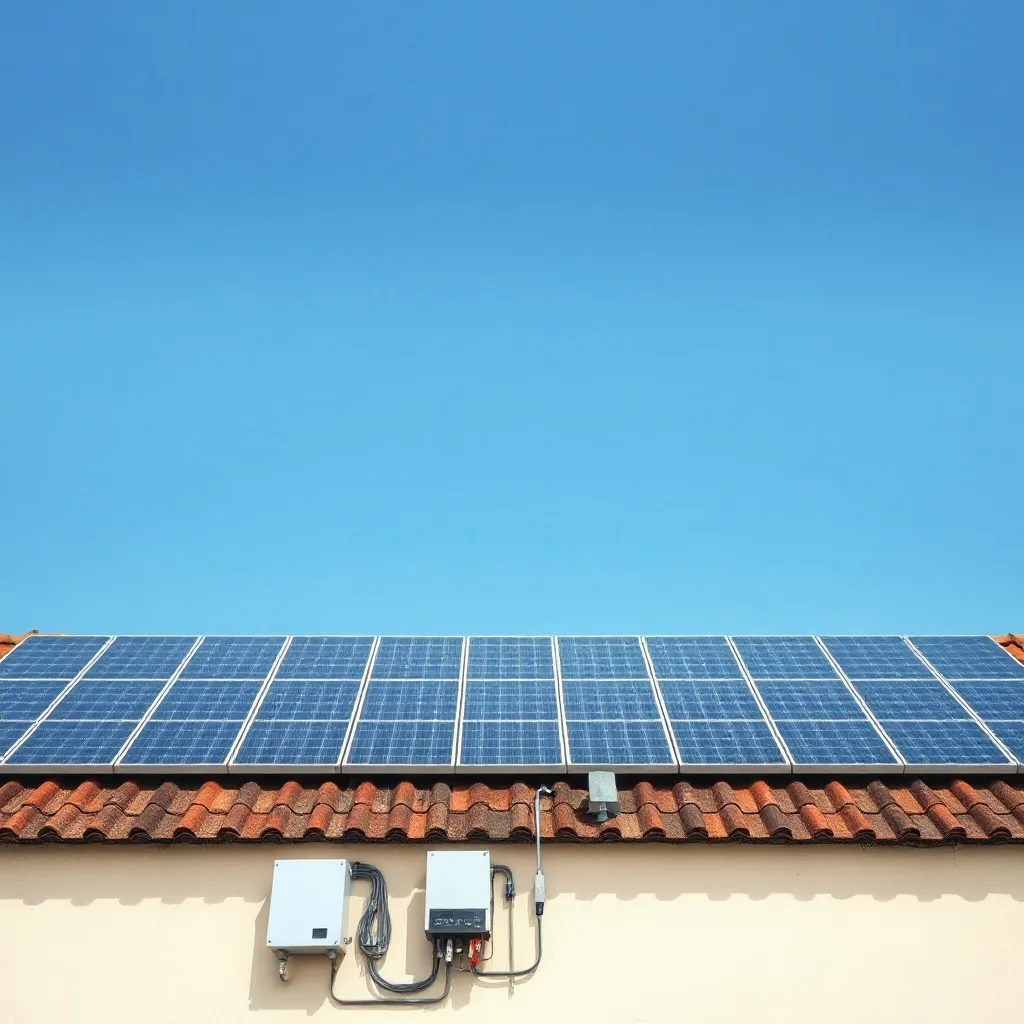
Panels and inverters are the two parts most people compare, and the inverter decision shapes the rest of the parts list. A string inverter needs combiner-level fusing, rapid-shutdown devices and larger DC conductors. Microinverters replace all of that with an AC trunk cable and put the electronics on the roof. Hybrid inverters add a battery port and a backup gateway.
Points to check on panels: rated wattage at standard test conditions, the temperature coefficient (how much output falls as the panel heats), and the two warranties, product (typically 12 to 25 years) and performance (a guaranteed output after 25 years). Check that the panel’s open-circuit voltage and short-circuit current fit the inverter’s input window; how many panels can safely go in series is worked out in our solar string sizing guide.
Points to check on inverters: rated AC output relative to the array size (a DC-to-AC ratio around 1.1 to 1.3 is common), number of MPPT inputs for roofs with more than one orientation, and rapid-shutdown compliance. Efficiency differences between reputable brands are small; warranty length and local service support matter more over 25 years.
Structure: Racking, Rails and Roof Attachments
The mounting system holds the panels for 25 years and is where roof leaks come from, so it deserves more scrutiny than it usually gets. The parts are:
- Roof attachments. Lag-bolted feet, hooks for tile roofs, or clamps for standing-seam metal. Each needs a flashing or sealing method suited to the roof material. Spacing follows the rail maker’s span tables for your wind and snow zone.
- Rails. Aluminium extrusions that carry the panels. Rail-less systems attach panels directly to feet and save material, but they need more attachment points.
- Mid and end clamps. Hold panel frames to the rails; many also provide the electrical bond between panel frame and rail, which removes the need for separate bonding jumpers.
- Ground-mount hardware. Driven piles, helical piles or ballasted concrete for ground arrays; taller structures for carports.
Ask for the structural calculation or the rail maker’s engineering letter for your roof type and load zone. It is the document the building inspector will want, and it tells you whether the attachment spacing on the quote is right.
Wiring, Connectors and Conduit
The DC side of a solar system uses purpose-made wire because ordinary building cable is not rated for sunlight, wet conditions and the temperatures behind a panel. PV wire is typically sunlight-resistant, wet-rated and rated to 90 °C or more. The gauge is chosen for the string current with a safety margin and for acceptable voltage drop over the run, commonly 4 or 6 mm² (12 or 10 AWG) on residential strings.
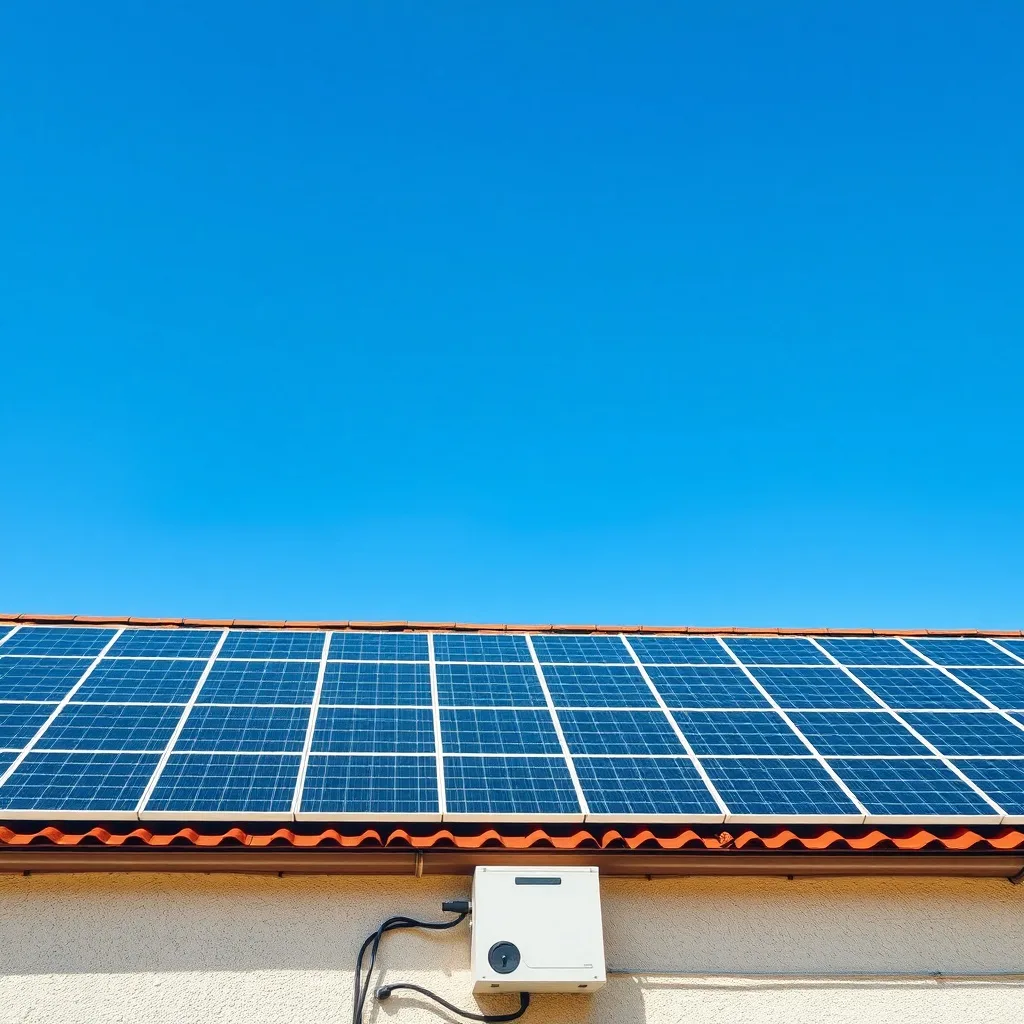
Connectors are the small part with an outsized failure rate. Use the same brand as the panel leads or a pairing the manufacturers list as compatible, crimp with the maker’s tool, and never connect or disconnect under load. The types and their pitfalls are covered in our guide to solar connector types.
Once conductors leave the array they run in conduit: metal conduit where the run enters the building, and outdoor-rated conduit or cable trays elsewhere. Conduit fills, bending radius and expansion joints on long exterior runs are inspection items. On the AC side, the inverter output runs through an AC disconnect to a backfeed breaker in the main panel, sized to a rule that limits the total of the main breaker and the solar breaker relative to the busbar rating. If the busbar cannot accept the solar breaker, a line-side tap or a panel upgrade is needed; that is a common hidden cost.
Protection: Disconnects, Fuses, Breakers and Grounding
Protection parts are what inspectors and firefighters care about. Their job is to let anyone isolate the system, to clear faults before they start fires, and to keep exposed metal safe to touch.
- DC disconnect. A lockable switch between the array and the inverter. Many inverters integrate one; some jurisdictions still require a separate visible unit.
- AC disconnect. A visible, lockable switch near the meter so the utility can isolate the system. Placement rules vary by utility.
- String fuses or breakers. Required when three or more strings are paralleled, sized to the panel’s maximum series fuse rating.
- Backfeed breaker. The breaker in the main panel that connects the inverter; its size, position at the opposite end of the busbar from the main, and labelling are all inspected.
- Rapid shutdown. Module-level or string-level devices that bring rooftop conductors to a safe voltage within seconds of switching off. Microinverters and optimisers satisfy this by design.
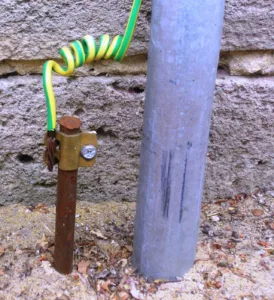
- Grounding electrode and bonding. Every metal part, from panel frames to rails to the inverter chassis, is bonded together and connected to the building’s grounding system through listed lugs and clips. Missing or improvised bonding is one of the most common inspection failures, as detailed in our grounding and bonding guide.
- Surge protection. Surge devices on the DC and AC sides protect the inverter from lightning-induced surges; increasingly required and always sensible in storm-prone areas.
- Labels. Code-specified warning and directory labels at the disconnects, the meter and the main panel. Cheap, and their absence fails inspections.
Metering, Monitoring and Storage Add-Ons
The last group of parts measures what the system does and, optionally, stores it. The utility supplies a bidirectional net meter after permission to operate is granted. The inverter maker supplies a monitoring gateway or built-in Wi-Fi that reports production and faults to an app; if the inverter’s monitoring does not include consumption, a pair of current clamps on the main feed adds it.
Adding a battery brings its own parts: the battery modules, a hybrid or battery inverter, a backup gateway or transfer switch that isolates the house from the grid during an outage, a critical-loads sub-panel if the whole house is not backed up, and the safety listing and spacing the local code requires. These items add both hardware and permitting time.
The non-hardware items, permitting, inspection, interconnection paperwork and labour, are often a larger share of the price than any single component. The DOE’s solar soft costs basics explains why. When comparing quotes, ask for the parts list with brands and models, then compare the installation scope line by line. The rest of the hardware topic is collected in our solar components and hardware topic guide.
FAQ
What are the main parts of a solar panel installation?
Panels, an inverter, racking and roof attachments, PV wire and connectors, DC and AC disconnects, overcurrent protection, grounding and bonding hardware, a rapid-shutdown system, a net meter and a monitoring gateway.
What is “balance of system” in solar?
Everything except the panels: inverter, mounting, wiring, protection, metering and monitoring. It accounts for a large share of cost and most installation faults.
Do I need a separate DC disconnect?
Many inverters include one, but some jurisdictions and utilities require a separate visible, lockable switch. Check local rules before buying.
What size wire is used for solar panels?
Residential strings commonly use 4 or 6 mm² (12 or 10 AWG) sunlight- and wet-rated PV wire, sized for string current with a safety margin and for acceptable voltage drop.
What is rapid shutdown and is it required?
A system that de-energises rooftop conductors within seconds of switching off, for firefighter safety. Recent electrical codes in most U.S. jurisdictions require it; microinverters and optimisers comply by design.
Why do quotes for the same panels differ so much?
Because the rest of the parts list and the installation scope differ: inverter type, racking quality, electrical upgrades, permitting and labour. Compare the full parts list, not just the panel brand.
Related Posts

Leave a Comment
Your comment will be published after it has been approved. Please send comments that do not contain slang words.