
Perovskite Solar Cells Explained
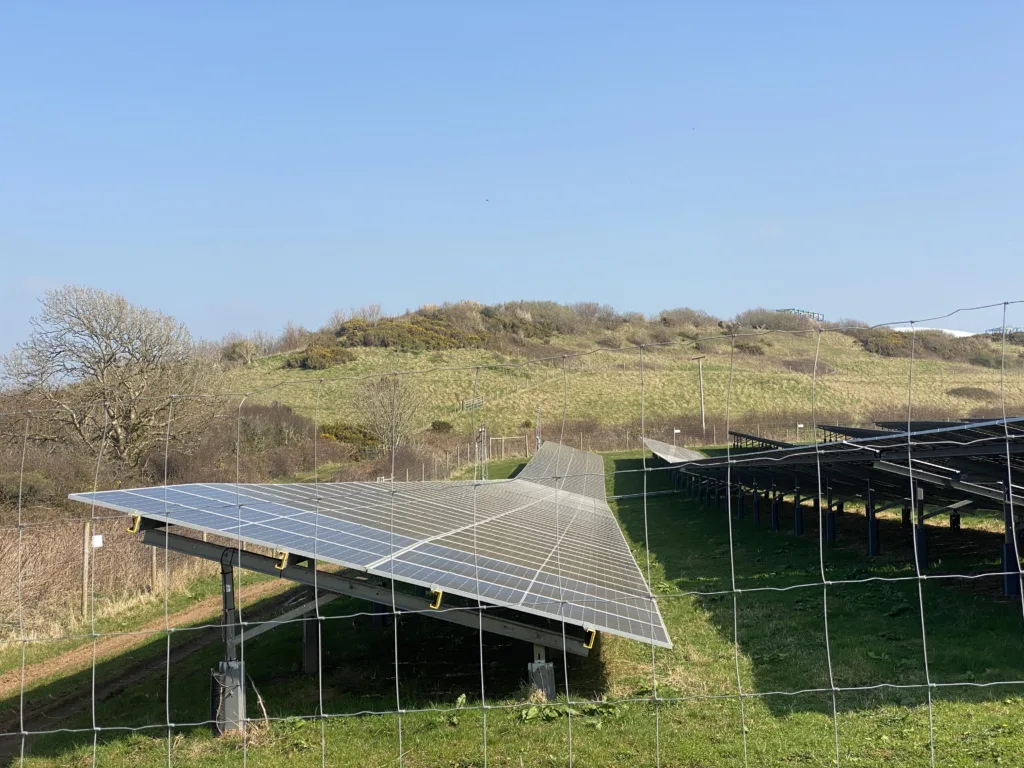
Perovskite solar cells are the technology generating the most genuine research excitement in photovoltaics right now – a crystal structure that can be layered on top of traditional silicon to capture more of the light spectrum, with lab efficiencies well above single-junction silicon alone. They are also, as of 2026, not yet a mainstream residential rooftop product, and understanding exactly where the technology stands helps separate real near-term relevance from research-stage hype.
This guide explains what perovskite cells actually are. It covers why tandem perovskite-silicon designs are the practical near-term path rather than pure perovskite panels. It covers the durability challenge that has been the main barrier to commercialization. It also gives a realistic timeline for when this might affect an actual purchase decision.
Table of Contents
- What Perovskite Solar Cells Actually Are
- Why Tandem Design Is the Practical Path
- Efficiency Numbers in Context
- The Durability Challenge
- Manufacturing and Commercialization Status
- Perovskite-Tandem vs. Current Silicon Technology
- A Realistic Timeline
- Research Landscape and Key Players
- How to Track This Technology
- Cost Implications Once Commercialized
- Other Emerging PV Technologies
- Common Mistakes When Following This Technology
- Frequently Asked Questions
What Perovskite Solar Cells Actually Are
Perovskites are a class of crystal-structured materials, named for their structural similarity to the mineral perovskite rather than their chemical composition. They can be manufactured into thin films that absorb sunlight and generate electricity. That function is similar to silicon, but the material properties are fundamentally different. They can be manufactured using lower-temperature processes than traditional silicon cells, which is part of the cost-reduction appeal. Their light-absorption characteristics also complement silicon rather than simply duplicating it. That is exactly why pairing the two in a tandem design is more promising than either material alone.
Why Tandem Design Is the Practical Path
A perovskite-silicon tandem cell stacks a perovskite layer on top of a conventional silicon cell. The perovskite layer absorbs higher-energy, shorter-wavelength light. The silicon layer beneath captures lower-energy light that passes through. Together they capture more of the usable solar spectrum than either material alone. Nearly all near-term commercialization effort focuses on this tandem approach rather than pure perovskite panels. It builds on existing silicon manufacturing infrastructure. It does not require an entirely new production paradigm.
Efficiency Numbers in Context
Lab-record perovskite-silicon tandem cells have demonstrated efficiencies meaningfully above the roughly 22-24% ceiling of current best commercial single-junction silicon panels – some lab results have exceeded 33%. It is important to distinguish lab-record numbers from shipped-product performance. Records are achieved on small research cells under controlled conditions. A commercially manufactured, full-size panel delivers less in the field. This gap is normal for any emerging PV technology, and it has historically taken years to close.
The Durability Challenge
Long-term durability has been the primary barrier keeping perovskite-tandem cells from broad commercial residential deployment. Perovskite materials have historically been more sensitive to moisture, heat, and UV exposure than silicon. Demonstrating 25-year field reliability, matching the standard silicon panel warranty expectation, takes a long time to prove by definition. Manufacturers have made substantial progress on encapsulation and material stability in recent years. This still remains the key technical question. It determines when, not if, tandem panels become a mainstream product with warranties comparable to today’s silicon.
Manufacturing and Commercialization Status
Several manufacturers moved from pure lab research into pilot-scale and early commercial production of perovskite-tandem panels during the mid-2020s. Early product announcements and limited deployments have followed in some markets. This represents genuine progress beyond pure research. But pilot-scale production is a meaningfully earlier stage than the mature, high-volume manufacturing current silicon panels benefit from. Expect continued gradual scale-up rather than an overnight mainstream shift.
Perovskite-Tandem vs. Current Silicon Technology
| Factor | Current Silicon (TOPCon/HJT) | Perovskite-Tandem |
|---|---|---|
| Commercial availability | Widely available, mature supply chain | Early pilot/limited commercial production |
| Typical efficiency | 21-24% commercial | Lab records above 30%; commercial product efficiency still emerging |
| Field-proven durability | 25+ years, extensively field-tested | Still being established; the key open question |
| Warranty length available | Up to 25 years, well-established | Shorter or more limited where available at all |
A Realistic Timeline
Based on typical PV technology commercialization patterns and current pilot-production status, perovskite-tandem panels reaching broad residential availability with warranty terms comparable to today’s silicon panels is more realistically a multi-year horizon than an imminent shift – see our clean energy technology trends guide for how this fits into the broader technology landscape and why waiting for it is generally not the right call for a near-term buying decision.
Research Landscape and Key Players
Perovskite-tandem work spans several kinds of players. Established solar manufacturers are adding tandem product lines to their existing silicon manufacturing base. Dedicated startups have been founded specifically around perovskite technology. Heavy academic and national-lab research continues alongside, with NREL in the US and various European and Asian research institutions all publishing significant efficiency-record results. This broad, multi-front investment is itself a signal of genuine technical promise rather than one company’s marketing claim. It also means the pace of progress varies depending on whose announcement you are reading. Record lab results do not always come from the same groups pursuing commercial-scale manufacturing.
How to Track This Technology Without Getting Misled
| Signal | What It Actually Means |
|---|---|
| New lab efficiency record announced | Research progress – interesting, not evidence of near-term product availability |
| Company announces pilot production line | Meaningful step toward commercialization, still pre-mass-market |
| Company announces first commercial product shipping | Real availability, but check warranty terms and independent field-durability data specifically |
| Independent third-party certification of field durability | The strongest signal the technology has crossed from promising to genuinely proven |
The more reliable trigger for reconsidering purchase timing is the last row: independent, field-proven durability certification comparable to what silicon panels already have. Any single efficiency-record headline is a much weaker signal.
Cost Implications Once Commercialized
The theoretical cost appeal of perovskite-tandem technology comes from higher power output per panel, meaning more watts from the same physical footprint and a similar manufacturing base. It does not come from a fundamentally cheaper manufacturing process, at least at first. Early commercial tandem products are likely to carry a price premium over standard silicon panels while manufacturing scales. Most new PV technologies have entered the market at a premium before costs declined with volume. Whether that premium is worth it depends on the specific buyer. Higher efficiency per square foot has the most value where space is constrained. A buyer with ample roof space has no reason to pay extra for efficiency they do not need.
Other Emerging PV Technologies Worth Knowing
Perovskite-tandem is the most heavily invested emerging PV technology, but it is not the only one worth knowing as context. CIGS, or copper indium gallium selenide, is a thin-film technology. It has been in limited commercial use for specialized applications for years without displacing silicon broadly. Organic photovoltaics remain largely research-stage with efficiency well behind silicon. And quantum dot solar cells remain an earlier-stage research direction. None of these are positioned to affect a near-term buying decision the way perovskite-tandem eventually might. They are included mainly to give perovskite’s relative maturity proper context within the broader emerging-PV landscape.
Common Mistakes When Following This Technology
- Confusing lab-record efficiency with commercial-product efficiency – the gap is normal and can take years to close.
- Delaying a near-term solar purchase to wait for perovskite panels – current silicon technology is mature and financially sound today.
- Assuming “perovskite” always means pure perovskite panels – nearly all near-term commercial focus is tandem (perovskite-on-silicon), not pure perovskite.
- Treating pilot-scale production announcements as evidence of imminent mainstream availability – pilot scale and mature mass manufacturing are meaningfully different stages.
Frequently Asked Questions
Can I buy perovskite solar panels today?
Very limited commercial availability as of the mid-2020s, mostly pilot-scale or early product launches in specific markets – not yet a mainstream option most homeowners can simply order from a typical installer.
Should I wait for perovskite panels instead of buying silicon panels now?
Generally no for most buyers – current mature silicon technology (TOPCon, HJT) is well-warrantied and financially attractive today, while perovskite-tandem panels remain a multi-year horizon from matching that warranty confidence.
Why haven’t perovskite panels replaced silicon panels yet if they’re more efficient?
Primarily durability – perovskite materials have historically been more sensitive to moisture, heat, and UV than silicon, and proving 25-year field reliability takes years. Manufacturing scale-up is also still in early stages.
What is a perovskite-silicon tandem cell?
A cell that stacks a perovskite layer on top of conventional silicon, letting each layer capture a different part of the light spectrum – this combined approach is the practical near-term commercialization path, not pure perovskite panels.
Are perovskite panels more environmentally friendly to manufacture?
Potentially – lower manufacturing temperatures are part of the appeal – but full lifecycle environmental comparison (including any material toxicity and end-of-life recycling considerations, some perovskite formulations use lead) is still an active area of research, not a settled advantage.
Will perovskite-tandem panels be cheaper than silicon panels?
Not initially – early commercial products are likely to carry a price premium reflecting higher output per panel and early-stage manufacturing scale, similar to how most new PV technologies have entered the market before costs declined with volume.
Are there other emerging solar technologies besides perovskite worth knowing about?
CIGS thin-film, organic photovoltaics, and quantum dot cells are all research or niche-commercial technologies, but none are as close to broad residential relevance as perovskite-tandem currently is.
Conclusion
Perovskite-tandem solar cells represent genuine, well-funded progress toward higher-efficiency panels. They remain a multi-year horizon from a mature, widely available, fully warrantied product. For most buyers today, waiting for them is not the right call. See our best solar panel brands guide for what to actually buy now, and our technology trends guide for the broader context this fits into.
Further reading: NREL – Perovskite Solar Cells Research and Wikipedia – Perovskite solar cell.
We take this further in our MC4 connectors explained. See our tandem solar cells guide for how this plays out in practice.
Related Posts

Leave a Comment
Your comment will be published after it has been approved. Please send comments that do not contain slang words.