
Greenhouse Solar Power: Where to Put Panels Without Starving the Plants
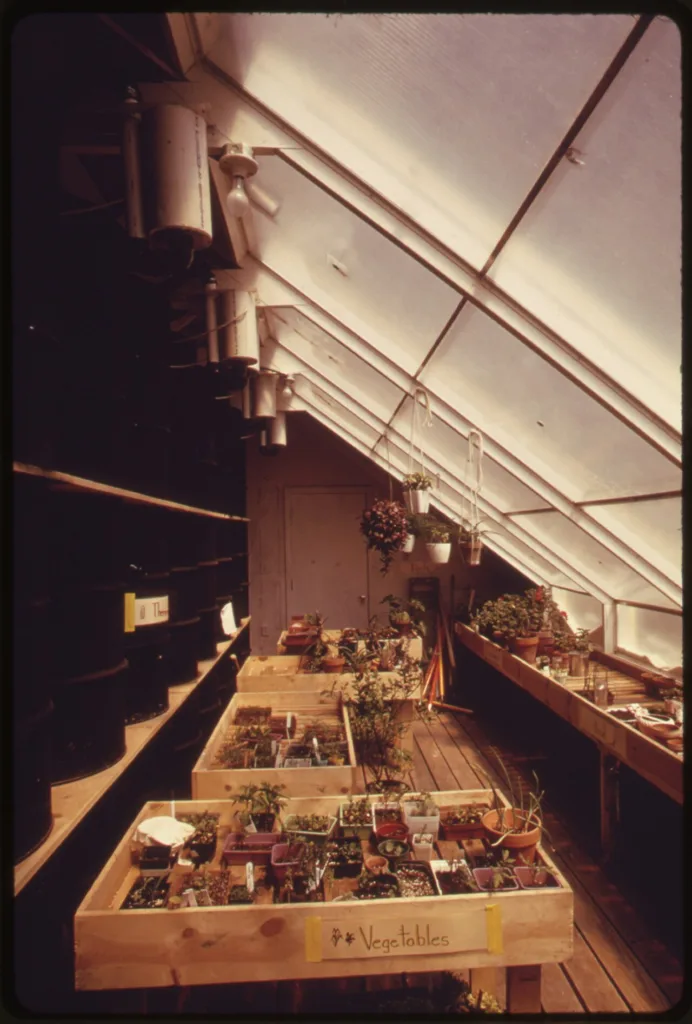
Quick answer: The instinct is to cover the greenhouse roof with panels. Resist it. Every watt of sunlight a panel captures is sunlight the crop does not get, and greenhouse plants are usually light limited. The better designs put panels on the north-facing roof slope, on a shed or adjacent structure, or on a ground array nearby. Solar comfortably runs fans, vents, pumps and controls. It rarely runs winter heating.
What this guide covers
- The light tradeoff
- Where to actually mount panels
- What a greenhouse really consumes
- Load table
- Why heating rarely pencils out
- Semi-transparent panels and agrivoltaics
- Common mistakes
- FAQ
The light tradeoff
A greenhouse exists to collect light. A solar panel exists to collect light. Putting one on top of the other creates a direct competition, and in most climates the crop loses more than the panel gains.
Plants respond to accumulated light over the day, often measured as daily light integral. Below a crop’s requirement, growth slows, stems stretch and yield falls. Shading the roof of a greenhouse that was already marginal in winter can be genuinely damaging.
There is a real exception. In very high light regions, some crops are actually stressed by excess summer radiation and are grown under shade cloth anyway. In that specific case, panels can replace the shade cloth and generate at the same time. That is a deliberate design, not a default.
Where to actually mount panels
The north-facing roof slope. In the northern hemisphere this slope contributes relatively little useful light to the crop, especially in winter. It is often the best compromise, though panels there also generate less.
An adjacent shed, barn or potting room. Full generation, zero shading, and usually an easier structural job than a glazed roof.
A ground mount nearby. Best electrical outcome. You can set ideal tilt and orientation, cleaning is easy, and it does not touch the greenhouse structure at all.
A solar canopy over a work or storage area. Generates power and provides a dry working space.
Greenhouse glazing structures are usually engineered for glazing loads, not for panel weight plus wind uplift. Any roof-mounted plan needs a structural check first.
What a greenhouse really consumes
The electrical loads in a typical hobby or small commercial greenhouse are modest and very well suited to solar.
Ventilation fans and automatic vent openers run in daylight, exactly when the panels produce. That match is unusually good. Circulation fans, irrigation pumps, controllers and sensors are all small loads.
Supplemental grow lighting is a different matter. It runs when there is little or no sun, which is precisely when solar cannot help without a large battery.
Propagation heat mats and soil warming cables sit between the two. They are moderate loads that often run at night.
Load table
| Load | Typical draw | Solar match |
|---|---|---|
| Exhaust and circulation fans | 50 to 400 W | Excellent, runs in daylight |
| Automatic vent openers | Negligible | Excellent |
| Irrigation pump | 100 to 750 W in bursts | Good, schedulable |
| Controllers and sensors | Under 20 W | Excellent |
| Propagation heat mats | 20 to 100 W each | Fair, needs battery |
| Supplemental grow lights | 200 W to several kW | Poor, runs when sun is absent |
| Space heating | Very large | Poor without grid support |
Why heating rarely pencils out
A greenhouse is deliberately built with very poor insulation, because glazing that admits light also loses heat. Heating one in winter is expensive by design.
The load peaks on cold clear nights, which is when solar produces nothing. Covering it electrically would require a very large battery charged by a very large array, and the array would be shaded by the greenhouse or competing with it for space.
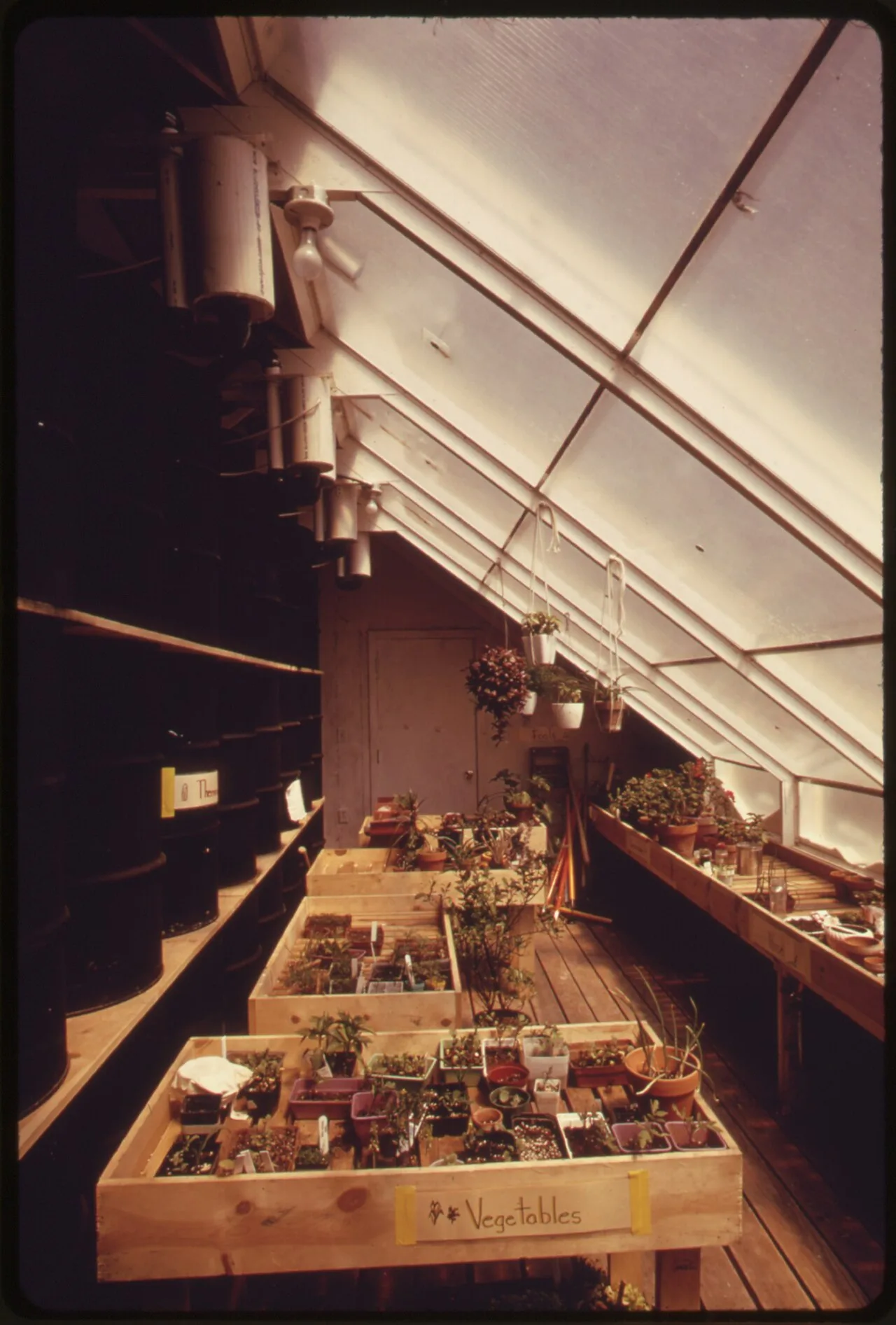
Cheaper measures work far better. Thermal mass such as water barrels absorbs daytime heat and releases it at night. Interior thermal screens pulled across at dusk cut radiant loss substantially. Insulating the north wall costs little and loses no useful light. Perimeter insulation stops heat draining into the ground.
If you do need active heat, solar thermal collectors feeding a water store are a more direct route than photovoltaics plus resistance heating. See solar water heaters.
Semi-transparent panels and agrivoltaics
Semi-transparent and wavelength-selective modules are an active research area. The idea is to harvest parts of the spectrum plants use least while passing through the rest.
Field trials in agrivoltaic systems have shown that some crops tolerate, and occasionally benefit from, partial shading, particularly in hot dry regions where reduced water stress offsets reduced light.
Treat this as promising rather than proven for your specific crop and climate. Results vary greatly by species. If you want to try it, start with a small section rather than the whole roof.
See agrivoltaics and transparent solar panels for the underlying technology.
Common mistakes
Covering the south-facing glazing. This is the light the crop most needs.
Ignoring the structure. Greenhouse frames are rarely designed for panel weight and uplift.
Trying to heat electrically off-grid. Thermal mass and screens beat panels for this job.
Running grow lights from solar without storage. The timing is exactly wrong.
Forgetting condensation and corrosion. A greenhouse is a warm humid environment. Electrical enclosures need appropriate ingress protection.
FAQ
Can I put solar panels on a greenhouse roof?
You can, but opaque panels shade the crop. The north-facing slope, an adjacent building or a ground array are usually better choices.
How much solar does a greenhouse need?
Fans, vents, pumps and controls are modest loads that a few hundred watts often covers. Lighting and heating change the answer completely.
Do semi-transparent panels work for greenhouses?
They are promising and under active research. Results depend heavily on crop and climate, so trial a small area first.
Can solar heat a greenhouse in winter?
Not economically with photovoltaics. Thermal mass, night screens and insulation deliver far more per dollar.
Will shading reduce my yield?
In light-limited conditions, yes. In very high light regions some crops tolerate or benefit from partial shade.
Is a ground mount better than a roof mount here?
Usually. It avoids the light competition entirely and lets you choose the best tilt and orientation.
What about off-grid greenhouse systems?
They work well for daytime loads. Add a small battery for controllers and night-time propagation heat.
Where to go next
Read ground mount solar for the recommended layout, agrivoltaics for dual-use farming, and MPPT versus PWM if the system is off-grid.
Agrivoltaic research is published by the National Renewable Energy Laboratory and the U.S. Department of Agriculture.
Related Posts
Leave a Comment
Your comment will be published after it has been approved. Please send comments that do not contain slang words.