
Solar Panel Hail Damage
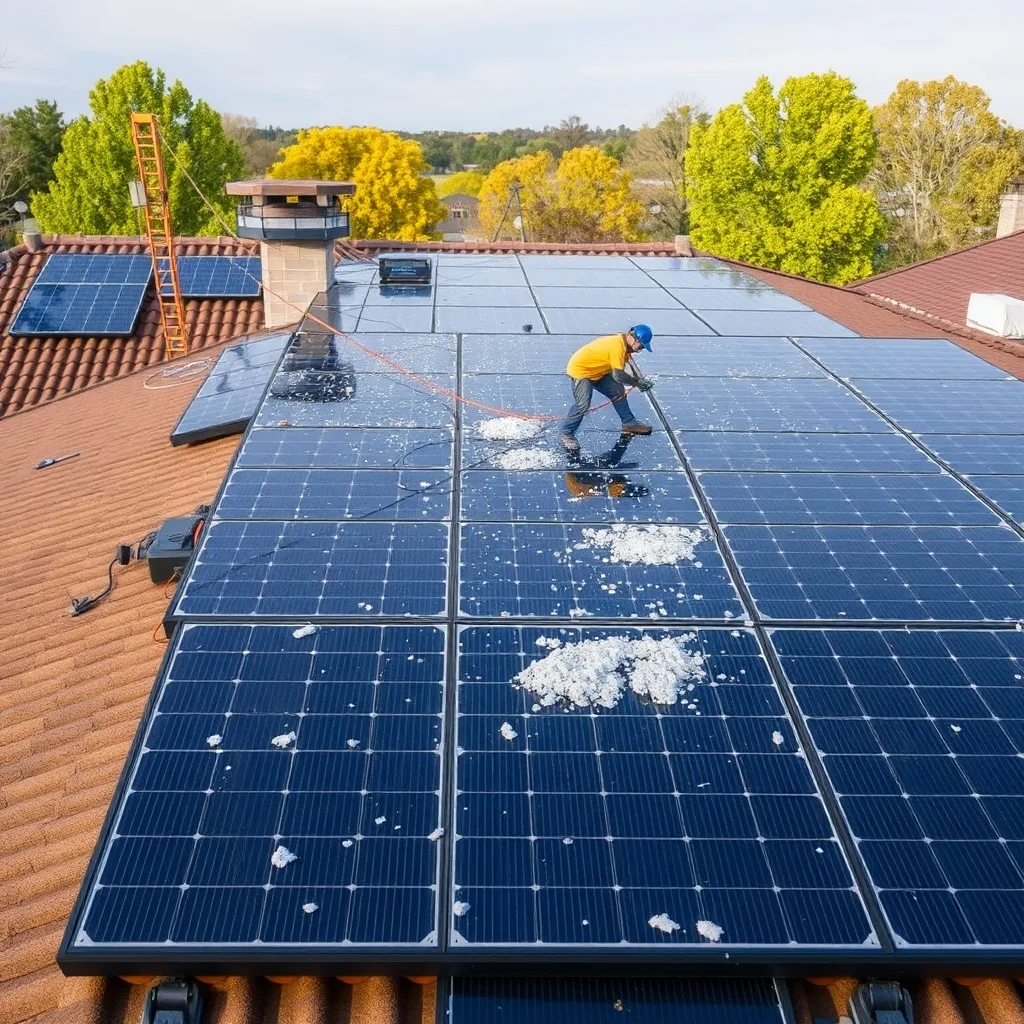
Hail can genuinely damage solar panels, but modern panels are far more resilient than most homeowners assume. Knowing what real damage looks like versus cosmetic marks matters for both safety and any insurance claim. This guide covers how panels are tested, what to check after a storm, and how to handle the claim if you do find damage.
Table of Contents
- How Hail-Resistant Are Solar Panels?
- Types of Hail Damage
- Damage Severity Guide
- Insurance Claims for Hail Damage
- Frequently Asked Questions
How Hail-Resistant Are Solar Panels?
Standard solar panels are certified to withstand roughly 1-inch diameter hail at highway speeds under industry testing standards (IEC 61215). Most typical hailstorms fall well within this tolerance, which is why widespread hail damage to solar panels is less common than many homeowners initially fear.
What the test actually does
In the IEC 61215 hail test, ice balls of a set diameter are fired at multiple points on the panel, including corners and edges near the frame. The panel passes if it shows no visible breakage and its output stays within a small tolerance of the pre-test value. Some manufacturers test to larger hail sizes and advertise that rating. If you live in a hail-prone region, that higher rating is worth asking for when you buy.
Why tempered glass holds up
The front of a panel is tempered glass, usually about 3.2 mm thick on standard modules. Tempering makes the glass several times stronger than ordinary window glass and causes it to crumble into small pieces rather than sharp shards if it does fail. Newer glass-on-glass modules use two thinner sheets, which behave a little differently under impact and are worth checking with the manufacturer.
Tilt helps
Hail falls roughly vertically. A panel tilted at 30 degrees receives a glancing blow rather than a square hit, which spreads the impact energy. Flat-mounted panels take the full force. The U.S. Department of Energy’s system design basics explains how tilt is chosen for output; the same tilt gives you some hail protection for free.
Types of Hail Damage
Cosmetic surface marks that don’t affect the glass structurally are the most common outcome from moderate hail — these don’t reduce performance. Actual cracked glass or micro-cracks in the cells beneath the glass are more serious, potentially reducing output or, in worse cases, creating a safety hazard requiring panel replacement.
Cosmetic marks
Small chips in the anti-reflective coating or faint scuffs look worse than they are. They affect a tiny fraction of the surface and do not let water in. No action is needed beyond noting them in your records.
Cracked glass
A visible crack, even a short one, breaks the seal that keeps moisture away from the cells. Output may look normal for weeks. Then water creeps in, corrosion starts, and the panel begins to underperform or trips ground-fault protection. A cracked panel should be scheduled for replacement even if it is still producing.
Micro-cracks in the cells
Hard impacts can crack the silicon cells under intact glass. You cannot see these from the roof. The signs are a drop in output for that panel or string, hot spots visible in a thermal image, or a pattern of dark lines in an electroluminescence test. The DOE’s solar performance and efficiency overview explains why a damaged cell can drag down the whole series-connected string.

Damage to everything else
Hail also hits the parts around the panels. Check the inverter enclosure, the disconnect boxes, exposed conduit, and roof flashing around the mounting feet. Damaged flashing is a roof-leak risk that has nothing to do with solar output but everything to do with your ceiling.
Damage Severity Guide
| Damage Type | How to Spot It | Action Needed | Who Pays |
|---|---|---|---|
| Surface marks, no glass cracks | Visual check from the ground or roof | None — cosmetic only | Nobody; note it in records |
| Small glass crack, panel still producing normally | Close visual inspection | Monitor, document for insurance, plan replacement | Insurance (storm damage) |
| Shattered glass or exposed cells | Obvious from the ground | Immediate professional assessment, likely replacement | Insurance |
| Sudden output drop after storm, no visible damage | Monitoring app, per-panel data if available | Professional inspection — internal damage possible | Insurance if storm-caused; warranty if defect |
| Damaged inverter, conduit, or flashing | Dents, cracked housings, water stains | Electrician or roofer visit | Insurance |
The line between insurance and warranty matters. A manufacturer warranty covers defects, not storms. Our warranty claims guide explains that boundary.
Insurance Claims for Hail Damage
Most homeowner’s policies covering the dwelling extend to solar equipment, but confirm this explicitly with your insurer rather than assuming. Document damage with photos immediately after the storm, and check your monitoring app’s production data from that day as supporting evidence for any claim.
Before the storm
Take clear photos of every panel and the inverter on a sunny day and store them with your installation paperwork. Export a month of production data from your monitoring app. Confirm in writing with your insurer that the system is covered and note any separate deductible for roof-mounted equipment.
Right after the storm
Photograph the roof from the ground first, then from a ladder if it is safe. Photograph any hail on the ground next to a coin or ruler for scale. Save the weather service report for the storm. Note the date and time your monitoring shows a change in output.
Filing the claim
Contact the insurer within the policy’s reporting window. Ask whether they want an inspection by your solar installer or by their own adjuster. Get a written repair estimate from a licensed solar installer, including panel replacement, labor, and any roof repair. If the adjuster proposes repairing only the visibly broken panels, ask for an electrical test of the rest; hidden cell damage is common in the same storm.

While you wait for repairs
A panel with shattered glass can still carry voltage and may leak current when wet. Do not touch it. If the inverter shows a ground-fault or isolation error, leave the system shut down until an installer inspects it. Cover exposed roof penetrations with a tarp if flashing was damaged, and keep every receipt for temporary repairs; insurers usually reimburse reasonable steps taken to prevent further loss. A system that keeps running with one damaged string will show lower production for weeks, so save those monitoring screenshots for the adjuster too.
Reducing the risk next time
Some installers offer protective mesh or covers for arrays in severe-hail regions, though covers reduce output and are rarely used on rooftops. Choosing panels tested to a larger hail size at purchase is the more practical step. Trackers on ground-mounted systems can be set to a steep “hail stow” angle when a storm is forecast. Keep documentation current, and use the solar maintenance hub for the rest of the seasonal routine.
Frequently Asked Questions
Can hail actually damage solar panels?
Yes, though panels are certified to withstand typical hail sizes — severe hail can still cause real damage.
Are cosmetic marks from hail a problem?
No, surface marks that don’t crack the glass don’t affect performance or safety.
Will my insurance cover hail damage to my panels?
Usually yes as part of dwelling coverage, but confirm explicitly with your specific insurer.
How do I know if hail caused invisible damage?
Check your monitoring app for a sudden output drop after the storm, even without visible cracks. A thermal or electroluminescence test confirms it.
Do panels need to be replaced after any hail hit?
No, only if the glass is actually cracked or output is measurably affected — cosmetic marks don’t require replacement.
Does hail damage count as a warranty claim?
No. Manufacturer warranties cover defects, not weather. Hail damage is an insurance matter.
For related storm damage and inspection routines, see our solar panel inspection checklist. For warranty claim specifics, see our solar panel warranty claims guide.
Our residential solar panel efficiency guide covers this in more depth.
What your policy actually pays for is set out in solar panel insurance.
Related Posts

Leave a Comment
Your comment will be published after it has been approved. Please send comments that do not contain slang words.