
Latest Solar Panel Technology 2026
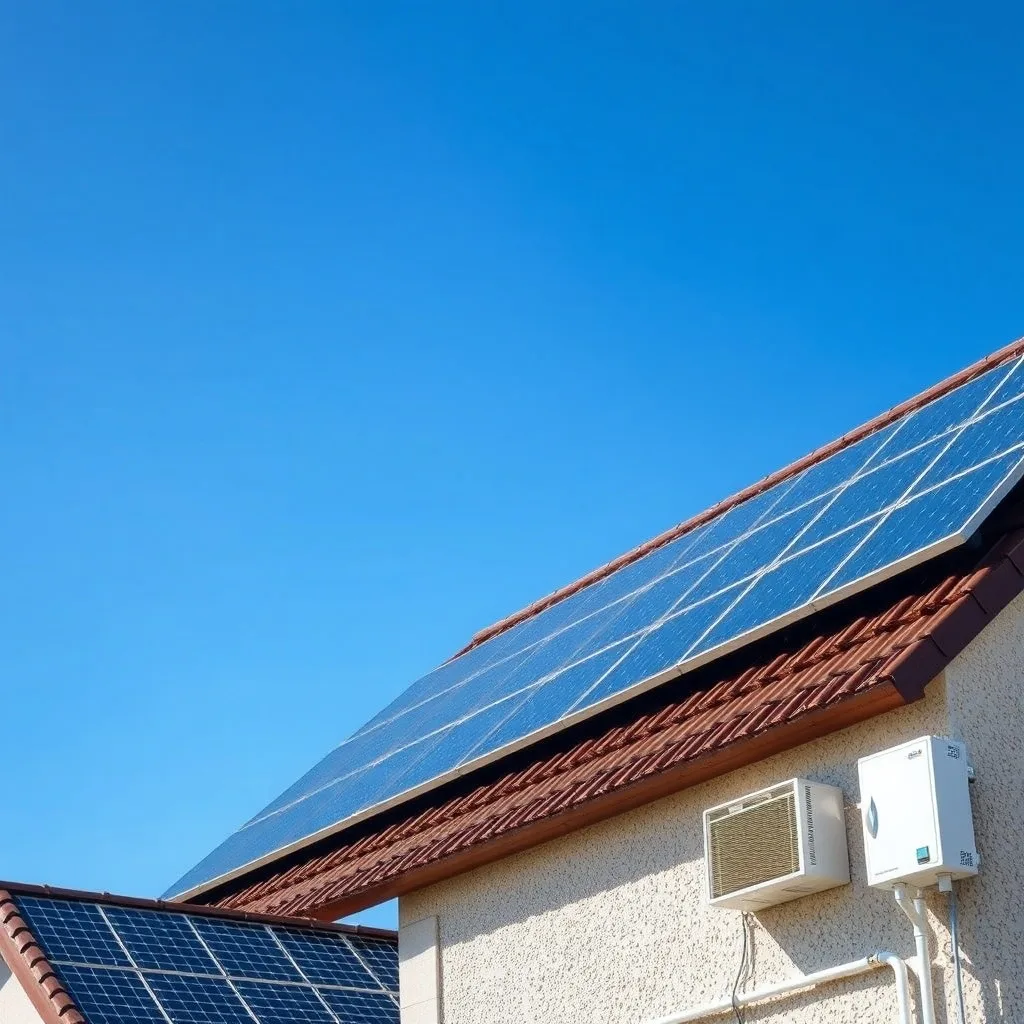
Today’s commercially available solar panel technology already delivers meaningfully better performance than what was standard just a few years ago — here’s what’s actually on the market right now, not future concepts. This guide sorts the cell types you will see on quotes in 2026, explains what each one changes in practice, and tells you when the premium is worth paying and when a standard panel is the smarter buy.
Table of Contents
- What’s Actually Standard Now
- Premium Options Available Today
- Current Market Technology
- What This Means for Buyers
- Frequently Asked Questions
What’s Actually Standard Now
Monocrystalline PERC (Passivated Emitter Rear Cell) panels, running 19-21% efficiency, represent the current mainstream standard for most residential installations — a meaningful step up from the polycrystalline panels common a decade ago. Half-cut cell designs, reducing resistance losses, are now standard across most quality panel lines.
How PERC improved on the basic cell
A conventional silicon cell loses some light straight through the back and loses electrons to recombination at the rear surface. PERC adds a passivation layer on the back of the cell that reflects light back into the silicon and reduces those losses. It was a cheap change to existing production lines, which is why it swept the market. The U.S. Department of Energy’s performance and efficiency basics explains the loss mechanisms these designs attack, including the fact that untreated silicon reflects more than 30 percent of incoming light before anti-reflective coatings are applied.
Half-cut cells, larger wafers, and multi-busbar
Three other changes arrived alongside PERC. Cutting each cell in half halves the current through each piece and cuts resistive losses. Larger wafer formats let manufacturers build higher-wattage panels at lower cost per watt. Replacing a few wide busbars with many thin wires shortens the path electrons travel and shades less of the cell. A 2026 residential panel typically combines all three, which is why a standard panel today carries a nameplate that would have been premium five years ago.
The shift under way in manufacturing
PERC has hit a practical efficiency ceiling, and much of the new manufacturing capacity built in the last two years uses TOPCon instead. The DOE’s solar manufacturing overview describes the production chain from polysilicon to module. For a buyer the effect is that TOPCon panels are increasingly quoted at prices close to PERC, blurring the line between standard and premium.
Premium Options Available Today
TOPCon and HJT (heterojunction) cell technology, pushing 22-23%+ efficiency, are now genuinely commercially available, not just lab technology — a real option for buyers prioritizing maximum output per square foot of roof space. Bifacial panels, capturing reflected light on their rear side, are also widely available and increasingly standard on commercial and utility-scale projects.
TOPCon
Tunnel Oxide Passivated Contact cells add an ultra-thin oxide layer and a doped polysilicon layer on the rear, which passivates the contact points where PERC still loses electrons. The result is higher efficiency, a better temperature coefficient, and lower first-year degradation. Because TOPCon builds on PERC production lines, it has scaled quickly and its price premium has shrunk.
HJT
Heterojunction cells sandwich crystalline silicon between thin layers of amorphous silicon. They have the best temperature behavior of the mainstream options, very low degradation, and are naturally bifacial. Production requires different equipment, so HJT panels remain rarer and pricier than TOPCon, and are favored where hot climates or space limits justify the cost.
Bifacial and tandem
A bifacial panel has a transparent backsheet or glass on both sides and collects light reflected from the ground. On a ground mount over light gravel or snow the gain is real; on a dark shingle roof with panels a few inches off the surface it is small. Perovskite-on-silicon tandem cells stack a second light-absorbing layer on top of a silicon cell to capture more of the spectrum, and the first commercial modules are shipping in limited volumes. Durability over 25 years is the open question. Our future technology hub follows the progress.
Current Market Technology
| Technology | Market Status | Key Advantage | Best Fit |
|---|---|---|---|
| Monocrystalline PERC | Mainstream standard | Lowest cost per watt, proven track record | Homes with ample roof space |
| TOPCon/HJT | Widely available premium option | Higher efficiency, better heat performance, lower degradation | Limited roofs, hot climates, long ownership |
| Bifacial | Available, standard for commercial/utility | Extra output from reflected light | Ground mounts, carports, bright surroundings |
| Perovskite tandem | Early/limited commercial availability | Highest lab efficiencies | Early adopters; watch long-term durability |
| Thin film (CdTe) | Utility scale mainly | Good heat and low-light behavior, domestic manufacturing | Large ground-mounted projects |
The International Energy Agency’s solar PV overview tracks how these technologies are shifting global deployment, and the U.S. Energy Information Administration explains the underlying photovoltaic basics.
What This Means for Buyers
Standard PERC panels remain a genuinely solid, cost-effective choice for most homeowners with adequate roof space. TOPCon/HJT makes sense specifically when roof space is limited relative to power needs. Bifacial and tandem technology are worth asking about but aren’t necessary upgrades for typical residential installations today.
Compare on the numbers that matter
Ask for the panel datasheet and compare four lines: efficiency, temperature coefficient, first-year and annual degradation, and the length of the performance warranty. A premium cell type often shows its value in the last three more than the first. Our degradation rate guide explains why a lower annual loss is worth money over 25 years.
Space versus cost
If your roof can fit enough standard panels to cover your usage, the cheapest panel per watt usually wins. If it cannot, higher-efficiency panels let you reach the target in fewer square feet, and that is where the premium earns its keep. Our panel count guide shows how to run that check before you compare quotes, and the components hub covers the rest of the hardware.
Warranties have moved with the technology
Five years ago a 25-year product warranty was a premium feature and a 10 or 12-year product warranty was common. Today many TOPCon and HJT panels carry 25 to 30-year product and performance warranties with guaranteed output in the high 80s percent at the end of the term. Read both parts of the warranty separately: the product warranty covers defects, the performance warranty covers output. A long warranty from a manufacturer that may not exist in 20 years is worth less than a shorter one from a company with a track record and a U.S. service presence, so ask the installer who handles a claim.
Questions to ask on a quote
Which cell technology is this panel? What is its temperature coefficient? What are the first-year and annual degradation figures? Is it bifacial, and if so does the estimate count any rear-side gain? Is a TOPCon option available at a similar price, and how does the production estimate change if it is? These five questions take a minute to ask and will tell you quickly whether the salesperson understands the product.
Frequently Asked Questions
What’s the standard solar panel technology today?
Monocrystalline PERC with half-cut cells, running 19-21% efficiency, is the current residential mainstream.
Is TOPCon technology worth the premium?
Worth it specifically if roof space is limited; standard PERC remains cost-effective where space isn’t constrained.
Are bifacial panels worth it for a home roof?
Less beneficial for typical roof-mount installations than for ground-mount or commercial applications with reflective surroundings.
Is tandem cell technology available to buy today?
Limited early commercial availability exists, but it’s not yet the mainstream residential choice.
How much better is current technology than 5 years ago?
Meaningfully — efficiency, degradation rates, and warranty terms have all improved measurably over that period.
Does a higher-efficiency panel produce more electricity per panel or per roof?
Per square foot — a higher-efficiency panel of the same size makes more watts, which matters when roof space, not budget, is the limit.
For future technology direction, see our solar panel future guide. For the detailed cell technology comparison, see our TOPCon vs HJT vs Perovskite comparison.
Related Posts


Leave a Comment
Your comment will be published after it has been approved. Please send comments that do not contain slang words.