
SRECs Explained: How Solar Certificates Pay You a Second Time
Quick answer: An SREC is a tradable certificate created every time your system generates one megawatt-hour. It is separate from the electricity itself and separate from net metering, so you can earn both. SRECs only exist in states whose renewable portfolio standard includes a solar carve-out, and their price swings hard with supply. In strong markets they have added a meaningful second income stream to a residential array.
What this guide covers
- What an SREC actually is
- Why the market exists
- Which states have a market
- SRECs versus net metering
- How to register and get paid
- Why prices swing so much
- Common mistakes
- FAQ
What an SREC actually is
SREC stands for solar renewable energy certificate. One certificate is created for every megawatt-hour, meaning 1,000 kilowatt-hours, that your system generates.
The certificate represents the environmental attribute of that energy. The electrons are a separate product. You use or export the power as normal, and you sell the certificate separately.
A typical residential array producing around 10,000 kilowatt-hours a year creates roughly ten certificates a year. The value of those ten certificates is what makes or breaks the case.
Why the market exists
Many states have a renewable portfolio standard. It requires electricity suppliers to source a set percentage of their power from renewables by a set year.
Some of those standards include a specific solar carve-out. The supplier must prove it met the solar share, and it proves that by retiring certificates.
Suppliers can build their own solar or buy certificates from people who already have it. That demand is what you are selling into.
If a supplier cannot find enough certificates, it pays a penalty known as the alternative compliance payment. That penalty sets a practical ceiling on certificate prices.
Which states have a market
Only a minority of states have an active solar certificate market. The list changes as programs open, close and get replaced.
Historically the most active markets have been in the Mid-Atlantic and Northeast. New Jersey, Maryland, the District of Columbia, Pennsylvania, Ohio, Delaware, Illinois and Massachusetts have all run solar-specific programs. Several have replaced open trading with fixed-price successor programs.
Two things matter more than the state list. Whether your state’s program is open to new systems, and whether it is a market price or a fixed administrative price.
Some programs also accept out-of-state systems for a lower price. Check whether your state qualifies for a neighbouring market before you conclude there is nothing available.
SRECs versus net metering
| Feature | SRECs | Net metering |
|---|---|---|
| What is sold | The environmental attribute | The exported electricity |
| Based on | Total generation | Only what you export |
| Who pays | Electricity suppliers | Your utility, as bill credit |
| Price stability | Volatile unless contracted | Set by tariff |
| Can you have both | Yes | Yes |
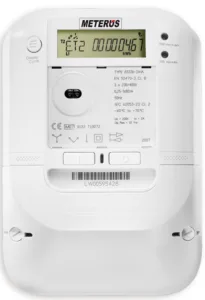
| Requires metering | Generation meter or inverter reporting | Bidirectional utility meter |
The two stack. That is the point most homeowners miss. Certificate income sits on top of the bill savings covered in net metering explained.
How to register and get paid
The process is administrative rather than technical, and it has four steps.
Register the system. Your state programme administrator certifies the system as eligible. You will need the interconnection approval, equipment details and commissioning date.
Open a tracking account. Generation is tracked in a regional registry. PJM-EIS GATS covers the Mid-Atlantic. NEPOOL-GIS covers New England. Your certificates are issued into that account.
Report generation. Some programmes read your inverter’s monitoring data automatically. Others require a revenue-grade production meter, which is an extra hardware cost you should confirm before you sign anything.
Sell. You can sell on the spot market through a broker, or sign a multi-year contract at a fixed price with an aggregator.
Most homeowners use an aggregator. They take a cut, but they handle registration, reporting and sale. Compare the fee against the price certainty offered.
Why prices swing so much
Certificate prices are set by supply and demand against a fixed compliance target. That makes them structurally volatile.
When installations run ahead of the target, supply floods the market and prices collapse. When installations lag, prices climb toward the penalty ceiling.
New Jersey is the textbook case. Its market saw prices fall by a very large margin within a few years as installation volume overshot the requirement, and the state eventually replaced open trading with an administratively set price.
The lesson is simple. Never build a payback model on today’s spot price held constant for fifteen years. Model a low case, and treat certificate income as upside rather than as the foundation.
If a fixed multi-year contract is available at a fair price, it removes this risk entirely. That certainty is often worth more than the higher expected value of spot sales.
Common mistakes
Letting the installer keep the certificates. Some contracts, especially leases and power purchase agreements, assign the certificates to the system owner rather than the homeowner. Read who owns them.
Missing the registration window. Several programmes require registration within a set period after commissioning. Miss it and you may forfeit eligibility entirely.
Assuming spot prices are permanent. They are not. Model conservatively.
Forgetting the meter cost. If a revenue-grade meter is required, include its price and any annual data fee in the analysis.
Ignoring the tax question. Certificate income may be taxable. Ask a tax professional rather than assuming. See solar tax credits for the separate federal credit.
FAQ
What is an SREC worth?
It depends entirely on the state and the year. Prices have ranged from a few dollars to several hundred dollars per certificate across different markets and periods.
How many SRECs will my system produce?
One per 1,000 kilowatt-hours generated. A typical residential array producing 10,000 kilowatt-hours a year earns about ten.
Can I get SRECs and net metering at the same time?
Yes. They are separate products and they stack.
Do I need a special meter?
Some programmes accept inverter monitoring data. Others require a revenue-grade production meter. Confirm before installation.
What happens if my state has no SREC market?
You simply do not earn certificate income. Your payback then depends on bill savings and any state rebate or tax credit.
Should I sell on the spot market or sign a contract?
A fixed multi-year contract trades upside for certainty. Given how volatile these markets are, most homeowners prefer the certainty.
Are SRECs taxable income?
Treatment varies and the guidance is not simple. Ask a qualified tax professional about your situation.
Where to go next
For the rest of the incentive picture, read incentive stacking rules, state rebate comparison and incentive expiration dates.
Programme details by state are maintained in the DSIRE database, and market background is published by the National Renewable Energy Laboratory.
Related Posts

Leave a Comment
Your comment will be published after it has been approved. Please send comments that do not contain slang words.