
Home Battery Storage
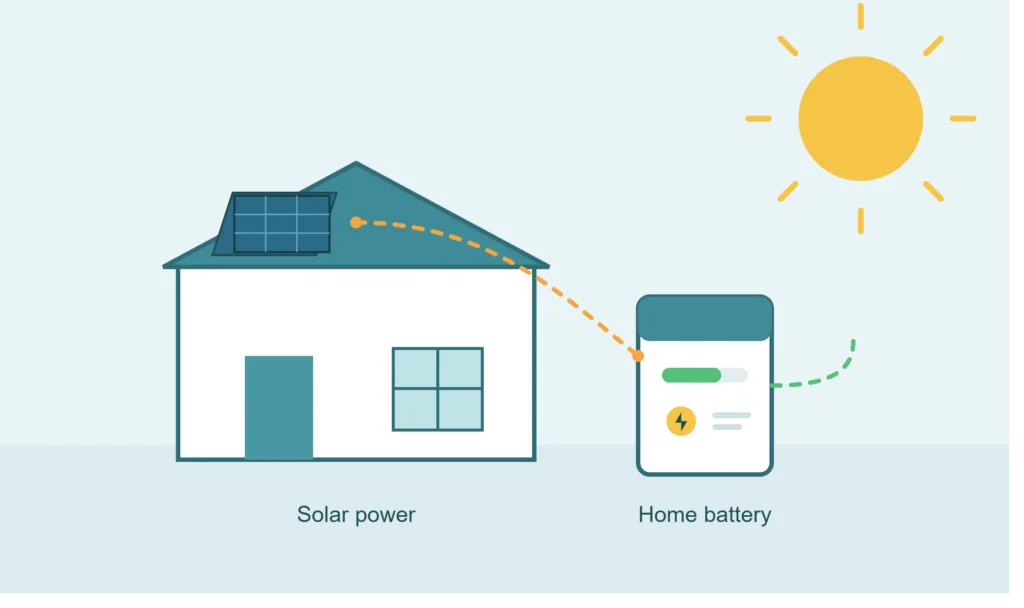
Power outages are becoming more frequent, electricity prices keep climbing, and rooftop solar is now on millions of homes — which is exactly why home battery storage has moved from a luxury gadget to a mainstream household decision. a home battery storage unit lets you store electricity, whether generated by your own solar panels or pulled cheaply from the grid overnight, and use it whenever you need it most.
That means backup power when the grid fails, lower bills when electricity is expensive, and a real step toward energy independence. But batteries are also expensive, technically complex, and easy to size wrong. This guide breaks down exactly how home battery storage works, what it really costs, how the major battery chemistries compare, and how the market looks across different regions in 2026.
How Home Battery Storage Works
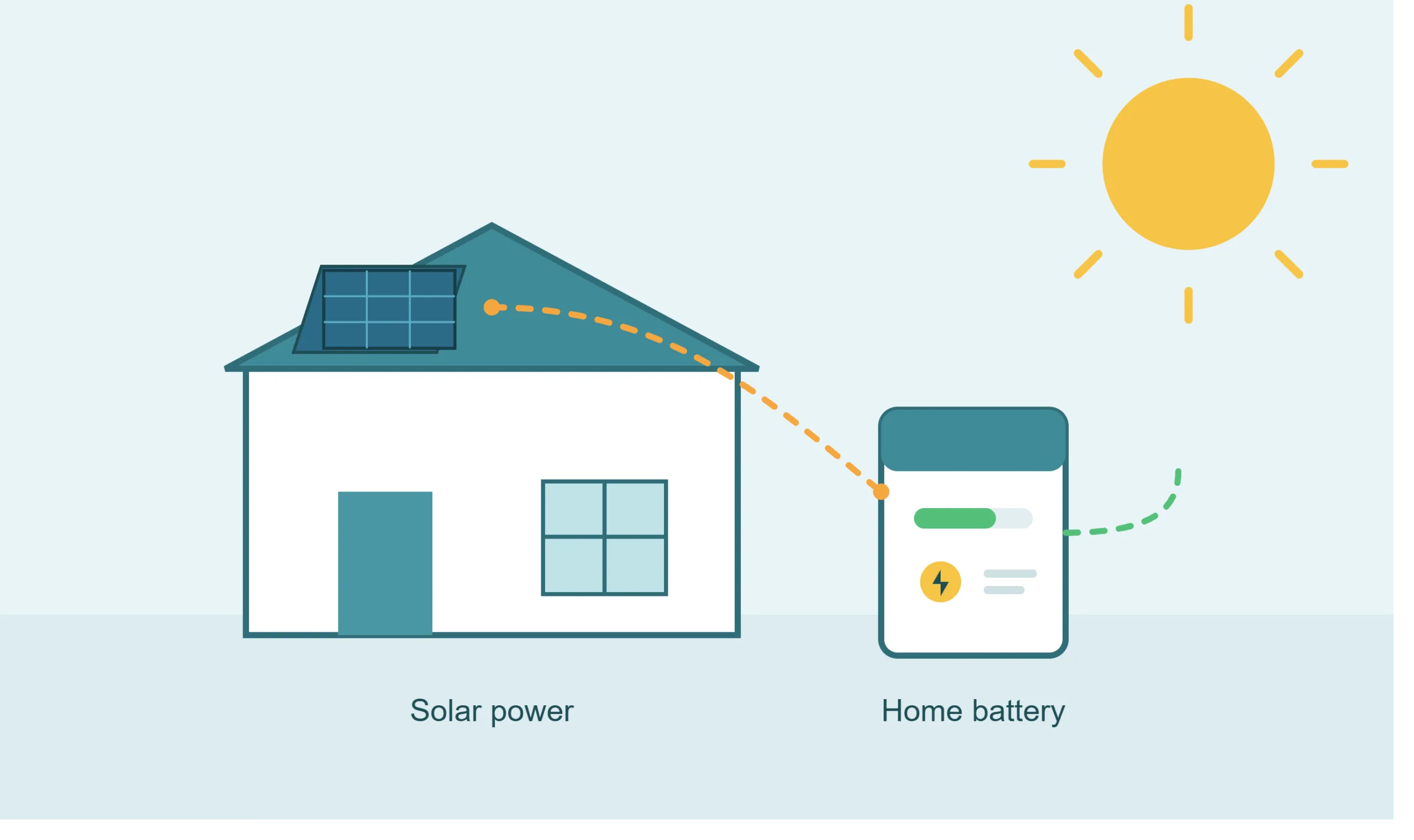
At its core, a home battery storage system does something deceptively simple: it captures electricity when it is cheap or abundant and releases it when it is expensive or unavailable. The complexity lives in the details of how that energy is converted, stored, and managed.
A typical residential system has four main components working together. Each plays a distinct role, and a weakness in any one of them limits the whole system.
- The battery cells themselves, which store energy chemically
- An inverter, which converts stored direct current (DC) into the alternating current (AC) your home uses
- A battery management system (BMS), which monitors temperature, charge levels, and safety
- Smart control software, which decides when to charge and discharge based on prices, solar output, and your usage
When paired with solar panels, the logic is straightforward.
During the day, your panels often generate more electricity than your home consumes. Instead of exporting that surplus to the grid for a small credit, the battery stores it.
Then in the evening — when the sun is down but your household demand peaks — you draw on that stored energy instead of buying expensive grid power. For homeowners exploring a full setup, understanding how energy storage systems integrate with panels is the essential first step.
Even without solar, a battery can pay off in regions with time-of-use electricity pricing. The system charges itself from the grid during off-peak hours when rates are lowest, then discharges during peak hours when rates spike.
This practice, sometimes called energy arbitrage, turns the battery into a tool for beating your utility’s pricing structure. The U.S. Energy Information Administration (EIA) tracks these regional price differences, which can be substantial depending on where you live.
The final piece is backup power. When the grid goes down, a properly configured home battery can automatically isolate your home from the grid — a process called islanding — and keep your essential circuits running. Depending on capacity, that might mean keeping the fridge, lights, and internet alive for several hours, or powering an entire home through a multi-day outage.
It is worth understanding a subtle but important concept: round-trip efficiency. No battery returns exactly as much energy as you put into it. Some is always lost during charging and discharging as heat.
Modern lithium systems are quite efficient, but this loss means the electricity you draw from the battery is always somewhat less than what went in. When calculating savings, factoring in this efficiency gap gives a more honest picture of real-world performance than headline capacity figures alone.
Depth of discharge is another concept that shapes daily use. It refers to how much of a battery’s capacity you can safely use before recharging. Older chemistries suffered if drained too deeply, but modern LFP batteries tolerate near-full discharge without significant harm, which is part of why they have become so popular for homes that cycle their battery every single day.
The Main Types of Home Battery Storage
Not all home battery storage systems are built the same, and the chemistry inside them determines cost, lifespan, safety, and performance. Two lithium-based chemistries dominate the residential market today, with a few alternatives on the fringes.
Lithium iron phosphate (LFP). This chemistry has become the default choice for new home batteries, and for good reason. LFP cells are highly stable, resistant to thermal runaway, and typically rated for a very high number of charge cycles — meaning they last longer before degrading. They tolerate being fully charged and discharged more gracefully than older chemistries, which suits daily home cycling well.
Lithium nickel manganese cobalt oxide (NMC). NMC batteries pack more energy into a smaller, lighter package, which is why they dominate electric vehicles. In homes, they deliver strong performance but run slightly warmer and are generally considered less thermally stable than LFP, requiring careful management. They also rely on cobalt, which raises both cost and ethical sourcing concerns.
Emerging alternatives. Sodium-ion, flow batteries, and saltwater batteries occasionally appear in residential contexts, promising cheaper materials or better safety.
Most remain niche for now, but they are worth watching as manufacturers search for chemistries that avoid lithium supply constraints. Research bodies like the National Renewable Energy Laboratory (NREL) continue to publish data on how these newer technologies perform.
When comparing systems, three specifications matter more than the marketing name: usable capacity (measured in kilowatt-hours), power output (in kilowatts), and cycle life. A battery with large capacity but low power output can store a lot of energy but only release it slowly — fine for overnight use, less useful for running heavy appliances all at once.
Getting this balance right is where many first-time buyers stumble. Reviewing options like a hybrid solar inverter setup can help match power output to your household’s real demands.
What Home Battery Storage Really Costs
Cost is where enthusiasm meets reality. Home battery storage remains a significant investment, and understanding the full picture prevents unpleasant surprises.
The total cost of a home home battery storage system includes far more than the battery itself. Buyers should budget for several distinct line items.
- The battery unit, priced according to usable capacity
- The inverter, if not already included or shared with a solar system
- Installation labor, which varies widely by region and complexity
- Electrical upgrades, such as a new panel or dedicated backup subpanel
- Permits and inspection fees required by local authorities
Prices have fallen substantially over the past decade as manufacturing has scaled, but a full residential system still represents a major purchase. The good news is that incentives can meaningfully reduce the net cost. Many governments offer tax credits, rebates, or subsidies for residential storage, especially when paired with solar. In the United States, federal tax credits have historically covered a meaningful share of storage costs, though the exact percentage and eligibility rules change over time and should be verified against current law before purchase. The return on investment depends heavily on your local situation. Three factors dominate the math: how much you pay for grid electricity, how large the gap is between peak and off-peak pricing, and how often your area experiences outages. In places with expensive electricity, steep time-of-use rates, and an unreliable grid, a battery pays for itself faster.
In areas with cheap, stable power, the financial case is weaker and the value shifts toward backup security and independence. For homeowners weighing the numbers, exploring home solar financing options can make the upfront cost more manageable.
It is also worth thinking in terms of payback period rather than sticker price. A system that costs more but lasts longer and cycles daily may deliver better lifetime value than a cheaper unit that degrades quickly. Warranty terms — typically expressed in years and total energy throughput — are a useful proxy for how confident the manufacturer is in that longevity.
There is also a value that resists spreadsheet analysis: resilience. For households in areas prone to storms, wildfires, or grid instability, the ability to keep medical equipment running, food refrigerated, and communication lines open during an extended outage carries a worth that pure payback math struggles to capture.
For some buyers, this security is the primary motivation, and the bill savings are simply a welcome bonus. Weighing that peace of mind against the upfront cost is a personal calculation, not just a financial one.
Comparing Battery Storage Options
Shopping specific models? Our Tesla Powerwall alternatives comparison puts the Powerwall 3, Enphase IQ 10C, FranklinWH aPower 2 and EcoFlow side by side on price per kWh and warranty.
To make the trade-offs concrete, the table below compares the main battery chemistries and use cases homeowners typically weigh against each other.
| Battery Type | Main Advantage | Main Drawback | Best For |
|---|---|---|---|
| Lithium iron phosphate (LFP) | Long cycle life and high safety | Heavier, slightly larger footprint | Daily solar cycling and backup |
| Lithium NMC | Compact and energy-dense | Runs warmer, cobalt dependency | Space-constrained installations |
| Sodium-ion | Cheap, abundant materials | Lower energy density, still emerging | Early adopters watching cost |
| Saltwater | Non-toxic and recyclable | Bulky, limited availability | Eco-focused, space-rich homes |
| Lead-acid (legacy) | Low upfront cost | Short lifespan, high maintenance | Off-grid backup on tight budgets |
The right choice is rarely about finding the single “best” battery and more about matching the technology to your specific home, budget, and goals. A household chasing decades of daily solar cycling has very different priorities than one buying a battery purely as occasional storm insurance.
For a deeper look at how storage needs are evolving, the analysis of the coming solar battery storage landscape toward 2030 is worth reviewing.
Home Battery Storage Around the World
Home battery adoption looks very different depending on where you live, shaped by electricity prices, grid reliability, solar penetration, and government incentives.
- US: Adoption is accelerating in states with high electricity costs, frequent outages, or strong solar programs, with federal and state incentives playing a major role in the financial case.
- EU: High retail electricity prices and strong residential solar uptake — especially in Germany and Italy — have made home batteries a popular pairing, reinforced by energy-security concerns across the bloc.
- China: As the world’s dominant battery manufacturer, China benefits from low hardware costs, though residential adoption is still maturing compared to its massive utility-scale storage buildout.
- Australia: With some of the world’s highest rooftop solar penetration and expensive grid power, Australia has become one of the most active home battery markets globally.
- India: Frequent grid instability makes backup power a primary driver, with battery storage increasingly paired with residential solar to bridge unreliable supply.
These regional differences matter for buyers because the “typical” advice online is often written for a single market. A payback calculation that makes sense in Australia or Germany may look very different in a region with cheap, reliable grid power. International agencies such as the International Energy Agency (IEA) track how residential storage is spreading across these very different conditions.
How to Choose the Right Home Battery Storage System
Selecting a home battery is less about chasing the flashiest brand and more about honestly assessing what you need it to do. A structured approach prevents both overspending and disappointment.
Start by defining your primary goal, because it changes everything downstream.
- If your main goal is backup power, focus on power output and which circuits you need to keep running
- If your main goal is bill savings, focus on usable capacity and daily cycling efficiency
- If your main goal is energy independence, prioritize capacity and solar integration
- If your main goal is future-proofing, prioritize expandability so you can add capacity later
Next, size the system to your actual consumption rather than a salesperson’s upsell.
Review your electricity bills to understand your daily usage in kilowatt-hours, and identify which appliances you truly need during an outage. Many homeowners discover they need less backup capacity than they initially assumed — or occasionally more, if they run heavy loads like air conditioning or well pumps.
Finally, scrutinize the warranty and the installer. A battery is a decade-plus commitment, so the manufacturer’s warranty and the installer’s reputation matter as much as the spec sheet. Look closely at the guaranteed cycle count, the retained-capacity promise at end of warranty, and whether the installer is certified for your chosen system.
Those exploring complete independence may also want to research a dedicated off-grid solar system approach, which places even greater demands on battery sizing and reliability.
Common Home Battery Storage Mistakes to Avoid
Even well-intentioned buyers fall into predictable traps.
Knowing them in advance saves money and frustration.
- Oversizing the battery beyond what your solar array can actually recharge each day
- Ignoring power output and discovering the battery cannot run heavy appliances simultaneously
- Overlooking round-trip efficiency losses, which mean you never get back 100% of what you store
- Forgetting that batteries degrade over time, so usable capacity shrinks across the years
- Choosing on price alone and ending up with a short-lived system that needs early replacement
Perhaps the most common error is treating a battery as a standalone purchase rather than part of a wider energy strategy.
The best results come from thinking about the whole system — solar generation, storage, home consumption patterns, and local pricing — as an integrated whole. When these pieces are matched to each other, a home battery delivers on its promise.
When they are mismatched, even an expensive battery can underperform. Looking ahead at the future of energy storage can help buyers make choices that stay relevant as the technology evolves.
Installation and Safety Essentials
The physical installation of a home battery is not a weekend project, and treating it as one creates real safety risks. Understanding what a proper installation involves helps you evaluate quotes and spot corners being cut.
Location matters more than most buyers expect. Batteries have temperature tolerances, and installing one in an uninsulated garage that swings from freezing to scorching will shorten its life and can trip protective shutdowns. The ideal spot is temperature-stable, dry, well-ventilated, and accessible for maintenance. Many systems are rated for outdoor installation, but even those perform better when shielded from direct sun and extreme weather.
Electrical integration is where certified expertise becomes non-negotiable. Connecting a battery to your home involves the main electrical panel, often a dedicated backup subpanel, and — critically — an automatic transfer switch that safely disconnects your home from the grid during an outage.
Without proper islanding protection, a battery could theoretically back-feed electricity into grid lines during a blackout, endangering utility workers. This is precisely why permits and inspections exist, and why they should never be skipped.
- Verify the installer is certified for your specific battery brand
- Confirm the system includes proper anti-islanding protection
- Ensure all permits and utility approvals are handled before work begins
- Ask about ventilation and temperature management for the chosen location
- Request a clear commissioning report showing the system passed inspection
Ongoing safety is largely automated through the battery management system, which continuously monitors cell temperature, voltage, and charge state, shutting down if anything drifts out of safe range.
Modern LFP systems in particular are engineered to be very safe, but that safety depends on correct installation. A well-installed, certified system requires little from the owner beyond occasional monitoring through its companion app.
The Future of Home Battery Technology
Home battery storage is evolving quickly, and understanding where the technology is heading helps buyers avoid investing in something about to be outdated. Several trends are reshaping the residential market.
Falling costs remain the dominant story. As global battery manufacturing capacity has expanded — driven largely by electric vehicle demand — the price of storage has trended downward, making systems accessible to a broader range of households. This trajectory is expected to continue, though supply chain constraints on key minerals can cause temporary reversals. Smarter software is the second major shift. Early home batteries simply stored and released energy on basic schedules. Today’s systems increasingly use intelligent algorithms that forecast your usage, predict solar generation from weather data, and respond to real-time electricity prices to maximize savings automatically.
Some can even participate in virtual power plants, where many home batteries are coordinated to support the wider grid in exchange for payments to the owner.
- Vehicle-to-home technology, letting an EV battery power your house during outages
- Virtual power plants that pay owners for sharing stored energy with the grid
- Longer-lasting chemistries that extend usable lifespan well beyond current norms
- Cheaper, more abundant materials that reduce dependence on constrained minerals
- Tighter integration between solar, storage, EV charging, and home energy management
For most homeowners, the practical takeaway is not to wait indefinitely for the perfect future battery.
The technology is mature enough to deliver real value today, and systems bought now — particularly expandable ones — can still benefit from software improvements and added capacity down the line. The smarter move is choosing a system with a strong warranty and expandability, rather than delaying a purchase that could be saving money and providing backup security in the meantime.

Maintenance and Environmental Impact
One of the quiet advantages of modern home batteries is how little day-to-day attention they demand, but “low maintenance” is not the same as “no maintenance,” and the environmental side of storage deserves honest consideration too.
For the owner, upkeep is mostly passive. The battery management system handles the technical monitoring, and most systems come with an app that displays charge levels, energy flows, and any alerts.
The practical responsibilities are modest: keep the unit’s surroundings clean and unobstructed, ensure ventilation pathways stay clear, and glance at the app periodically to confirm everything is behaving normally. Firmware updates, often delivered automatically, keep the control software current and can even improve performance over the system’s life.
- Keep the installation area clean, dry, and free of obstructions
- Monitor performance periodically through the companion app
- Allow automatic firmware updates to keep software optimized
- Schedule occasional professional check-ups for older systems
- Watch for unusual alerts or sudden drops in usable capacity
The environmental picture is more nuanced.
On one hand, home batteries enable greater use of clean solar energy and reduce reliance on fossil-fuel peaker plants that utilities fire up during high demand. On the other, battery production is material-intensive, and sourcing lithium and other minerals carries an environmental and social footprint.
The most responsible path involves choosing durable, long-lasting systems and ensuring proper recycling at end of life. Environmental agencies like the U.S. Environmental Protection Agency (EPA) provide guidance on battery recycling, and the recycling infrastructure for lithium batteries continues to mature as volumes grow.
Viewed over its full lifecycle, a home battery that runs on solar energy for a decade or more generally delivers a net environmental benefit compared to relying entirely on a fossil-heavy grid.
But that benefit is maximized when the system is well-matched to the home, used to its full potential, and eventually recycled rather than discarded. Thinking about the whole lifecycle — not just the shiny installation day — is part of being a responsible energy consumer.
Frequently Asked Questions
How long does a home battery last?
Most modern lithium home batteries are warrantied for around ten years or a set number of charge cycles, though actual lifespan depends on chemistry, usage patterns, and temperature conditions.
Can a home battery power my whole house?
It can, if sized correctly, but many homeowners choose to back up only essential circuits to keep costs reasonable and extend how long the stored energy lasts during an outage.
Do I need solar panels to use a home battery?
No — a battery can charge from the grid during cheap off-peak hours and discharge during expensive peak hours, though pairing it with solar usually improves the long-term value.
Is home battery storage worth it financially?
It depends heavily on your electricity prices, time-of-use rate structure, outage frequency, and available incentives, so the financial case is much stronger in some regions than others. This is covered separately in our home battery backup during outages guide. Vehicles are becoming part of this picture too. Our electric transportation guide covers where EV batteries fit alongside home storage. For chemistry, sizing and safety, see the storage topic guide.
Related Posts



Leave a Comment
Your comment will be published after it has been approved. Please send comments that do not contain slang words.