
Solar Powered EV Chargers Home
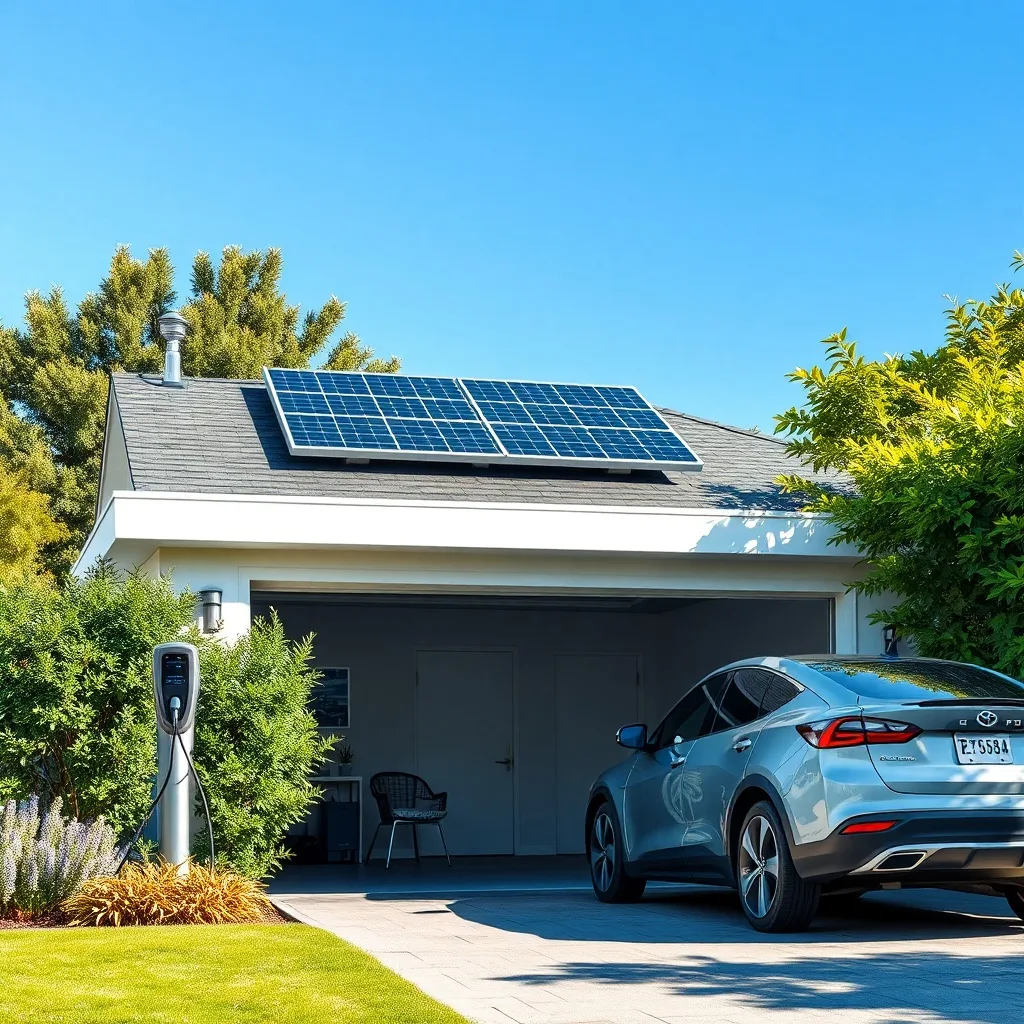
Solar-powered EV chargers for the home pair a Level 2 charger with your existing or new solar system — a natural combination, but one that benefits from a bit of planning to actually capture the intended savings. The charger itself is ordinary hardware. What makes the setup “solar-powered” is how you time the charging, how you size the array, and whether the charger can talk to your inverter. This guide walks through each of those decisions.
Table of Contents
- Home EV Charger Basics
- Integrating With Your Solar System
- Setup Options Compared
- Installation Considerations
- Frequently Asked Questions
Home EV Charger Basics
A Level 2 home charger (240V) charges significantly faster than a standard household outlet, typically delivering a full charge overnight rather than requiring many hours longer with basic Level 1 charging. This is the standard choice for home EV charging regardless of whether solar is involved.
The numbers explain why. According to the U.S. Department of Energy’s Alternative Fuels Data Center, Level 1 charging from a 120-volt outlet delivers roughly 1.9 kW, or about 5 miles of range per hour. Level 2 equipment on a 240-volt circuit ranges from 2.9 kW to 19.2 kW. A common 30-amp unit supplies about 7.2 kW, which adds roughly 25 miles of range per hour of charging.
Why the power level matters for solar
Solar production is only available for a limited window each day. A faster charger can absorb more of that midday energy before the sun drops. A Level 1 cord plugged in at noon captures only a fraction of what a 7.2 kW charger would over the same afternoon. If your goal is to run the car on sunlight, charging speed is part of the equation, not just convenience.
Connectors and compatibility
Most Level 2 home chargers use either the J1772 connector or the newer J3400 (NACS) connector. Adapters bridge the two in most cases. When you buy a charger, check which connector your vehicle accepts natively. This avoids leaving an adapter permanently attached in the garage.
Many EVs travel roughly 3 to 4 miles per kilowatt-hour. A daily commute of 30 miles therefore needs about 8 to 10 kWh of charging. That is a useful reference point when you compare it with what your roof produces.
Integrating With Your Solar System
Some smart EV chargers integrate directly with your solar monitoring system, automatically adjusting charging rate to match available solar production in real time — maximizing self-consumption without manual scheduling. Simpler setups just rely on time-based scheduling to align charging with typical solar production hours.
Three ways to match charging to sunlight
Manual timing. You plug in when the sun is out and unplug in the evening. It works, but it depends on the car being home during the day.
Scheduled charging. Most EVs and many chargers let you set a start and stop window. Setting a 10 a.m. to 3 p.m. window captures most production on a clear day. Cloudy days still pull from the grid, but the schedule needs no attention.
Solar-following (dynamic) charging. The charger reads production from a current sensor or your inverter’s data feed. It raises or lowers the charging current every few seconds to track surplus solar. Some units also let you set a minimum rate so the car still fills up when clouds roll in.
Why self-consumption is the goal
Every kilowatt-hour that goes straight from your panels into the car avoids a purchase from the utility. The U.S. Energy Information Administration reports an average residential electricity price of 18.34 cents per kWh for June 2026, up from 17.47 cents a year earlier, according to its Electric Power Monthly. Exported solar is often credited at a lower rate than that retail price, depending on your utility’s net metering rules. Charging the car directly from the array captures the full retail value instead.
The gap between export credit and retail price is what makes solar-following chargers pay off. If your utility pays close to retail for exports, a simple schedule captures nearly the same benefit at lower cost.
Sizing the array for a car
A 400-watt panel in a location with four peak sun hours produces around 1.6 kWh per day. Covering a 10 kWh daily commute needs six or seven additional panels under that assumption. Your actual number depends on shading, tilt, and season. Winter production in northern states can be half of summer output, so size for the annual average rather than the best month. Our guide to solar EV charging speed limits explains what caps the rate at each point in the chain.
Setup Options Compared
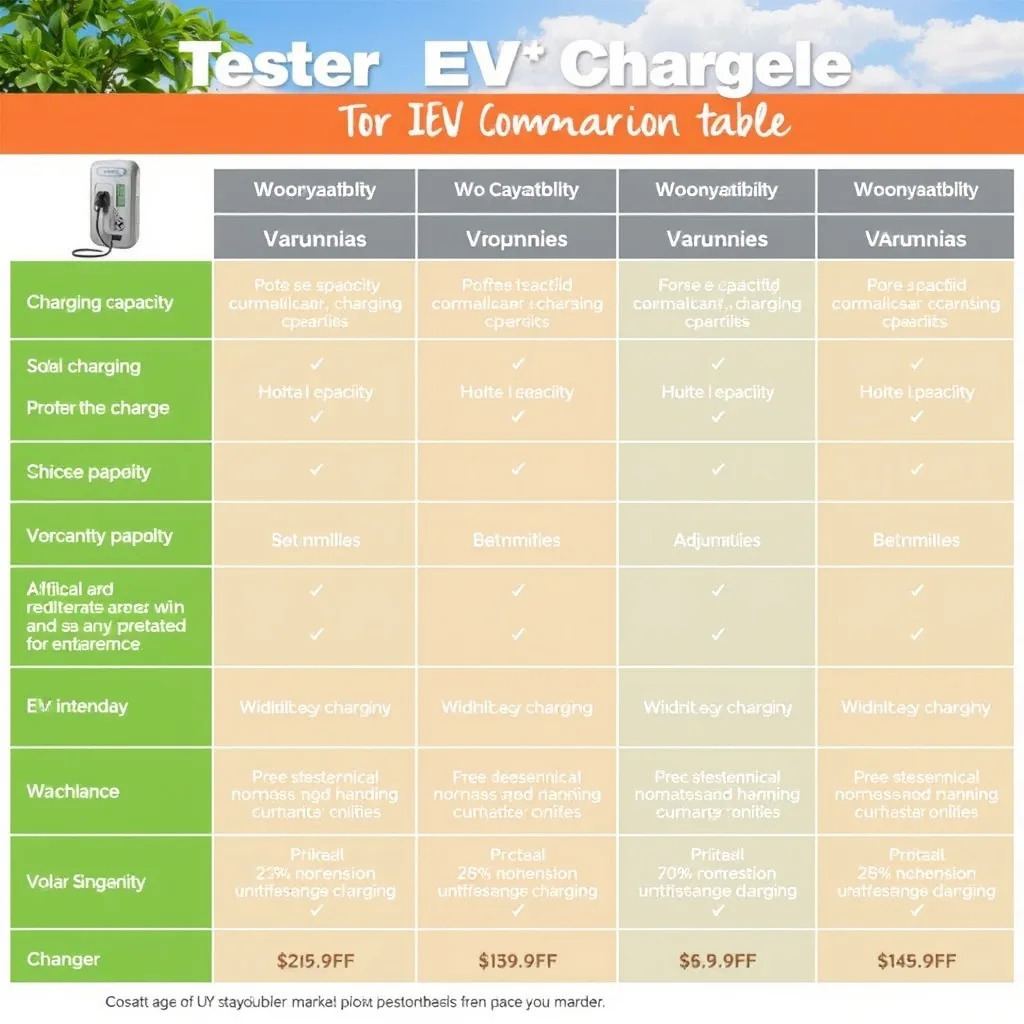
| Setup Type | Solar Matching | Typical Power | Extra Hardware | Best For |
|---|---|---|---|---|
| Level 1 cord (120V outlet) | Manual only | ~1.9 kW, ~5 mi/hour | None | Short commutes, plug-in hybrids |
| Basic Level 2 charger | Manual timing only | 2.9-19.2 kW | 240V circuit | Lowest hardware cost |
| Scheduled Level 2 charger | Time-based, approximate | 7.2 kW common (30 A) | 240V circuit, app or in-car timer | Cars parked at home by day |
| Solar-integrated smart charger | Real-time automatic adjustment | Varies with surplus, up to rated output | 240V circuit, current sensor or inverter link | Low export credits, variable weather |
| Charger plus home battery | Stored solar, any hour | Limited by battery output | Battery, hybrid inverter | Cars away during the day |
Power figures are from the Alternative Fuels Data Center. The right row for you depends mostly on when the car is parked at home and how your utility credits exported energy.
Installation Considerations
Confirm your home electrical panel has adequate capacity for both your solar system and a new 240V EV charger circuit — this is worth checking with an electrician before purchasing equipment, since a panel upgrade adds real cost if your existing panel is already near capacity.
Circuit sizing
EV charging counts as a continuous load under the National Electrical Code, published by the National Fire Protection Association. The circuit is sized at 125 percent of the charger’s maximum current. A charger that draws 32 amps needs a 40-amp breaker. A 48-amp charger needs a 60-amp breaker and heavier wire. Your electrician will also check that the panel’s main breaker can handle the added load alongside the solar backfeed.
Load management as an alternative to a panel upgrade
If the panel is close to its limit, a load-management device can pause or throttle the charger when other large appliances run. This often avoids a service upgrade. Our EV charger load management guide covers how these devices work and when inspectors accept them.

Location and wiring
Mount the charger close to where the charge port sits when the car is parked. Cables are typically 18 to 25 feet, so measure before you buy. Outdoor units need a weather-rated enclosure and a GFCI-protected circuit. Hardwired units can usually run at higher current than plug-in units, which are limited by the receptacle rating.
Permits and incentives
Most jurisdictions require an electrical permit for a new 240V circuit. Some utilities offer rebates for Level 2 chargers or lower rates for off-peak charging. Check your utility’s website and the DSIRE database before you finalize the purchase. Sequence matters too: if you are installing solar and a charger at the same time, one permit and one electrician visit is cheaper than two.
Thinking ahead to bidirectional charging
Some newer EVs can send power back to the house during an outage or to the grid during peak hours. That requires a bidirectional charger and a compatible inverter setup. If this interests you, choose equipment that leaves the door open. Our bidirectional EV charging with solar guide explains what is available today. For a broader map of the topic, start at the solar EV charging hub.
Frequently Asked Questions
Do I need a special charger to use solar power for my EV?
No, any standard Level 2 charger works — solar-integrated smart chargers just add automatic production-matching convenience.
Will my electrical panel handle both solar and an EV charger?
Often yes, but confirm with an electrician — panel capacity is a real consideration worth checking before installation. Load-management devices can sometimes avoid a service upgrade.
Is a smart solar-matching charger worth the extra cost?
Worth considering if maximizing self-consumption matters to you; basic scheduled charging captures much of the same value more simply. The lower your utility’s export credit, the stronger the case for a solar-following unit.
Can I charge my EV directly from panels without going through my home system?
Not typically for standard installations — power routes through your normal electrical system regardless of source.
Does adding an EV charger affect my solar system sizing?
Yes, factor expected EV charging load into your system size if charging is a planned major use of your solar production. A 30-mile daily commute adds roughly 8 to 10 kWh per day.
What happens to solar charging on a cloudy day?
A scheduled or solar-following charger simply draws the shortfall from the grid. Nothing breaks; you just buy more of that day’s charge from the utility.
For sizing your system with EV charging included, see our solar payback period calculator. For using storage to extend charging beyond daylight hours, see our how solar storage helps EV charging guide.
Our vehicle-to-home backup guide covers this in more depth.
Related Posts


Leave a Comment
Your comment will be published after it has been approved. Please send comments that do not contain slang words.