
Hurricane-Rated Solar Panels: What Survives and What Fails
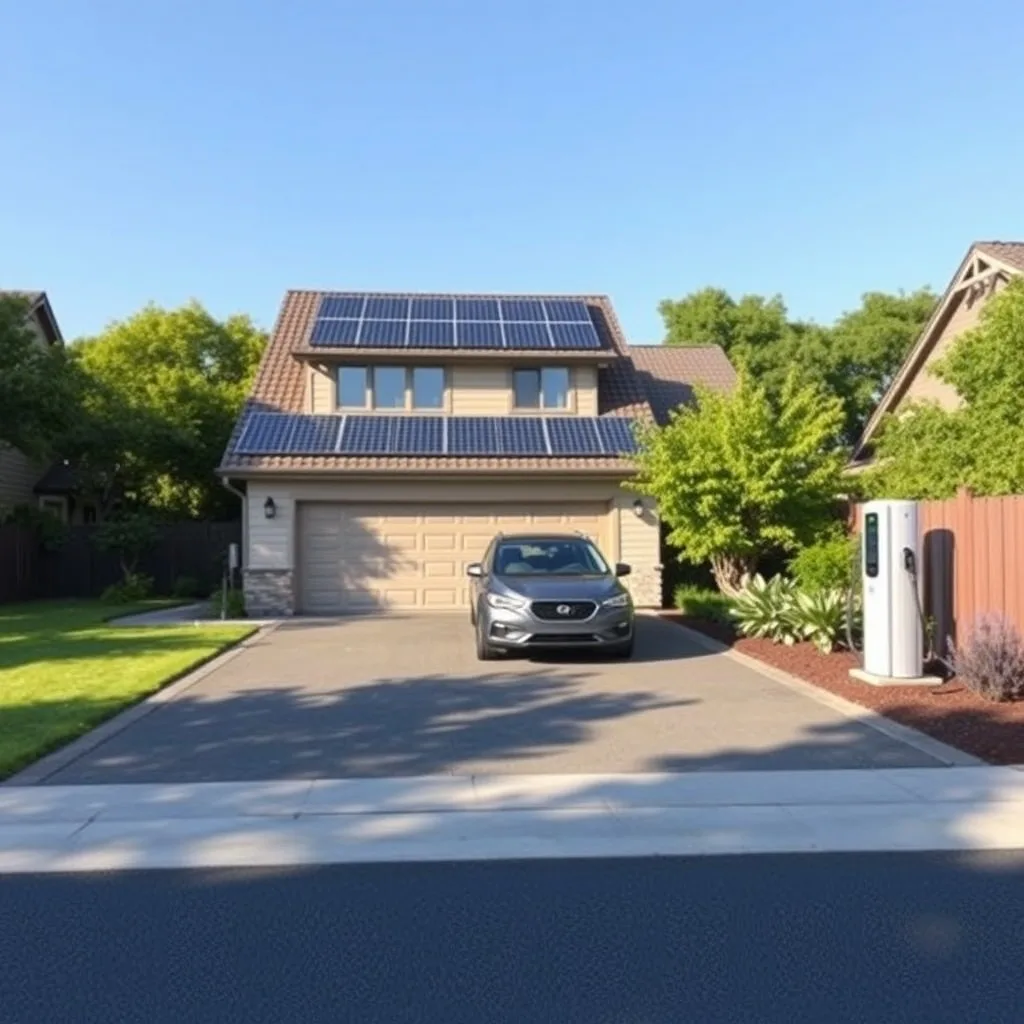
Quick answer: In high-wind events, solar modules themselves are rarely the first thing to fail. The attachments are. Post-storm surveys repeatedly find intact panels lying on the ground next to a roof with the racking still bolted to it, or clamps that slipped. The things to check in a quote are the design wind speed used, the roof zone the array sits in, the fastener pull-out capacity, and whether the product has a recognised approval for your jurisdiction.
What this guide covers
- What actually fails
- Roof zones and why corners matter
- Mechanical load ratings explained
- What to ask for in a quote
- Design choices that help
- After the storm
- Common mistakes
- FAQ
What actually fails
Modern modules are tested to withstand substantial uniform pressure on the glass. That is not usually the weak link.
The failure sequence in high wind is normally about connections. Wind lifts the array, that uplift load travels through the clamps into the rails, through the rails into the mounting feet, through the feet into the fasteners, and finally into the roof structure. The weakest element in that chain decides the outcome.
Common failure points, roughly in order of how often they appear in post-event surveys: clamps sliding or releasing under repeated loading, fasteners pulling out of thin sheathing rather than framing, mounting feet or flashing tearing away with the roof covering, and only then module frames or glass.
Cyclic loading is the part people underestimate. Hurricane wind is not a steady push. It is hours of buffeting that works fasteners loose, and a connection that would survive one large gust may not survive six hours of them.
Roof zones and why corners matter
Uplift is not uniform across a roof. Wind separating at the edges creates suction that is far stronger at corners and along edges than in the middle of a roof plane.
Engineering standards divide the roof into zones for exactly this reason, with much higher design pressures near corners and perimeters. A racking layout that is adequate in the field of the roof may be badly under-attached in a corner zone.
The practical implication is simple. Attachment spacing must be tighter near edges and corners, and many designs simply keep panels out of the worst corner zones entirely.
Setbacks from the roof edge also help in another way. They leave room for firefighters, which many jurisdictions require anyway.
Ask to see the attachment plan showing spacing by zone. A design that uses one uniform spacing everywhere has probably not been engineered for wind.
Mechanical load ratings explained
Two different ratings get quoted, and they are often confused.
Module mechanical load rating. Panels are tested to a stated design load, commonly expressed in pascals, with separate figures for downward pressure such as snow and for uplift suction. Higher uplift ratings are meaningful in hurricane regions.
Racking system rating. The mounting system is evaluated as a system with specific modules, specific clamps and specific spacing. The rating only applies to that tested combination.
That second point matters more than the first. Mixing a module from one maker with clamps from another, at a spacing nobody tested, voids the basis of the rating even if every individual component is strong.
In parts of the United States there are additional jurisdictional approvals, such as state product approval systems and county-level notices of acceptance in the most exposed areas. Where those apply, they are not optional and an installer should provide the approval numbers.
What to ask for in a quote
| Item | Why it matters |
|---|---|
| Design wind speed used | Must match your address, not a regional default |
| Exposure category | Open coastal sites see much higher loads |
| Attachment spacing by roof zone | Corners and edges need tighter spacing |
| Fastener type and embedment | Must reach framing, not just sheathing |
| Module uplift load rating | Higher is better in exposed locations |
| System listing for that module | Ratings apply to tested combinations only |
| Local product approval numbers | Required in the most exposed jurisdictions |
| Engineer stamped drawings | Evidence the load path was calculated |
Design choices that help
Keep the array low and flush. Tilted racks on a sloped roof act like wings. Flush mounting parallel to the roof reduces uplift substantially.
Set back from edges. Both for uplift and for firefighter access.
Use through-bolted or engineered attachments where possible. Structural attachment into rafters beats reliance on sheathing.
Consider a ground mount. On an exposed coastal site, a properly engineered ground array removes the roof from the load path entirely, and repairs afterwards are far easier. See ground mount solar.
Fix the roof first. A twenty year old roof covering will fail before the racking does, taking the array with it. Re-roof before installing.
Protect the electronics. Inverters and batteries should be above expected flood levels and out of direct storm exposure.
After the storm
Treat a damaged array as live. Panels generate whenever there is light, and a broken array can have energised conductors in unexpected places. Do not walk among fallen panels or handle damaged wiring.
Shut down the system using the documented procedure if it is safe to reach the disconnect. Then photograph everything before anything is moved, because those images are your insurance evidence.
Have a qualified installer inspect the mounting hardware even if nothing looks wrong. Fasteners loosened by hours of cyclic loading are the hidden damage that causes a failure in the next storm.
Check the roof penetrations for water ingress and the modules for micro-cracks, which often show up as production loss rather than visible damage. Read solar panel insurance for how claims work and what deductible may apply.
Common mistakes
Assuming the module rating covers the whole system. The attachments decide the outcome.
Uniform attachment spacing. Corners need more fixings than the field of the roof.
Fastening into sheathing. Pull-out capacity is a fraction of a proper rafter fixing.
Installing over an old roof. The covering fails first and takes the array with it.
Mixing untested component combinations. A system rating applies only to what was tested.
Approaching damaged panels after a storm. They are still generating.
FAQ
Can solar panels survive a hurricane?
Properly engineered and attached arrays have survived major storms. Failures are usually in the attachment chain rather than in the modules.
What wind speed are solar panels rated for?
There is no single figure. The system must be engineered for the design wind speed and exposure category at your specific address.
Are ground mounts safer in hurricanes?
They remove the roof from the load path and are easier to repair, but they still need proper foundation and wind engineering.
Does a tilted rack increase risk?
Yes. Tilted arrays on sloped roofs catch more uplift than flush-mounted ones.
Should I remove panels before a storm?
No. Removal is slow, dangerous and usually leaves the roof in worse condition. Correct engineering is the answer.
What should I check after a storm?
Have an installer inspect attachments and flashing, photograph everything first, and watch production data for signs of module micro-cracking.
Does insurance cover hurricane damage to panels?
Usually, subject to a separate wind and hail deductible that can be a percentage of your dwelling coverage.
Where to go next
Read hail damage, cold climate solar and the inspection checklist for the rest of the durability picture.
Wind load standards are published by the American Society of Civil Engineers, with resilience research from the National Renewable Energy Laboratory.
Related Posts

Leave a Comment
Your comment will be published after it has been approved. Please send comments that do not contain slang words.