
Do Smart Thermostats Actually Save Money? An Honest Answer
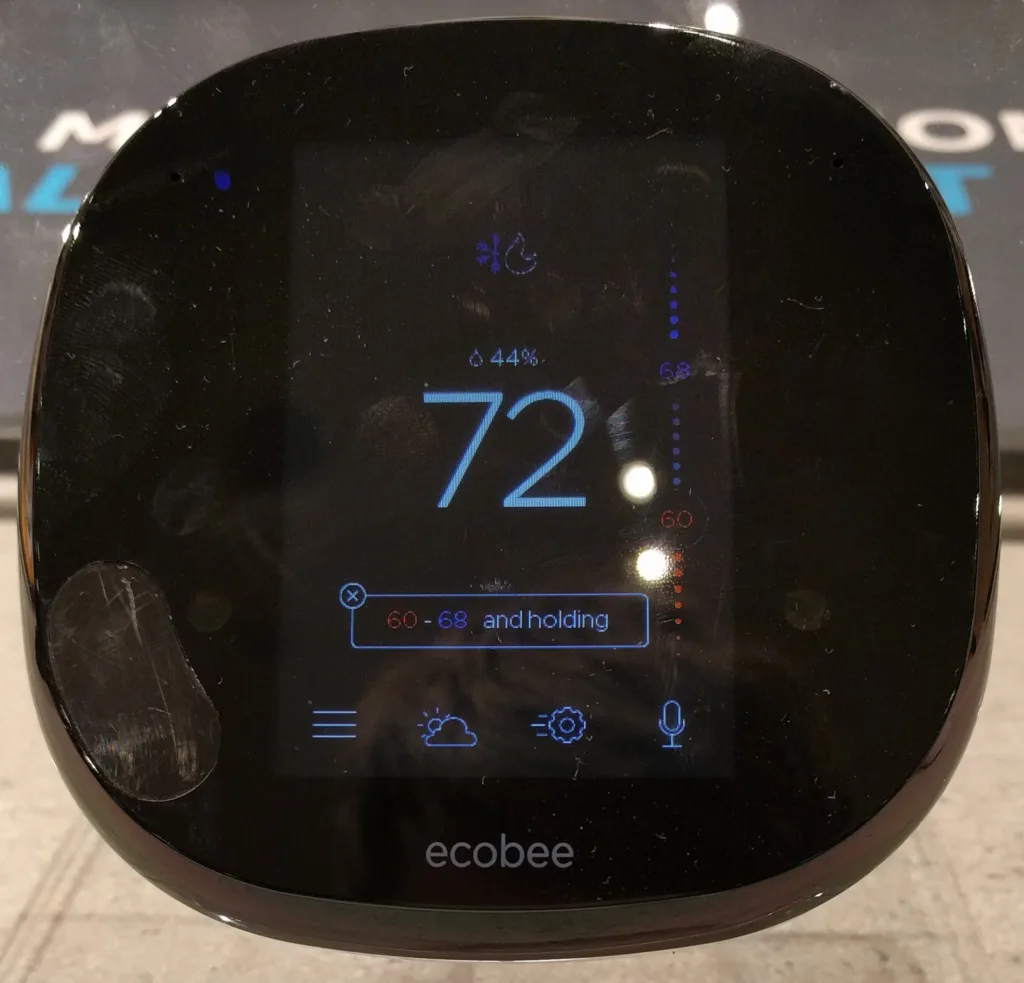
Quick answer: A smart thermostat saves money mainly by doing something you could do manually, which is not heating or cooling an empty house. Independent results are more modest than marketing claims and vary widely by household. The savings are largest if you currently leave a fixed temperature running all day, and near zero if you already use a good schedule. If you have a heat pump, the setback strategy needs care or the thermostat can cost you money.
What this guide covers
- Where the savings actually come from
- What the savings really look like
- The heat pump setback trap
- Who benefits and who does not
- Time-of-use and demand response
- Installation issues, especially the C-wire
- Common mistakes
- FAQ
Where the savings actually come from
There are only four mechanisms, and it helps to be clear about them.
Setback. Letting the house drift when nobody is home or everyone is asleep. This is the big one, and a basic programmable thermostat does it too.
Occupancy detection. Geofencing or motion sensing catches the days your schedule is wrong. This is the genuine advantage over a programmable model.
Better scheduling in practice. Many people never program their old thermostat. A device that learns or nudges gets used.
Load shifting. Pre-cooling or pre-heating before an expensive tariff period. This only matters if you are on a time-varying rate.
Notice what is not on the list. A smart thermostat does not make your furnace or heat pump more efficient. It only changes when it runs.
What the savings really look like
Manufacturers commonly cite savings in the region of ten to twelve percent on heating and around fifteen percent on cooling. Those figures come from modelled or manufacturer-run studies.
Independent field evaluations have generally found smaller and far more variable results, with plenty of households seeing little or no change and some seeing meaningful reductions. The variation is driven by behaviour, not by the device.
The honest way to think about it is this. The thermostat does not save energy. Not conditioning an empty house saves energy. The thermostat just makes that easier and more consistent.
So the question is simply whether your current habits already capture that. If you hold one temperature around the clock, there is real money on the table. If you already set back at night and when you leave, expect very little.
The heat pump setback trap
This is the part that trips up households moving away from gas, and it can make bills worse rather than better.
A heat pump is most efficient when it runs steadily at a modest output. Deep setbacks work against that. When you return and demand a large temperature rise quickly, many systems bring in auxiliary electric resistance heat to catch up.
Resistance heat delivers one unit of heat per unit of electricity. The heat pump delivers around three. So the recovery period can consume more energy than the setback saved.
The fix is to use a thermostat that is explicitly heat pump aware, with intelligent or adaptive recovery that starts early and ramps gently, and with sensible limits on when auxiliary heat is allowed. Use shallower setbacks, typically a few degrees rather than ten.
Ask before you buy whether the model manages auxiliary heat lockout properly. Not all do. See solar plus heat pumps.
Who benefits and who does not
| Household | Likely benefit |
|---|---|
| Empty house on weekdays, fixed temperature now | High |
| Irregular schedule, often away unexpectedly | High, geofencing earns its keep |
| On a time-of-use tariff | Moderate to high via pre-conditioning |
| Already using a good programmable schedule | Low |
| Someone home all day | Low |
| Heat pump with aggressive setbacks | Can be negative |
| Very leaky, poorly insulated house | Low, fix the envelope first |
Time-of-use and demand response
If your electricity price changes by hour, a smart thermostat becomes a genuinely useful tool rather than a convenience.
Pre-cooling before the expensive evening window uses cheap energy and coasts through the peak on the building’s thermal mass. On a hot day with a wide price spread, that shift can be worth more than the annual efficiency saving.
Many utilities also run demand response programmes that pay you, often as a bill credit or an upfront rebate, for letting them nudge your thermostat a degree or two during grid stress events. You can normally override any individual event.
Check your utility’s rebate list before buying. It is common for the rebate plus enrolment incentive to cover a large share of the device cost. Read time-of-use rates for how the tariff side works.
Installation issues, especially the C-wire
Most smart thermostats need continuous power, which comes from a common wire, usually called the C-wire.
Older installations frequently do not have one. Symptoms of running without proper power include the thermostat rebooting, losing wifi, or the system short cycling. Some models include an adapter that adds a common connection at the air handler, and that is the clean fix.
Two other checks are worth doing before purchase. Confirm compatibility with your specific system type, particularly for heat pumps with auxiliary heat, multi-stage equipment or zoned systems. And if you have zoning, confirm the thermostat works with your zone controller rather than assuming.
Placement matters too. A thermostat in direct sun, next to a lamp, or on an exterior wall will read the wrong temperature and no amount of software fixes that.
Common mistakes
Expecting the marketing number. Independent results are usually smaller and depend on your habits.
Deep setbacks on a heat pump. Auxiliary resistance heat can wipe out the saving.
Buying before checking utility rebates. Many programmes substantially cut the net cost.
Installing without a C-wire. Intermittent behaviour follows.
Skipping the envelope. A leaky house wastes far more than smart scheduling can save. See home energy audits.
FAQ
How much does a smart thermostat save?
Manufacturers cite roughly ten to fifteen percent on heating and cooling. Independent results are typically smaller and vary a great deal by household habits.
Is it worth it if I already use a schedule?
Probably not for energy alone. The remaining benefits are convenience, remote control and demand response payments.
Do smart thermostats work with heat pumps?
Some do it well. Look specifically for heat pump aware models with adaptive recovery and auxiliary heat lockout.
What is a C-wire and do I need one?
It is a common wire providing continuous power. Most smart thermostats need it, and an adapter can add one if your wiring lacks it.
Should I set back the temperature when away?
Yes for furnaces and air conditioning. For heat pumps use shallower setbacks to avoid triggering resistance heat.
Can it help with time-of-use rates?
Yes, and this is often the largest single benefit. Pre-conditioning before peak hours avoids the most expensive energy.
Are utility demand response programmes worth joining?
Usually. They often pay a rebate plus annual credits, and you can normally override individual events.
Where to go next
Read smart energy systems for whole-home automation, attic insulation for the envelope work that comes first, and how solar reduces your bill.
Product performance criteria are published by ENERGY STAR and the ENERGY STAR (U.S. EPA).
Related Posts

Leave a Comment
Your comment will be published after it has been approved. Please send comments that do not contain slang words.