
Solar Farm Lease Rates Per Acre: What Drives the Number
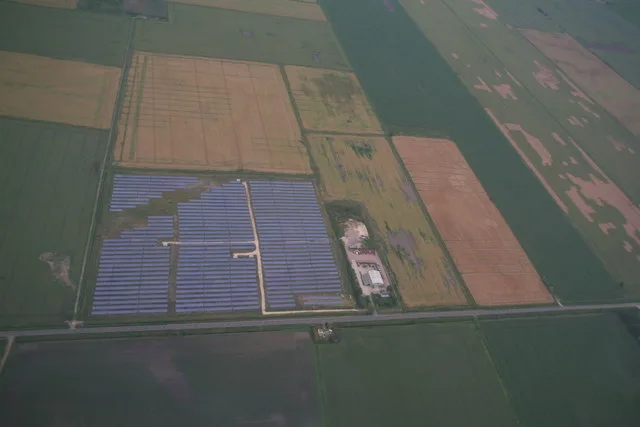
Quick answer: Reported solar lease rates in the United States span a very wide band, commonly from a few hundred dollars per acre per year to well over a thousand, and occasionally far more in constrained markets. The single biggest driver is not soil quality or acreage. It is how close you are to a substation with available capacity. Two farms ten miles apart can be offered rates that differ by a factor of three for that reason alone.
What this guide covers
- What actually sets the rate
- The value drivers ranked
- How the payments are structured
- Clauses that matter more than the rent
- Property tax and agricultural status
- Common mistakes landowners make
- FAQ
What actually sets the rate
Developers are not buying farmland. They are buying a place to connect to the grid. Everything else is secondary.
Interconnection access. Distance to a suitable line or substation, and whether that substation has spare capacity, dominates the offer. Interconnection studies and upgrades can cost millions, so a site that avoids them is worth a great deal more.
Queue position. In many regions the interconnection queue is years long. A site with an existing queue position carries real value.
Buildable acreage. Wetlands, floodplain, slope, tree lines and irregular parcel shape all reduce what can actually be built. Gross acres and buildable acres are different numbers.
Local policy. Zoning that permits utility-scale solar, and a county that has approved projects before, reduces development risk and raises what a developer will pay.
Market prices. Local power prices and state incentive structures set the ceiling on what a project can afford.
Soil quality, which farmers naturally focus on, barely registers. A developer would rather have poor soil next to a substation than prime soil twenty miles away.
The value drivers ranked
| Driver | Effect on rate |
|---|---|
| Distance to substation with capacity | Very large |
| Existing interconnection queue position | Very large |
| Contiguous buildable acreage | Large |
| Permissive local zoning | Large |
| Flat, clear, well-drained ground | Moderate |
| Road access for construction | Moderate |
| Soil productivity | Minimal |
How the payments are structured
A solar lease usually has three phases, and landowners often only look at the third.
Option period. The developer pays a smaller annual amount for the exclusive right to study the site, typically for three to five years. Many projects never leave this phase. Ask what happens if the option lapses.
Construction period. Payment often steps up while the site is being built, and there may be separate compensation for crop loss or soil disturbance.
Operating term. The main rent begins at commercial operation and runs for roughly twenty to thirty years, usually with extension options that the developer controls.
Escalation matters enormously over that horizon. A fixed rent with no escalator loses real value every year for three decades. A modest annual escalator, commonly in the low single digits, changes the total considerably.
Rent is sometimes quoted per acre and sometimes per megawatt installed. Those are different bases and they can produce very different totals on the same land.
Clauses that matter more than the rent
Landowners negotiate the rate and sign the rest. That is backwards. These clauses carry more risk than a few dollars per acre.
Decommissioning security. Who removes the equipment at the end, and what financial instrument guarantees it? A bond or escrow held by the county is far stronger than a promise in the lease.
Assignment. Projects change hands routinely. The company you sign with is often not the company that operates. Understand what consent rights, if any, you retain.
Mortgage subordination. If the land is mortgaged, your lender will have views. This must be resolved before signing, not after.
Setbacks, screening and fencing. Especially where you live on or next to the parcel.
Access easements and drainage. Construction traffic, tile drainage damage and repair obligations should be explicit.
Restoration standard. What condition the soil must be returned in, in measurable terms.
None of this is legal advice. Have an attorney who has handled energy leases review the document, and treat that fee as part of the transaction.
Property tax and agricultural status
Converting farmland to energy generation can change how the parcel is assessed, and it can affect agricultural use classifications that reduce your tax bill.
In some jurisdictions the change triggers rollback taxes on prior years. In others there are specific solar assessment rules or negotiated payments in lieu of taxes.
This varies by state and often by county. Ask the developer to state clearly who bears any increase, and confirm the position independently with your county assessor before signing.
Agrivoltaic designs, where grazing or cropping continues between rows, can sometimes preserve agricultural status. See agrivoltaics for how those layouts work.
Common mistakes landowners make
Signing the first option agreement offered. Option agreements are frequently presented as routine paperwork. They are binding and exclusive.
Negotiating only the rate. Decommissioning, assignment and restoration carry more long-term risk.
Accepting no escalator. Over thirty years, inflation does the damage quietly.
Assuming the project will be built. Many optioned sites never reach construction. Plan your finances on the option payment, not the operating rent.
Not consulting the lender or the heirs. A thirty-year encumbrance outlives most farm plans.
FAQ
How much per acre do solar farms pay?
Reported rates in the United States range widely, commonly from a few hundred to over a thousand dollars per acre per year, driven mainly by grid proximity rather than land quality.
How long is a typical solar lease?
Usually an option period of three to five years followed by an operating term of roughly twenty to thirty years, with extension options.
Why do offers vary so much between neighbours?
Interconnection access dominates. A parcel near a substation with spare capacity is worth far more than one that is not.
Who removes the panels at the end?
The developer should, under a decommissioning obligation. Insist on financial security such as a bond or escrow rather than a bare promise.
Will my property taxes change?
Often yes, and agricultural classifications may be affected. Rules vary by state and county, so confirm with your assessor.
Can I still farm the land?
Sometimes, under agrivoltaic designs that allow grazing or certain crops between rows. This must be written into the lease.
Do I need a lawyer?
Yes. These are long, complex commercial documents and the standard drafts favour the developer.
Where to go next
Read solar farm development for the developer’s side, land requirements for the geometry, and grid connection for why interconnection dominates everything.
Land use and siting research is published by the National Renewable Energy Laboratory and the U.S. Department of Energy.
Related Posts

Leave a Comment
Your comment will be published after it has been approved. Please send comments that do not contain slang words.