
Utility Scale Solar Land Requirements
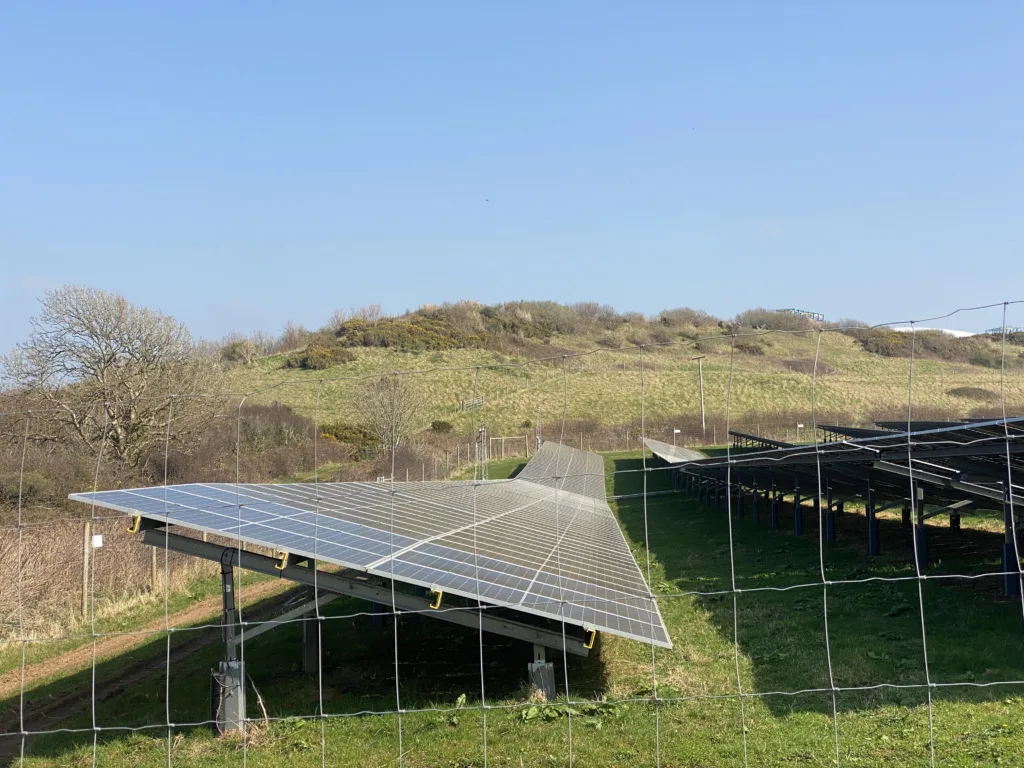
Utility-scale solar land requirements are a genuine consideration in project development and a common point of public discussion – large solar installations do require meaningfully more land per megawatt than a natural gas plant, though the comparison against other land uses (including other energy sources’ full footprint) is more nuanced than headline acreage figures alone suggest.
This guide covers actual land requirements per megawatt and the siting criteria developers evaluate. It covers land-use tradeoffs and mitigation approaches like agrivoltaics. It also compares utility-scale land use to other energy sources on a full lifecycle basis.
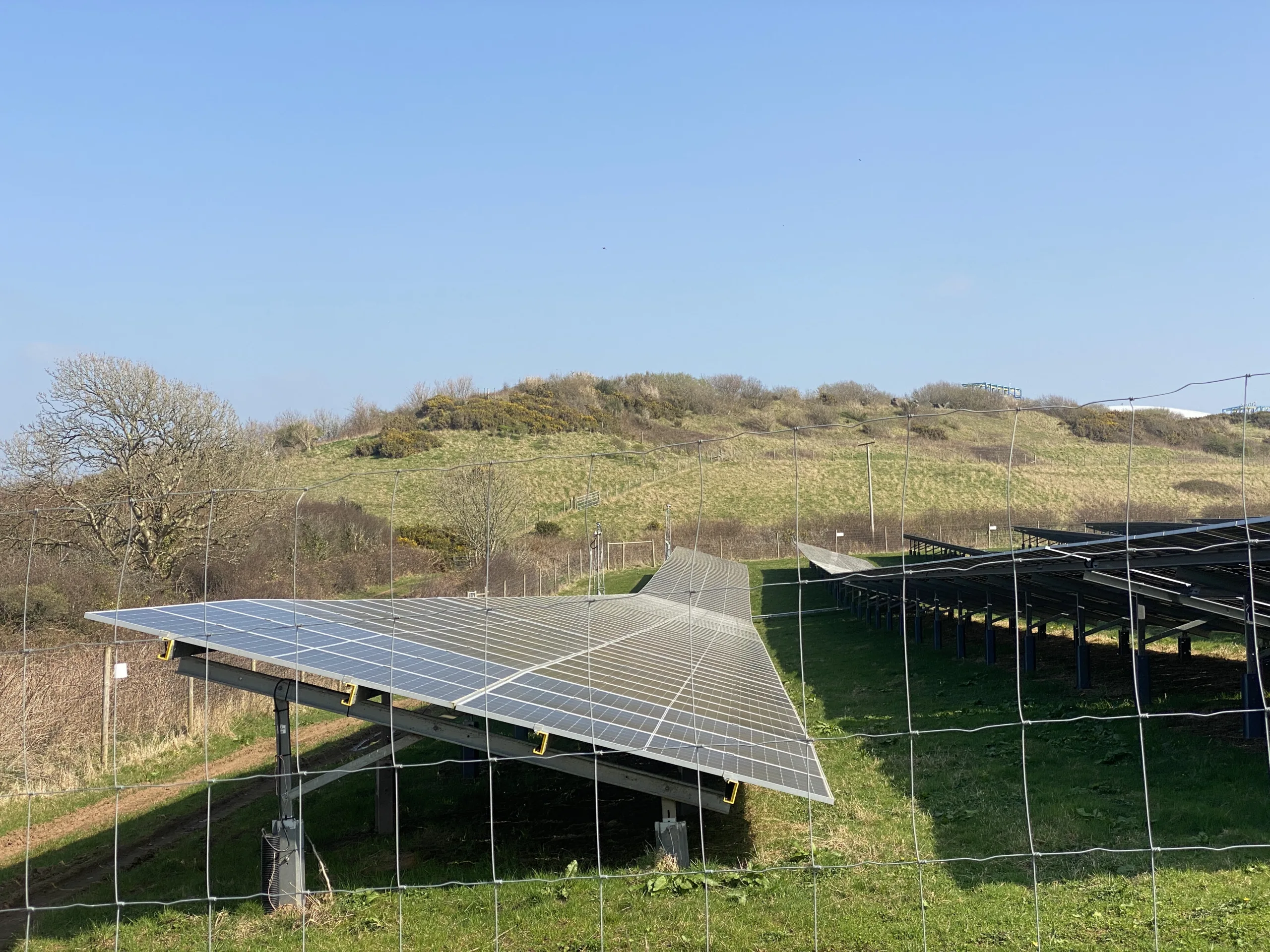
Table of Contents
- Land Required Per Megawatt
- Siting Criteria Developers Evaluate
- Land-Use Tradeoffs and Concerns
- Agrivoltaics as a Mitigation Approach
- Comparison to Other Energy Sources’ Land Footprint
- Brownfield and Marginal Land Siting
- Land Use Permitting and Zoning
- Setback and Buffer Requirements
- Post-Project Land Restoration
- Common Misconceptions
- Frequently Asked Questions
Land Required Per Megawatt
| Installation Type | Approximate Land Per MW |
|---|---|
| Fixed-tilt utility-scale | ~5-7 acres per MW |
| Single-axis tracking utility-scale | ~7-10 acres per MW (wider row spacing to avoid self-shading) |
| Agrivoltaic/dual-use configurations | Similar or somewhat more land, but land supports both solar and agricultural use simultaneously |
These figures are approximate industry-typical ranges – actual land requirement varies by specific technology, panel efficiency, terrain, and row-spacing design choices for a given project.
Siting Criteria Developers Evaluate
Beyond simple acreage availability, developers evaluate a range of siting factors. Proximity to existing transmission infrastructure is a major cost and interconnection-timeline driver. Land slope and terrain suitability matter, since flat or gently sloped land is significantly cheaper to develop. Solar resource quality is a third factor. Environmental sensitivity is a fourth, with wetlands, protected habitat, and floodplains generally avoided or requiring extensive mitigation. Local zoning and community acceptance round out the list. Transmission proximity is often an underappreciated factor. Land that is otherwise ideal but far from adequate grid infrastructure can be effectively unviable. The cost of new transmission lines is what kills it.
Land-Use Tradeoffs and Concerns
Common community and policy concerns around utility-scale land use fall into three groups. One is competition with agricultural land, particularly in regions with limited high-quality farmland. Another is habitat and wildlife impact. The third is visual and landscape change for nearby residents. These are legitimate considerations, and responsible development processes address them rather than dismissing them. Environmental review and community engagement are the standard tools. Mitigation approaches like agrivoltaics are increasingly used as well. So is preferential siting on lower-conflict land, such as brownfields, marginal agricultural land, or areas with existing disturbance.
Agrivoltaics as a Mitigation Approach
Agrivoltaics combines solar generation with continued agricultural use of the same land. It works through elevated panel mounting or panel arrangements designed around specific crop needs. It has moved from research pilots to a genuine, growing development approach that directly addresses land-use competition concerns. See our clean energy technology trends guide for more on this technology. From a land-requirement perspective, it does not reduce the total acreage needed for a given solar capacity. It does change the land-use conflict calculus. The same footprint stays in productive agricultural use.
Comparison to Other Energy Sources’ Land Footprint
Solar’s land footprint per unit of energy is often compared unfavorably to fossil fuel generation’s much smaller direct plant footprint. That comparison is frequently incomplete. It typically excludes the land footprint of fuel extraction through mining and drilling, plus associated infrastructure and environmental impact zones. Those can be substantial when accounted for over a fuel source’s full lifecycle. A fair land-footprint comparison should account for full lifecycle land use on both sides rather than comparing solar’s direct footprint against only a fossil plant’s immediate site footprint.
Brownfield and Marginal Land Siting
A growing share of new utility-scale development targets lower-conflict sites specifically. Brownfield sites are one example, meaning former industrial or contaminated land unsuitable for many other uses. Landfill caps are another. Marginal agricultural land with lower productivity is a third. All three reduce land-use conflict with prime farmland or undisturbed natural habitat. This siting approach doesn’t eliminate land-use considerations entirely, but it meaningfully reduces the tradeoffs associated with converting high-value agricultural or ecologically sensitive land specifically.
Land Use Permitting and Zoning
Beyond environmental review, utility-scale projects typically require local zoning approval or a conditional use permit, sometimes involving public hearings where community members can raise concerns or support. Zoning requirements vary enormously by jurisdiction. Some counties have adopted solar-specific zoning ordinances with clear, predictable requirements. Others evaluate each project through a more general and less predictable conditional-use process. Developers increasingly engage with local jurisdictions early, sometimes years before formal application. The goal is to understand and help shape solar-specific zoning frameworks. That benefits both project predictability and community input quality, compared to a purely reactive, case-by-case approval process.
Setback and Buffer Requirements
| Requirement Type | Typical Purpose |
|---|---|
| Property line setbacks | Distance from the array to adjacent property boundaries, often with landscaping/screening requirements |
| Road setbacks | Distance from public roads, partly for visual/safety reasons |
| Wetland/waterway buffers | Environmental protection, typically driven by state/federal wetland regulations |
| Residential proximity buffers | Distance from nearby homes, sometimes with vegetative screening requirements to reduce visual impact |
These requirements reduce the effective usable land within a given parcel. Developers factor that in during site selection and array design from the earliest planning stages. A parcel that looks adequately sized on paper can end up meaningfully smaller in usable area once all applicable setbacks are applied.
Post-Project Land Restoration
Land restoration requirements at decommissioning – covered from the financing angle in our utility-scale solar guide – are directly relevant to land-use planning as well: modern lease and permit agreements increasingly specify that land be returned to a usable condition (often agricultural) at the end of the project’s operating life, which is a meaningful factor in how communities and landowners evaluate the long-term land-use tradeoff of hosting a project. This restoration expectation shapes how utility-scale solar is framed in modern development agreements. It is increasingly treated as a long-term but ultimately reversible land use. It is not a permanent conversion.
Common Misconceptions
- Comparing solar’s direct footprint to fossil fuels’ direct plant footprint alone – a fair comparison should account for full lifecycle land use (extraction, infrastructure) on both sides.
- Assuming all utility-scale solar competes directly with prime farmland – a growing share of development specifically targets brownfields and marginal land.
- Assuming agrivoltaics eliminates land-use tradeoffs entirely – it changes the conflict calculus by enabling dual use, but doesn’t reduce total acreage required.
- Underestimating transmission proximity as a siting factor – often as important as land cost/availability itself in determining project viability.
Frequently Asked Questions
How much land does a utility-scale solar farm actually need?
Roughly 5-10 acres per megawatt depending on technology (fixed-tilt vs. tracking) and site-specific design, though this varies by project.
Does utility-scale solar always compete with farmland?
Not always – a growing share of development specifically targets brownfields, landfill caps, and lower-productivity marginal agricultural land to reduce land-use conflict.
Is solar’s land footprint really worse than fossil fuel generation?
A fair comparison should include fossil fuels’ full lifecycle land use (extraction, infrastructure), not just the direct plant footprint – solar’s comparative disadvantage is smaller than a direct-footprint-only comparison suggests.
What is the most important siting factor besides land availability?
Proximity to adequate transmission infrastructure – land that’s otherwise ideal but far from the grid can be effectively unviable due to new transmission line costs.
Does agrivoltaics reduce how much land a solar project needs?
No – it doesn’t reduce total acreage required for a given capacity, but it allows continued agricultural use of that same land, changing the land-use tradeoff rather than the footprint itself.
Is a solar farm a permanent conversion of the land?
Increasingly framed as reversible in modern agreements – many current leases and permits require land restoration to a usable (often agricultural) condition at the end of the project’s operating life.
Why do setback requirements matter for how much usable land a project needs?
Property line, road, wetland, and residential-proximity setbacks all reduce the effective usable area within a parcel – a site that looks adequately sized on paper can be meaningfully smaller in usable area once setbacks are applied.
Conclusion
Utility-scale solar land requirements are real and worth understanding accurately, at roughly 5 to 10 acres per megawatt. The common comparison to other energy sources often overlooks full lifecycle land use. Modern siting also increasingly targets lower-conflict land specifically, to address legitimate community concerns. See our utility-scale solar guide for the fuller development context this fits into.
Further reading: NREL – Land-Use Requirements for Solar Power Plants and Wikipedia – Agrivoltaics.
Related Reading
For the full picture of how utility-scale solar projects come together, see our Utility-Scale Solar: The Complete 2026 Guide, covering development, financing, interconnection, and grid integration.
Related Posts

Leave a Comment
Your comment will be published after it has been approved. Please send comments that do not contain slang words.