
Utility Scale Solar Construction Timeline
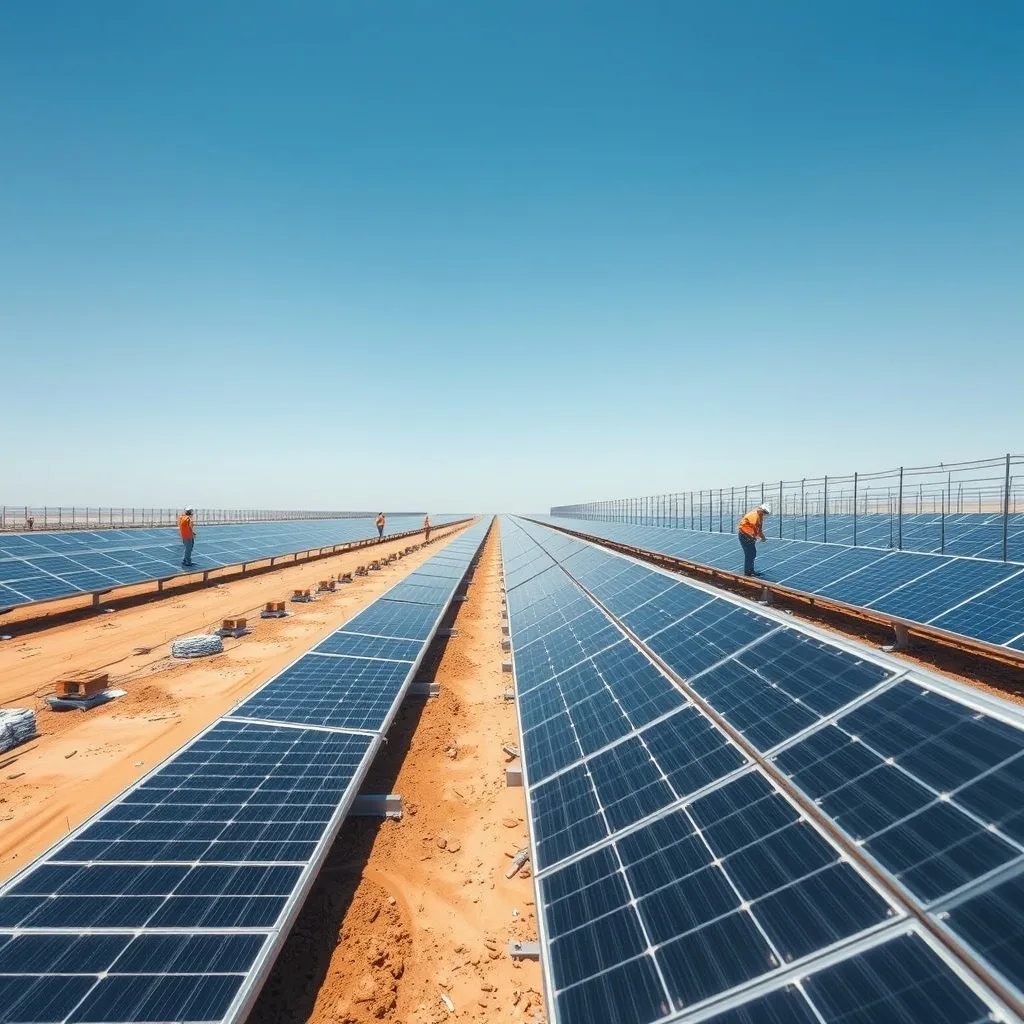
A utility-scale solar construction timeline runs from first site screening to commercial operation and commonly takes three to six years, of which physical construction is often only 9 to 18 months. The rest is development: land, permits, environmental review, grid interconnection studies and financing. This guide lays out each phase in order, gives typical durations, explains what happens on site once construction starts, and identifies the steps that most often push a project late.
Table of Contents
- The Full Timeline at a Glance
- Development: Site, Land and Interconnection
- Permitting and Environmental Review
- Offtake, Procurement and Financial Close
- Construction Phase, Step by Step
- What Pushes Projects Late
- FAQ
The Full Timeline at a Glance
The table gives typical ranges for a project in the tens to hundreds of megawatts. Phases overlap; interconnection studies, permitting and offtake negotiation usually run in parallel, which is why the total is shorter than the sum of the rows.
| Phase | Main activities | Typical duration | Runs in parallel with |
|---|---|---|---|
| 1. Site screening and land control | Resource assessment, grid proximity, option agreements or leases | 3 to 12 months | — |
| 2. Interconnection | Queue application, cluster and impact studies, interconnection agreement | 1 to 4 years | Phases 3 and 4 |
| 3. Permitting and environmental review | Zoning, environmental studies, cultural and wildlife surveys, public hearings | 1 to 3 years | Phases 2 and 4 |
| 4. Offtake and financing | PPA negotiation, equipment procurement, tax-credit qualification, financial close | 6 to 24 months | Phases 2 and 3 |
| 5. Construction | Civil works, piles, racking, modules, electrical, substation | 9 to 18 months | Utility-side interconnection works |
| 6. Commissioning and COD | Testing, grid compliance tests, energisation, commercial operation date | 1 to 3 months | — |
Site quality sets the pace from the start. Projects in regions with strong sun and available transmission move faster on every later phase, which is one reason the U.S. build-out concentrates where the U.S. Energy Information Administration’s overview of where solar is found shows the resource is best.
Development: Site, Land and Interconnection
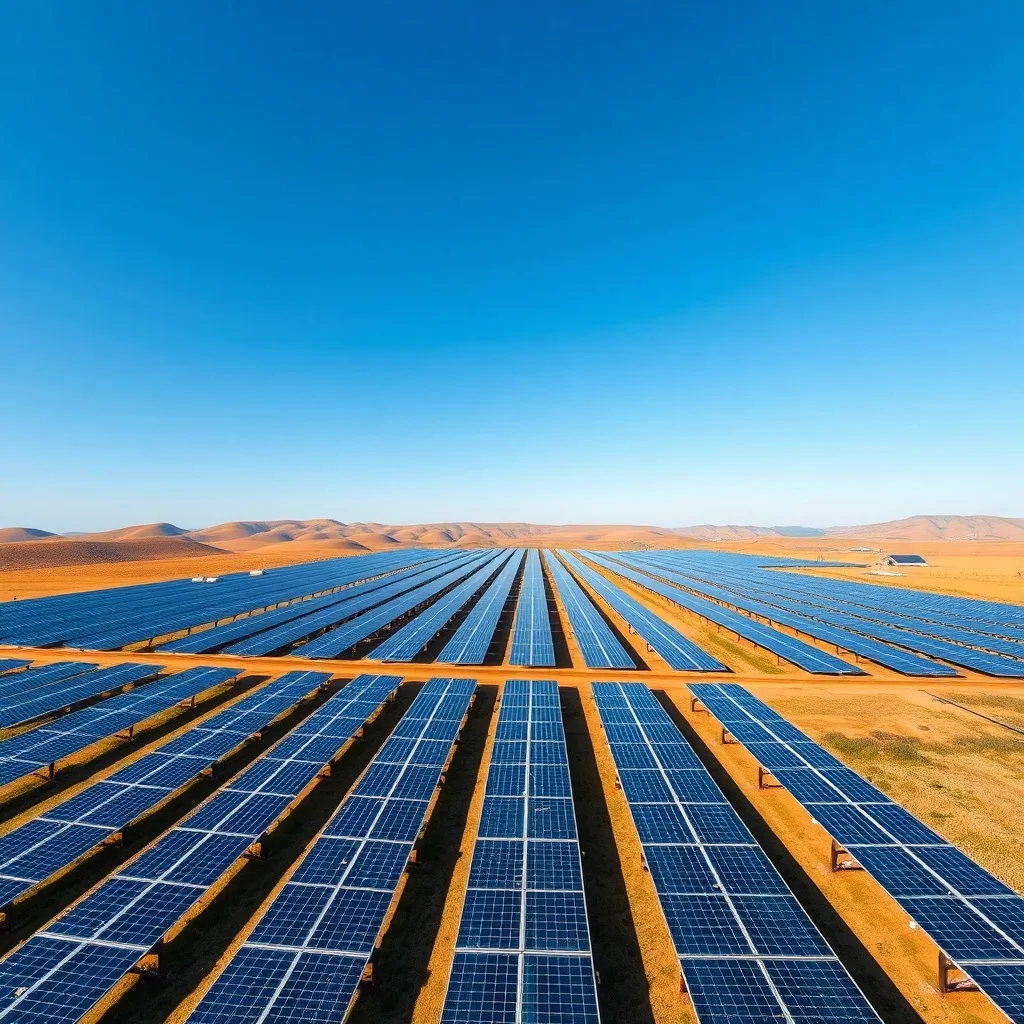
Development begins with a site that has three things: good sun, flat or gently sloping land with few constraints, and a substation or transmission line nearby with spare capacity. Developers screen hundreds of parcels for every one they take forward.
Land control comes next, usually as an option to lease that converts to a long-term lease when the project is confirmed. The option period, often two to five years, has to cover the rest of development, which is why option terms and payments are negotiated carefully; see our guide to solar farm lease rates per acre.
Interconnection is the long pole. The developer applies to the grid operator’s queue, pays deposits, and waits through feasibility, system impact and facilities studies before receiving an interconnection agreement with assigned upgrade costs. In congested regions this alone can take several years, and the studies decide whether the project is economic at all. The steps, costs and recent U.S. queue reforms are covered in our solar farm grid connection guide.
Permitting and Environmental Review
Permitting runs alongside interconnection and involves several layers of government. The scope depends on location and on whether federal land, funding or permits are involved.
- Local zoning and land use. A conditional use permit or rezoning from the county or municipality, with public hearings. Setbacks, screening, decommissioning bonds and glare studies are typical conditions.
- Environmental studies. Wetlands delineation, threatened and endangered species surveys, cultural resource surveys, stormwater and erosion plans. Seasonal survey windows can add months if missed.
- State-level approvals. Some states require a siting certificate from a state board for projects above a size threshold, with their own review timelines.
- Federal review. Projects on federal land or with a federal nexus go through the national environmental review process, which can take a year or more.
- Building and electrical permits. Issued closer to construction, based on final engineering drawings.
Community engagement is not a formal step but shapes all of the above. Projects that meet neighbours early, address glare, noise, traffic and farmland concerns, and commit to decommissioning tend to clear hearings faster. Environmental trade-offs and how developers mitigate them are covered in our review of utility-scale solar environmental impact.
Offtake, Procurement and Financial Close
Financial close is the point at which lenders and equity commit funds, and it requires the other phases to be far enough along: an interconnection agreement, major permits, a signed offtake contract and firm equipment pricing. Until then, the developer spends its own capital at risk.
Three workstreams converge here:
- Offtake. A power purchase agreement with a utility or corporate buyer, negotiated over months; terms and risk allocation are explained in utility-scale solar PPA agreements.
- Procurement. Modules, inverters, racking and the main transformer are ordered. Transformers and high-voltage breakers have had lead times of a year or more, so they are often ordered before financial close.
- Tax credit qualification. Since the 2025 U.S. law, solar projects generally must begin construction by July 4, 2026 or be placed in service by the end of 2027 to claim the federal investment or production credit, with tightened supply-chain rules. Documenting a begin-construction date has become a milestone in itself.
Financial close typically comes a few months before mobilisation, with an engineering, procurement and construction (EPC) contract signed at the same time. Soft costs, including permitting, interconnection paperwork and financing, are a meaningful share of the total budget; the Department of Energy’s solar soft costs basics explains what they cover.
Construction Phase, Step by Step
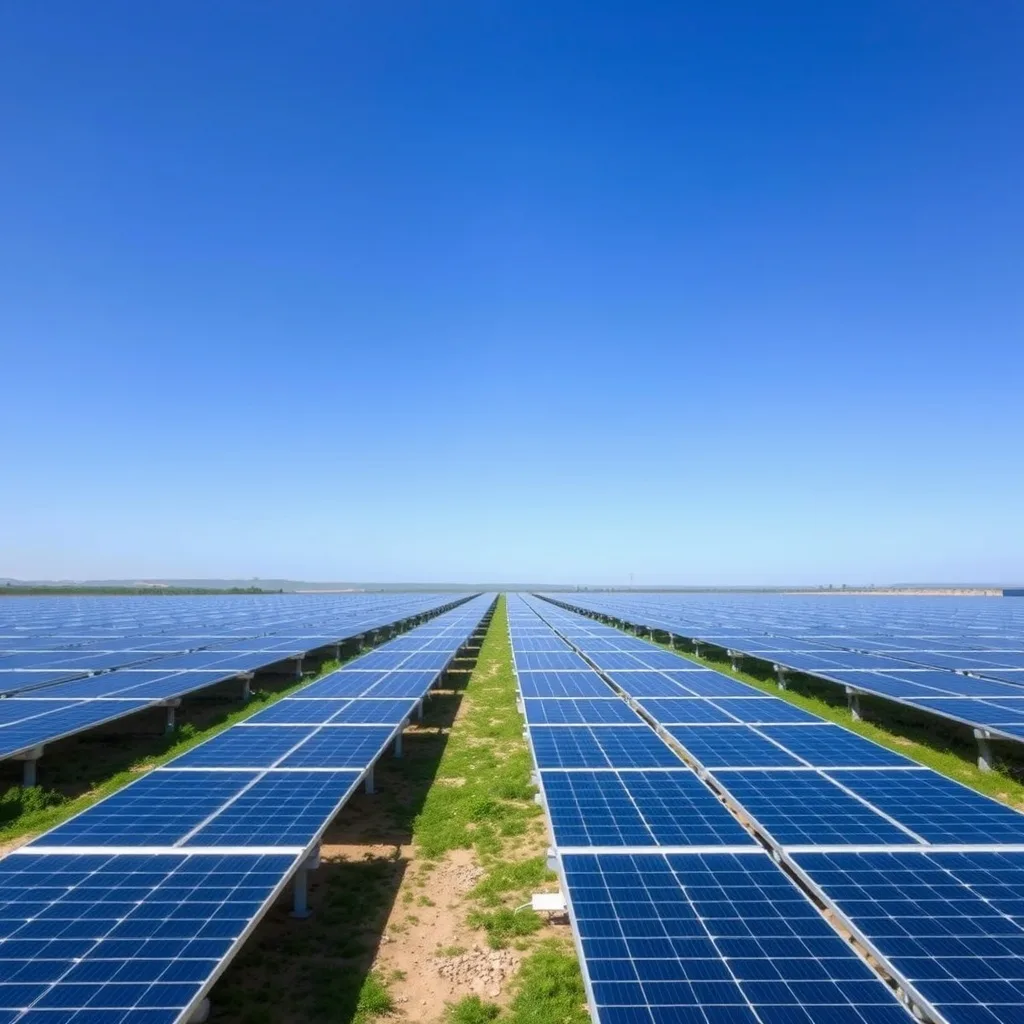
Once the site is mobilised, construction of a large plant follows a fixed sequence, with crews moving across the site in waves so that several steps are under way at once.
| Step | Work | Typical share of construction period |
|---|---|---|
| 1. Mobilisation and civil works | Access roads, laydown yards, fencing, erosion controls, grading where needed | First 10 to 20 percent |
| 2. Pile driving | Steel piles driven on a surveyed grid to support trackers or fixed racks; pull tests verify capacity | Overlaps with 1 and 3 |
| 3. Racking and trackers | Torque tubes, bearings, motors and controllers installed on the piles | Middle third |
| 4. Module installation | Panels mounted and clipped; the most labour-intensive step | Middle third, following racking crews |
| 5. DC electrical | String wiring, combiner boxes, trenching and collection cables to inverter pads | Follows module crews |
| 6. Inverters and transformers | Inverter skids and medium-voltage transformers set on pads and connected | Later half |
| 7. Substation and gen-tie | Plant substation built, main transformer set, interconnection line strung | Runs the full period; long-lead items critical |
| 8. Commissioning | String testing, inverter start-up, protection tests, SCADA, grid code tests with the utility | Final 10 to 15 percent |
The pace is set by the slowest of three chains: the utility’s own interconnection works, the delivery of the main transformer, and weather windows for civil works and pile driving. Module and racking installation, though visible, is rarely the bottleneck on a well-run site.
Commissioning ends with tests witnessed by the grid operator, permission to energise, and a ramp-up period. When the plant meets the performance and compliance tests in its contracts, the commercial operation date is declared and revenue begins.
What Pushes Projects Late
Most delays come from outside the fence. In rough order of frequency:
- Interconnection. Queue backlogs, restudies when neighbouring projects withdraw, and utility-side construction lagging the plant.
- Equipment supply. Transformer and breaker lead times, module import restrictions and tariff changes.
- Permitting and litigation. Appeals of local approvals, missed survey seasons, and changes in state siting rules.
- Financing conditions. Interest rate moves or tax-credit uncertainty that reopen contract negotiations.
- Weather and site conditions. Wet seasons that halt grading and piling; unexpected rock or soft ground.
- Labour. Shortages of qualified electricians and pile crews when many projects build at once.
Experienced developers protect the schedule by ordering long-lead equipment early, entering the grid queue only when ready, negotiating COD windows rather than fixed dates, and building float into the construction contract. For the wider set of guides on building and operating large plants, see our utility-scale solar guides.
FAQ
How long does it take to build a utility-scale solar farm?
Physical construction typically takes 9 to 18 months. Including development, permitting, interconnection and financing, the full timeline is commonly three to six years.
What is the longest step in a solar farm timeline?
Grid interconnection. Queue studies and utility-side upgrades can take several years in congested regions and often determine whether the project proceeds at all.
When does a solar project reach financial close?
After it has an interconnection agreement, major permits, a signed offtake contract and firm equipment pricing, usually a few months before construction mobilises.
What happens during solar farm commissioning?
String and inverter testing, protection and SCADA checks, and grid-code compliance tests witnessed by the utility, followed by energisation and a ramp-up to commercial operation.
Why are transformers a problem for solar construction?
Main power transformers and high-voltage breakers have had lead times of a year or more, so late orders can leave a finished plant waiting to connect.
Do tax credit deadlines affect construction timelines?
Yes. Under the 2025 U.S. law, solar projects generally must begin construction by July 4, 2026 or be in service by the end of 2027 to qualify, which has pushed developers to lock in start dates early.
Related Posts
Leave a Comment
Your comment will be published after it has been approved. Please send comments that do not contain slang words.