
Agrivoltaics And Solar Farming
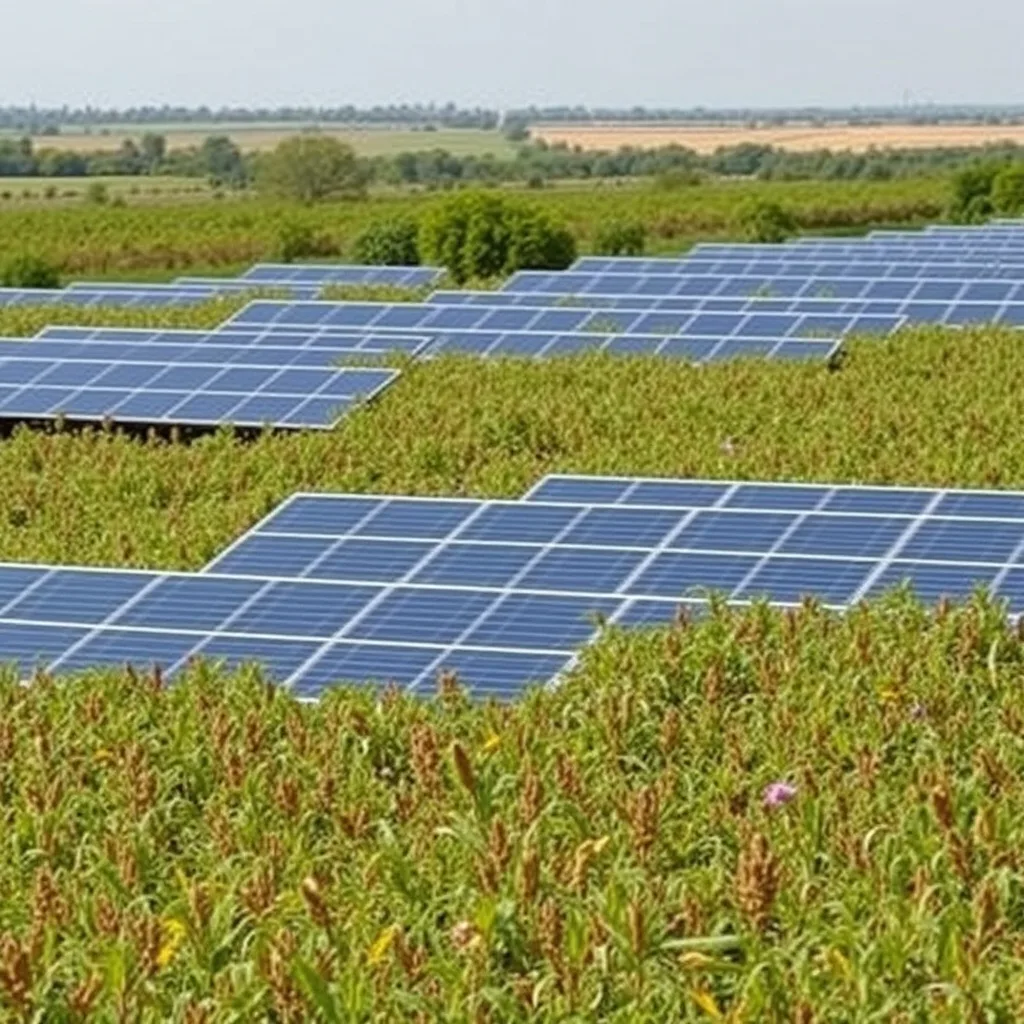
Agrivoltaics combines solar energy generation with active agricultural use on the same land — grazing, crop growing, or pollinator habitat beneath and between panel rows, addressing solar’s land-use tension directly.
Table of Contents
- What Agrivoltaics Actually Looks Like
- Compatible Agricultural Uses
- Common Combinations
- Benefits and Real Challenges
- Frequently Asked Questions
What Agrivoltaics Actually Looks Like
Panel spacing and mounting height are adjusted specifically to allow continued agricultural activity beneath and around the array — taller mounting for equipment access, wider row spacing for light penetration to crops, or simply grazing-compatible fencing and panel height for livestock.
Compatible Agricultural Uses
Sheep grazing is currently the most common and well-proven combination, since sheep naturally keep vegetation controlled beneath panels without damaging equipment (unlike larger livestock). Certain shade-tolerant crops and pollinator-friendly ground cover, supporting bee populations, are other growing applications.
Common Combinations
| Agricultural Use | Compatibility |
|---|---|
| Sheep grazing | High — most proven combination |
| Pollinator habitat | High — minimal panel design changes needed |
| Shade-tolerant crops | Moderate — requires specific crop selection |
| Large livestock (cattle) | Lower — requires taller, sturdier mounting |
Benefits and Real Challenges
Agrivoltaics helps address land-use conflicts and can provide farmers additional lease income alongside continued agricultural production. Real challenges include higher upfront design/construction cost for elevated or wider-spaced mounting, and the fact that not every crop or livestock type is genuinely compatible with panel infrastructure.
Frequently Asked Questions
Does agrivoltaics reduce solar energy output?
Some designs trade a small amount of density for agricultural compatibility, though the impact is generally modest.
What’s the most common agrivoltaic combination?
Sheep grazing beneath solar arrays is currently the most widely proven and adopted combination.
Can farmers make money from agrivoltaics?
Yes, through land lease income from the solar project alongside continued agricultural revenue.
Is agrivoltaics more expensive to build than standard solar?
Generally yes, due to taller or wider-spaced mounting requirements for agricultural compatibility.
Does every crop work with agrivoltaics?
No, shade tolerance and compatibility with panel infrastructure vary significantly by crop type.
For the broader land-use tension this addresses, see our utility-scale solar challenges guide. For the general development process, see our solar farm development guide.
A related dual-use case for growers is covered in greenhouse solar power.
Related Posts
Leave a Comment
Your comment will be published after it has been approved. Please send comments that do not contain slang words.