
Solar Water Heaters in 2026: Types, Savings and When to Skip Them
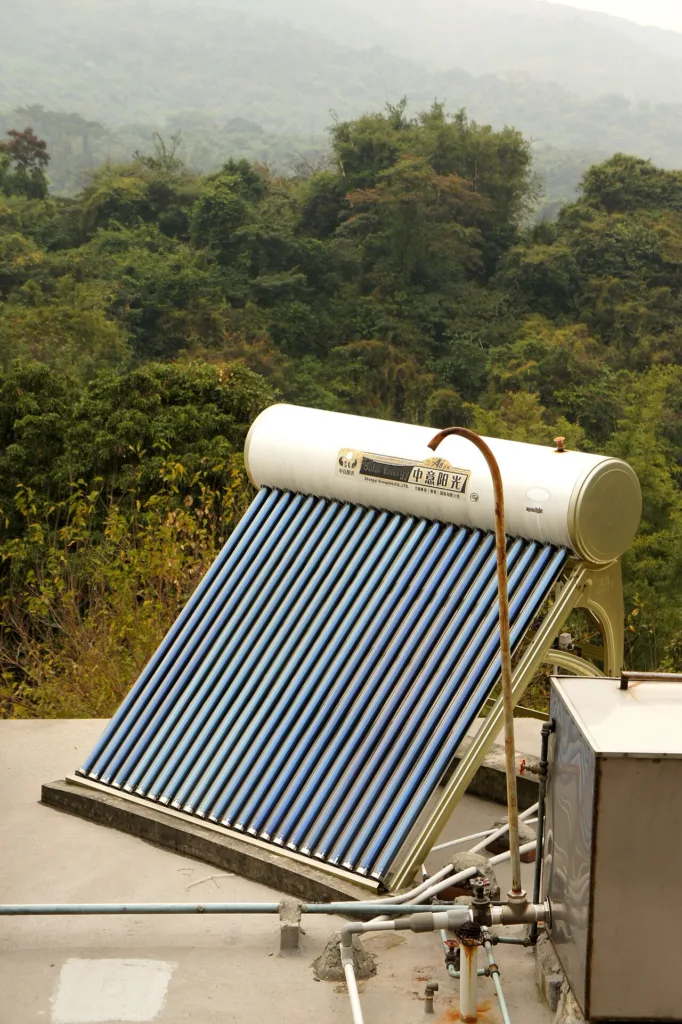
Quick answer: A solar water heater uses sunlight directly to heat water, and it is far more efficient per square foot than a photovoltaic panel. It can cut water heating energy by roughly half to three quarters in a good climate. The catch in 2026 is that a heat pump water heater paired with extra PV panels often costs less to install, needs less maintenance, and delivers similar savings. Solar thermal still wins in high hot-water households and in sunny climates without freeze risk.
What this guide covers
- The four system types
- Flat plate versus evacuated tube
- System comparison
- Solar thermal versus PV plus heat pump
- Sizing and expected savings
- Maintenance nobody mentions
- Common mistakes
- FAQ
The four system types
Every solar water heater is either active or passive, and either direct or indirect.
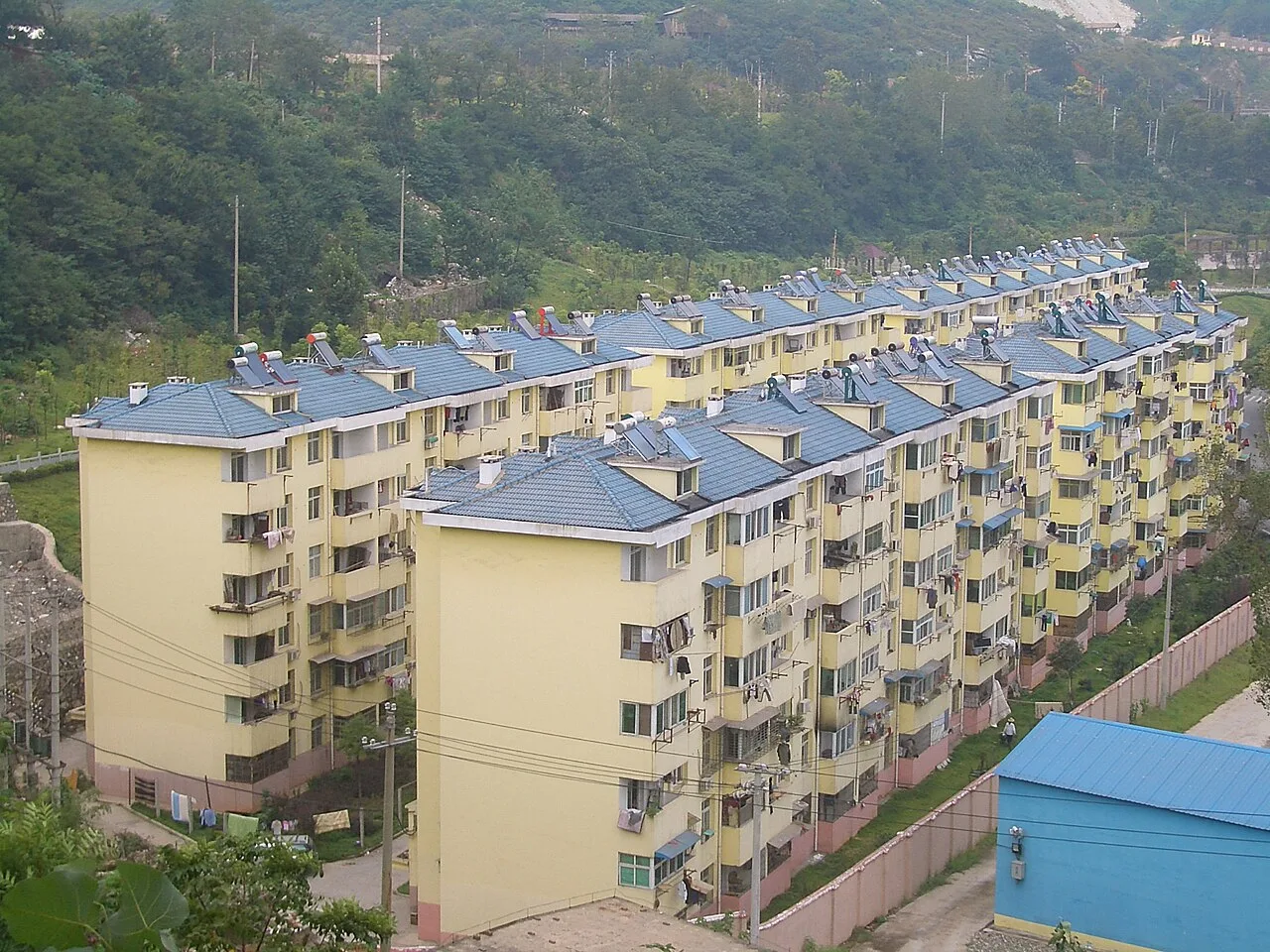
Passive thermosiphon. Hot water rises on its own, so there is no pump. The tank sits above the collector, usually on the roof. Simple and reliable, but the roof must carry the weight of a full tank.
Passive batch or integrated collector storage. The tank is the collector. A dark cylinder in a glazed box heats directly. Cheap and nearly maintenance free, but it loses heat overnight and is unsuitable where it freezes.
Active direct circulation. A pump moves household water through the collector and back. Efficient, but only safe in climates without hard freezes.
Active indirect circulation. A pump moves antifreeze through the collector, and a heat exchanger transfers heat to your water. This is the standard choice anywhere it freezes. It is also the most complex and the most expensive.
A fifth variant, drainback, empties the collector loop whenever the pump stops. It gives freeze protection without antifreeze, at the cost of careful pipe slope during installation.
Flat plate versus evacuated tube
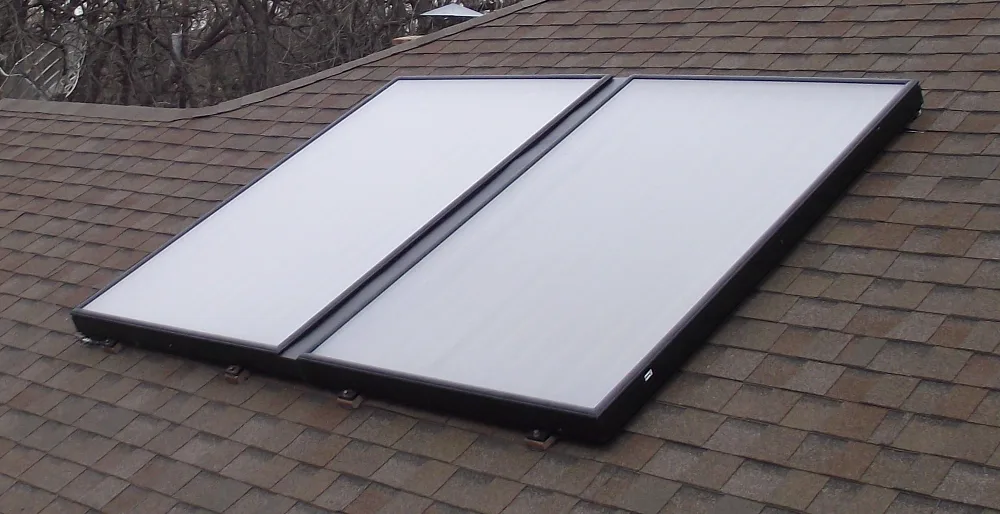
A flat plate collector is an insulated glazed box with a dark absorber plate and pipework inside. It is rugged, cheap and repairable, and it sheds snow well because the whole surface warms.
An evacuated tube collector uses rows of glass tubes with a vacuum between the walls. The vacuum almost eliminates convective heat loss, so the collector keeps working in cold air and diffuse light.
The tradeoff is practical rather than theoretical. Evacuated tubes perform better in cold or cloudy conditions. They are also more fragile, more expensive, and they can fail to shed snow because the outer glass stays cold.
For most temperate climates flat plate is the pragmatic choice. Evacuated tube earns its price in cold, cloudy regions or where high water temperatures are needed.
System comparison
| Type | Freeze safe | Relative cost | Maintenance | Best for |
|---|---|---|---|---|
| Batch / ICS | No | Lowest | Very low | Warm climates, seasonal use |
| Thermosiphon | Limited | Low | Low | Mild climates, strong roofs |
| Active direct | No | Medium | Medium | Frost-free regions |
| Active indirect (glycol) | Yes | Highest | Higher | Cold climates |
| Drainback | Yes | High | Low | Cold climates, careful installs |
Solar thermal versus PV plus heat pump
This is the comparison that decides most projects today, and it deserves an honest answer.
Solar thermal converts a much larger share of incoming sunlight into useful heat than a photovoltaic panel converts into electricity. On efficiency per square metre, solar thermal wins clearly.
But a heat pump water heater does not need one unit of electricity per unit of heat. It moves heat instead of making it, delivering roughly three units of heat per unit of electricity. That multiplier closes most of the gap.
Then compare the installations. Solar thermal needs roof collectors, a pump station, a heat exchanger, a controller, a specialist plumber, and a glycol loop that needs servicing. PV plus a heat pump water heater needs some extra panels and a straightforward appliance swap.
Solar thermal still wins where hot water demand is very high, where the climate is sunny and frost free, or where roof space is tight and every square metre must count. For a typical family in a mixed climate, the electric route is usually simpler and cheaper.
Sizing and expected savings
A common starting point is roughly 20 gallons of storage per person, and about 20 square feet of collector for the first two occupants plus 8 to 14 square feet for each additional person. Colder and cloudier regions need the higher end.
Expected solar fraction, meaning the share of water heating supplied by the sun, typically lands between 50% and 80%. Sunny southern climates reach the top of that band. Northern climates with a glycol system sit near the bottom.
Every system needs a backup. That is either an electric element in the tank or a connection to an existing boiler. Sizing for 100% solar coverage is a mistake, because you pay for winter capacity that is idle all summer.
Look for collectors certified by the Solar Rating and Certification Corporation. Certified ratings let you compare products on the same basis instead of on marketing numbers.
Maintenance nobody mentions
Solar thermal has more service needs than photovoltaics, and quotes rarely mention them.
Glycol degrades. Antifreeze in a closed loop breaks down over time, usually within three to six years, and turns acidic. Acidic glycol attacks the copper. Testing and replacement is a routine service item.
Anode rods corrode. Any steel tank has a sacrificial anode that must be inspected every few years.
Pumps and controllers fail. These are ordinary mechanical and electronic parts with ordinary service lives.
Scale builds up. Hard water leaves deposits in the heat exchanger and reduces transfer.
Budget for a service visit every few years. A neglected glycol system can fail expensively and without warning.
Common mistakes
Installing a freeze-vulnerable system in a freezing climate. A single hard night can split a collector.
Oversizing the collector array. Excess summer heat causes stagnation, which cooks the glycol and stresses the seals.
Skipping the tempering valve. Solar tanks can reach scalding temperatures. A thermostatic mixing valve at the outlet is a safety requirement, not an option.
Using a general plumber. Solar loops need correct slope, air venting and expansion sizing. This is specialist work.
Ignoring the alternative. Price a heat pump water heater plus extra PV as a control case. See solar plus heat pumps.
FAQ
How much can a solar water heater save?
Typically between 50% and 80% of water heating energy, depending on climate, system type and hot water use.
Do solar water heaters work in winter?
Yes, but output drops. A properly designed system in a cold climate uses antifreeze or drainback protection and relies more on backup heating in midwinter.
How long do they last?
Collectors commonly last 20 years or more. Pumps, controllers and glycol are consumables replaced along the way.
Is solar thermal better than photovoltaic panels?
Per square metre it captures more energy. Overall, PV plus a heat pump water heater is often cheaper to install and easier to maintain.
Do I still need a conventional water heater?
Yes. Every solar system needs a backup heat source for cloudy stretches and winter demand.
Does a solar water heater qualify for the federal tax credit?
Certified solar water heating property has historically qualified. Confirm current rules and certification requirements with a tax professional.
What maintenance does it need?
Periodic glycol testing and replacement, anode rod inspection, and normal pump and controller servicing.
Where to go next
Compare against solar plus heat pumps, and read home energy storage benefits if you are weighing where to spend next. For the electric route, start with solar panel cost.
Sizing and system guidance is published by the ENERGY STAR (U.S. EPA), with certified product ratings from the Solar Rating and Certification Corporation.
Related Posts
Leave a Comment
Your comment will be published after it has been approved. Please send comments that do not contain slang words.