
Tiny House Solar: Sizing, Heating and the Off-Grid Decision
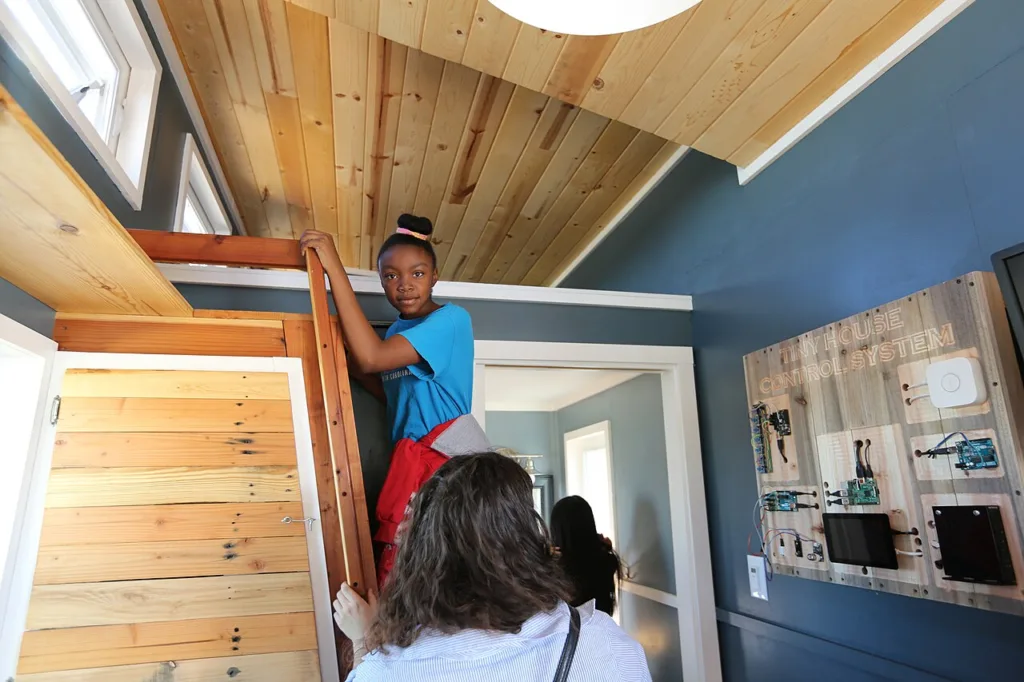
Quick answer: A tiny house has a small roof and a surprisingly large heating problem. Lighting, electronics and a fridge are easy to cover with 600 to 1,500 watts of solar. Space heating and hot water are not, and they decide the whole design. Decide how you will heat before you size a single panel. If a grid connection is available at reasonable cost, grid-tied with a small battery is usually cheaper and simpler than going fully off-grid.
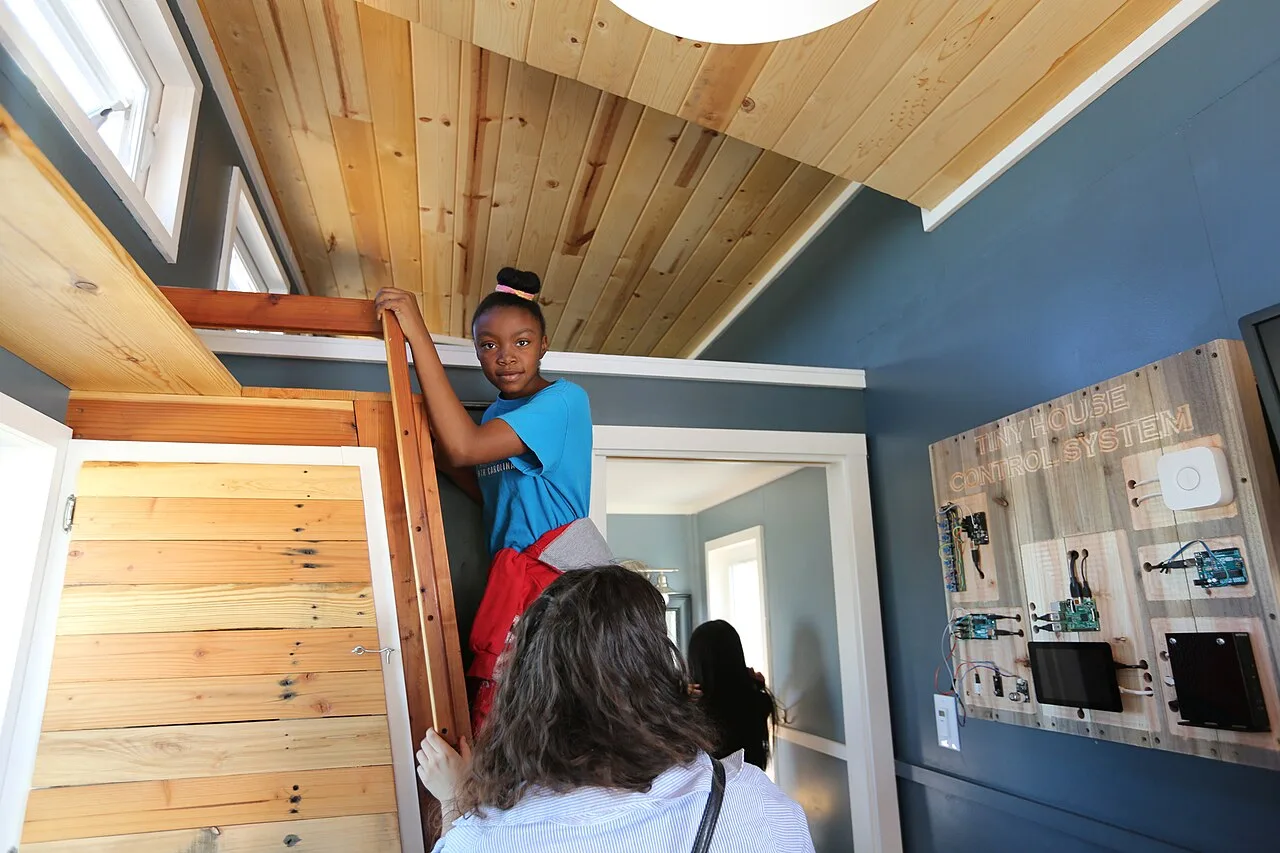
What this guide covers
- Off-grid or grid-tied
- Heating decides everything
- A realistic load budget
- Roof area and mounting on a moving house
- Battery sizing for winter
- Common mistakes
- FAQ
Off-grid or grid-tied
Going off-grid is a lifestyle choice that many tiny house owners make for good reasons. It is not automatically the cheaper choice.
If a utility connection exists at the site, or can be brought in for a modest trenching cost, a grid-tied system with a small battery gives you unlimited winter capacity, no generator, and a much smaller battery bank. You only pay for the energy you actually import.
Off-grid makes sense when connection costs are high, when the site is remote, or when independence is itself the goal. It requires a bigger battery, a bigger array, a backup source, and a habit of watching consumption.
A house on wheels changes the calculation again. It is usually treated as a recreational vehicle rather than a dwelling, which affects electrical standards, inspection and insurance. A house on a permanent foundation follows normal building and electrical code.
Confirm which category applies before designing, because it changes the wiring standard you must build to.
Heating decides everything
This is the part that separates realistic plans from optimistic ones.
Resistance electric heating is simple and cheap to install and completely impractical off-grid. A 1,500 watt heater running eight hours consumes 12,000 watt-hours, which is several times a typical tiny house battery bank.
A mini-split heat pump is dramatically better, delivering roughly three units of heat per unit of electricity. It is the best electric option, but even so a cold-climate winter load can exceed what a small array produces in December.
Propane and wood remain popular in off-grid tiny houses precisely because they move the heating load off the electrical system entirely. A small propane heater or a compact wood stove uses almost no electricity.
The same logic applies to hot water and cooking. Propane for those three loads lets a modest solar system comfortably run everything else.
Insulation is the cheapest heater you can buy. A tiny house has a high surface area relative to its volume, so heat escapes quickly. See home energy audits for what to check.
A realistic load budget
| Load | Daily energy | Off-grid friendly |
|---|---|---|
| LED lighting | 50 to 150 Wh | Yes |
| Fridge | 400 to 900 Wh | Yes |
| Laptops, phones, internet | 200 to 500 Wh | Yes |
| Water pump and fans | 50 to 200 Wh | Yes |
| Washing machine | 300 to 700 Wh per load | Run on sunny days |
| Mini-split heat pump | 2,000 to 8,000 Wh | Difficult in winter |
| Electric water heater | 2,000 to 5,000 Wh | No |
Everything above the washing machine row is comfortable on a small solar system. Everything below it is the reason most off-grid tiny houses burn something.
Roof area and mounting on a moving house
A typical tiny house on a trailer has between 100 and 200 square feet of usable roof, which supports roughly 1,000 to 2,500 watts of modern panels once you allow for vents and skylights.
Height and weight matter if the house moves. Panels add windage and mass high up. Low-profile mounting rails and secure fixings into structural members, not just sheathing, are essential.
Consider a ground-deployed array as an alternative or supplement. A portable array on a frame can be aimed properly, cleaned easily, and moved out of shade. On a wooded site that flexibility can double real output.
For a house on a permanent foundation, the standard residential rules apply and a ground mount is often the better build. See ground mount solar.
Battery sizing for winter
Size the bank against your worst realistic stretch, not your average day.
A common target is two to three days of autonomy for the loads you cannot postpone. With lithium iron phosphate you can use most of the rated capacity, so the arithmetic is straightforward.
Add a cold-weather plan. Lithium banks must not be charged below freezing without internal heating, and an unheated tiny house in winter will get there.
Accept that a small generator is normal in an off-grid tiny house at high latitude. Sizing the system so that you never need one usually costs far more than owning one.
Common mistakes
Planning electric heat off-grid. It is the single most common design failure.
Sizing on summer sun. December output at high latitude can be a fifth of June output.
Building to the wrong standard. A house on wheels and a house on a foundation follow different rules.
Mounting into sheathing only. On a moving structure, fixings must reach framing.
Forgetting ventilation for the battery. Even sealed lithium banks need a temperature-controlled space.
No shore power inlet. A simple inlet lets you plug in anywhere and removes a great deal of anxiety.
FAQ
How many solar panels does a tiny house need?
Most fit 1,000 to 2,500 watts on the roof. The right number depends on your daily watt-hours and whether heating is electric.
Can solar run a mini-split in a tiny house?
In summer, comfortably. In a cold winter it usually needs grid support, a generator or an alternative heat source.
Is off-grid cheaper than connecting to the grid?
Not usually, if a connection is available at reasonable cost. Off-grid needs a larger battery, larger array and a backup.
How big a battery bank do I need?
Aim for two to three days of autonomy on the loads you cannot defer, using lithium iron phosphate for usable capacity.
Do I need permits for tiny house solar?
It depends on whether the structure is classed as a vehicle or a dwelling. Confirm with your local authority before building.
Should I use propane?
Many off-grid tiny houses do, for heat, hot water and cooking, precisely because it removes the largest loads from the electrical system.
Can I mount panels on a house that moves?
Yes, with low-profile rails fixed into framing. A portable ground array is a useful supplement.
Where to go next
Read off-grid cabin solar for a similar build at a fixed site, off-grid batteries for bank design, and off-grid kits for pre-matched components.
System design guidance is published by the U.S. Department of Energy.
Related Posts
Leave a Comment
Your comment will be published after it has been approved. Please send comments that do not contain slang words.