
Solar Inverter Clipping: When Oversizing the Array Is Deliberate
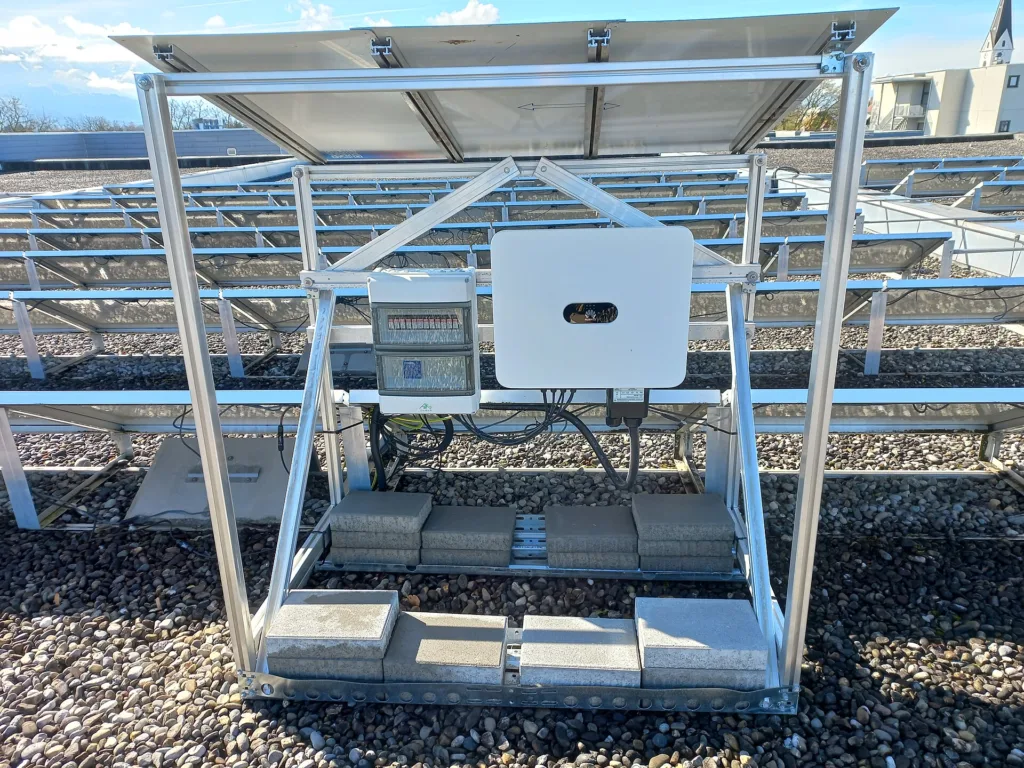
Quick answer: Clipping happens when your panels can produce more power than the inverter can convert, so the inverter holds output at its limit and the surplus is lost. It sounds like a fault. It is usually a deliberate design choice, because inverters cost money and the peak hours that get clipped are rare. A small amount of clipping, roughly under two to three percent of annual production, is normal and economically correct.
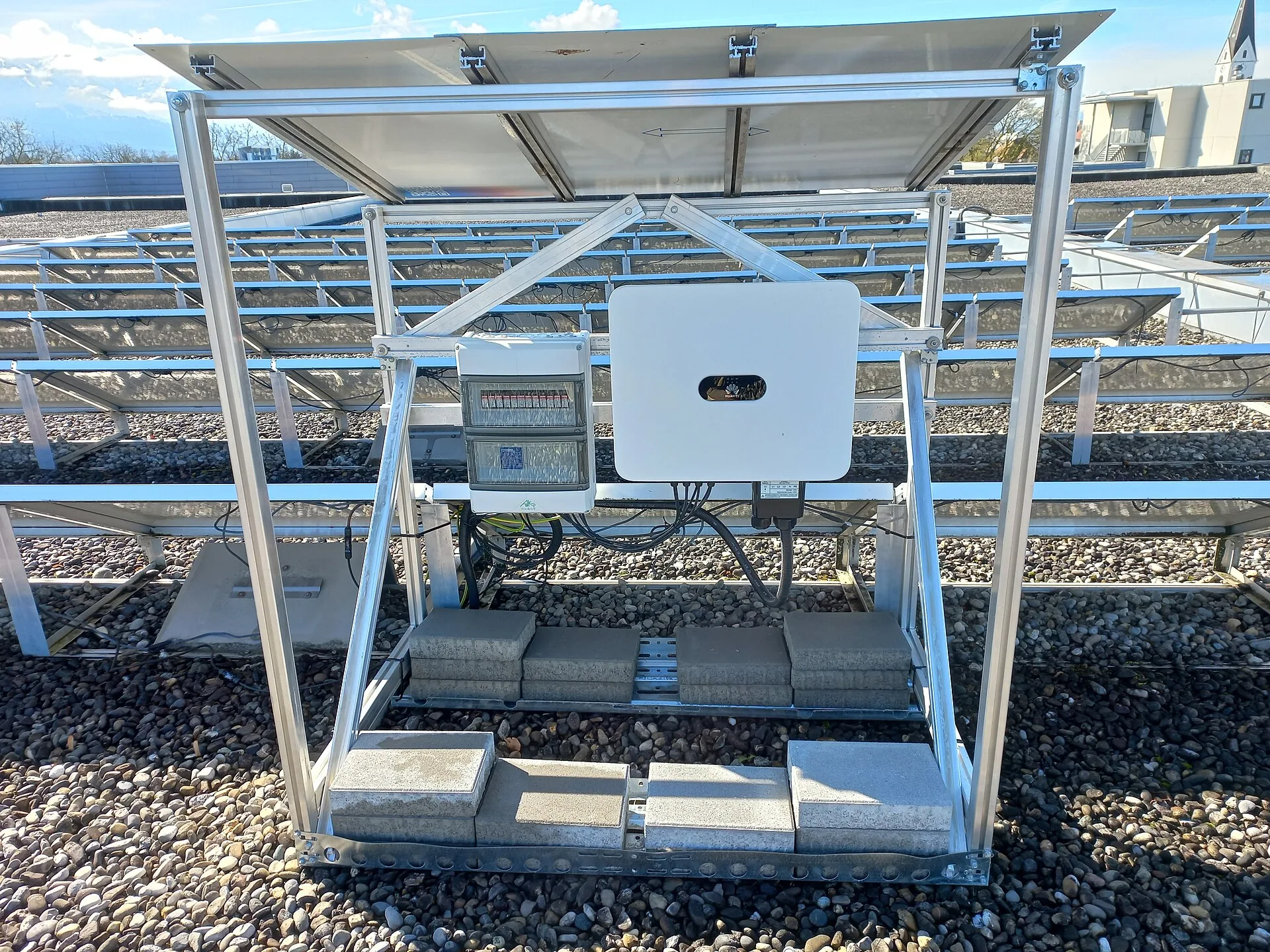
What does this guide cover?
- What is solar inverter clipping?
- Why do installers oversize solar arrays on purpose?
- How do I choose a DC to AC ratio?
- How can I spot clipping in my solar data?
- What is clipping not?
- How can storage capture clipped energy?
- What are common clipping mistakes?
- FAQ
What is solar inverter clipping?
Your array has a rated DC capacity. Your inverter has a rated AC output. When the array tries to deliver more than the inverter can pass, the inverter simply refuses.
It does this by moving the array off its maximum power point, holding the output at the inverter’s limit. Nothing overheats and nothing is damaged. The energy is never produced rather than being produced and wasted.
The ratio between the two ratings is called the DC to AC ratio, sometimes the inverter loading ratio. A 8 kW array on a 6.4 kW inverter has a ratio of 1.25.
Clipping only occurs in the narrow band of hours when irradiance, temperature and array condition all line up near the maximum. In most climates that is a handful of hours across a year.
Why do installers oversize solar arrays on purpose?
Panels rarely produce their nameplate rating. Standard test conditions assume 1,000 watts per square metre at a cell temperature of 25 degrees Celsius. Real roofs on sunny days are much hotter than that, and hot cells produce less.
So an 8 kW array in the real world may peak nearer 6.5 to 7 kW even at midday in summer. Buying an 8 kW inverter to match the nameplate would mean paying for capacity you never use.
Oversizing the DC side also improves the shoulder hours. In early morning, late afternoon and under cloud, a larger array pushes the inverter into its efficient operating band sooner and keeps it there longer. That gain is spread across many hours, while the clipping loss is concentrated in very few.
Panel prices have fallen much faster than inverter prices, which pushes the economically optimal ratio upward over time.
How do I choose a DC to AC ratio?
| Situation | Suitable ratio | Reason |
|---|---|---|
| Hot sunny climate, south facing | 1.1 to 1.2 | Sharp midday peak, clipping arrives quickly |
| Cloudy or northern climate | 1.25 to 1.4 | Peak conditions are rare, shoulder gain dominates |
| East and west split roof | 1.3 or higher | Production is spread, both sides rarely peak together |
| Partly shaded array | Higher | Array rarely reaches full output anyway |
| Battery on the DC side | Higher | Surplus can charge instead of being lost |
| Export paid at a good rate | Lower | Every clipped kilowatt-hour had real value |
Ask your installer for the modelled annual clipping loss as a percentage. If they cannot produce that number, they have not modelled the design properly.
How can I spot clipping in my solar data?
Clipping has an unmistakable signature. Open your monitoring app and look at a clear summer day at fifteen minute resolution.
A normal day traces a smooth curve that rises, peaks and falls. A clipped day has a flat top, as if the peak has been sliced off with a ruler. The output sits at exactly the same value for a stretch of hours in the middle of the day.
The flat value will be very close to the inverter’s rated AC output. That confirms it.
To estimate the annual cost, sum the area of those flat tops across the year and compare it to total production. In most well-designed residential systems the answer is a small single-digit percentage or less.
What is clipping not?
Two other behaviours look similar in monitoring data and mean quite different things.
Thermal derating. If the inverter is in a hot enclosure, in direct sun, or has blocked ventilation, it reduces output to protect itself. This looks like a sagging plateau that falls further as the day heats up, rather than a clean flat line. It is a fault to fix, not a design choice. See inverter cooling.
Grid-side curtailment. Some utilities limit export, and some inverters are configured to reduce output when grid voltage rises too high. That shows up as clipping at varying levels and often at odd times of day. Check the inverter’s event log.
If the plateau is not at the inverter’s rated output, it is probably not clipping.
How can storage capture clipped energy?
A DC-coupled battery sits on the array side of the inverter. That means surplus DC power that would have been clipped can charge the battery instead of being refused.
An AC-coupled battery cannot do this, because it charges from power that has already passed through the inverter. Anything clipped never reaches it.
This is a genuine argument for DC coupling on a heavily oversized array, though the amounts involved are usually modest. Do not let it drive the whole storage decision. See hybrid inverters.
What are common clipping mistakes?
Treating any clipping as a fault. Some clipping means the design was economically sensible.
Accepting heavy clipping without a reason. Above roughly five percent, ask what the modelling assumed.
Confusing clipping with thermal derating. One is design, the other is a hot inverter that needs attention.
Ignoring degradation. Panels lose output slowly over decades, so clipping reduces year on year.
Oversizing beyond the inverter’s rated maximum DC input. There is a hard limit in the datasheet and exceeding it is not clever design. See string sizing.
FAQ
Is inverter clipping bad?
Not in moderation. A small clipping loss is the price of a well-sized inverter, and the design usually produces more annual energy per dollar than a perfectly matched one.
How much clipping is acceptable?
Roughly two to three percent of annual production is normal. Above about five percent, ask your installer to justify the design.
What is a good DC to AC ratio?
Commonly 1.1 to 1.3 for residential systems, higher in cloudy climates or on split east-west roofs.
How do I tell if my system is clipping?
Look for a flat top on a clear-day production curve at a value matching the inverter’s rated AC output.
Does clipping damage the inverter?
No. The inverter simply limits output. Persistent overheating is a different problem.
Can a battery recover clipped energy?
Only a DC-coupled battery can, because it sits upstream of the inverter.
Will clipping get worse over time?
No, it reduces, because panel output declines slowly with age.
Where should I go next?
Read inverter sizing mistakes, string sizing and inverter efficiency for the surrounding design decisions.
System modelling methodology is published by the National Renewable Energy Laboratory.
Related Posts
Leave a Comment
Your comment will be published after it has been approved. Please send comments that do not contain slang words.