
Solar inverter efficiency explained

Solar inverter efficiency measures how much of the DC power your panels generate actually becomes usable AC power at the output. A few lost percentage points sound small, but they add up to real money over a system’s lifetime. This guide explains what the efficiency numbers on a spec sheet mean, which one to trust, and what you can do to keep an inverter working near its rating.
Table of Contents
- What Efficiency Actually Measures
- CEC Weighted vs Peak Efficiency
- Typical Efficiency by Type
- What Affects Real-World Efficiency
- Why the Difference Actually Matters
- Frequently Asked Questions
What Efficiency Actually Measures
Inverter efficiency is the ratio of AC power out to DC power in, expressed as a percentage. A 97% efficient inverter converts 97 watts of usable AC for every 100 watts of DC input. The remaining 3% is lost as heat inside the unit — this is unavoidable with any power electronics, not a design flaw.
Where the losses come from
Inside an inverter, transistors switch on and off thousands of times per second to build an AC waveform from DC. Every switch loses a little energy as heat. Transformers, filters, and the electronics that run the display and communications draw a little more. Good design shrinks each loss; it cannot remove them.
Conversion efficiency versus MPPT efficiency
Spec sheets sometimes list two numbers. Conversion efficiency is the DC-to-AC figure described above. MPPT efficiency measures how well the inverter tracks the panels’ maximum power point as light and temperature change. Modern units score above 99 percent on MPPT tracking, so conversion efficiency is the number that separates products. The U.S. Department of Energy’s overview of inverters and grid services explains the different inverter architectures and the grid functions they perform beyond simple conversion.
CEC Weighted vs Peak Efficiency
Manufacturer spec sheets often list a peak efficiency number, measured at the single best-case operating point. The California Energy Commission (CEC) weighted efficiency is a more realistic average across varying real-world conditions throughout a typical day. Always compare CEC weighted numbers between inverters, not peak numbers — peak figures can overstate real performance by a full percentage point or more.
How the weighting works
The CEC method measures efficiency at several load levels, from 10 percent to 100 percent of rated power, and weights each result by how much time a typical system spends there. Because a solar inverter runs at partial load for most of the day, low-load performance carries real weight. Europe uses a similar scheme called European efficiency with slightly different weights for its cloudier climate.
Reading a spec sheet
Look for three lines: maximum efficiency, CEC weighted efficiency, and the number of MPPT inputs. Compare products on the CEC line. A unit with 98.5 percent peak and 97 percent CEC is not better than one with 98 percent peak and 97.5 percent CEC. The solar inverters hub links to comparisons of current models.
Typical Efficiency by Type
| Inverter Type | Typical CEC Efficiency | Where Losses Happen | Notes |
|---|---|---|---|
| String inverter | 96-98% | One central conversion stage | Whole string follows the weakest panel |
| Power optimizer + string | 96-98% | Optimizer (about 99%) plus inverter | Recovers shading losses that offset the extra stage |
| Microinverter | 95-97% | Small conversion stage at each panel | Panel-level MPPT; runs hot on the roof |
| Hybrid (battery mode) | 94-97% | Extra DC-DC stage for the battery, round-trip losses | Solar-only mode matches string inverters |
| Central inverter (utility scale) | 98%+ | Large, well-cooled units at high load | Not used in homes |
Type matters less than the numbers suggest. A microinverter system on a partly shaded roof often delivers more energy than a string inverter with a higher CEC rating, because each panel produces independently. Compare whole-system yield, not just the conversion figure. Our solar inverter types guide covers the tradeoffs.
What Affects Real-World Efficiency
High temperatures reduce inverter efficiency, sometimes significantly on the hottest days. Running well below or above an inverter’s ideal load range also reduces efficiency — this is one reason correct sizing matters. Firmware updates occasionally improve efficiency slightly, which is one more reason to keep an inverter’s software current.
Heat and derating
Every inverter has a temperature above which it reduces output to protect itself. A unit in a sunny garage wall or a hot attic can hit that limit on summer afternoons, exactly when the panels are producing the most. Mount the inverter in shade, leave the clearance the manual specifies, and keep vents clear. Our inverter maintenance guide covers the routine.
Load level
Efficiency is lowest at very light load, when fixed losses dominate, and can dip again at full load, when switching losses peak. An inverter sized so the array runs it in the middle of its range for most of the day captures the best average. The sizing mistakes guide explains how the DC-to-AC ratio sets that operating point.
Input voltage
Most inverters are most efficient when string voltage sits near the middle of their MPPT window. Very low string voltage forces the unit to boost, which costs a little. String design, covered in the string sizing guide, has a small but real effect on conversion losses.
Standby and night-time draw
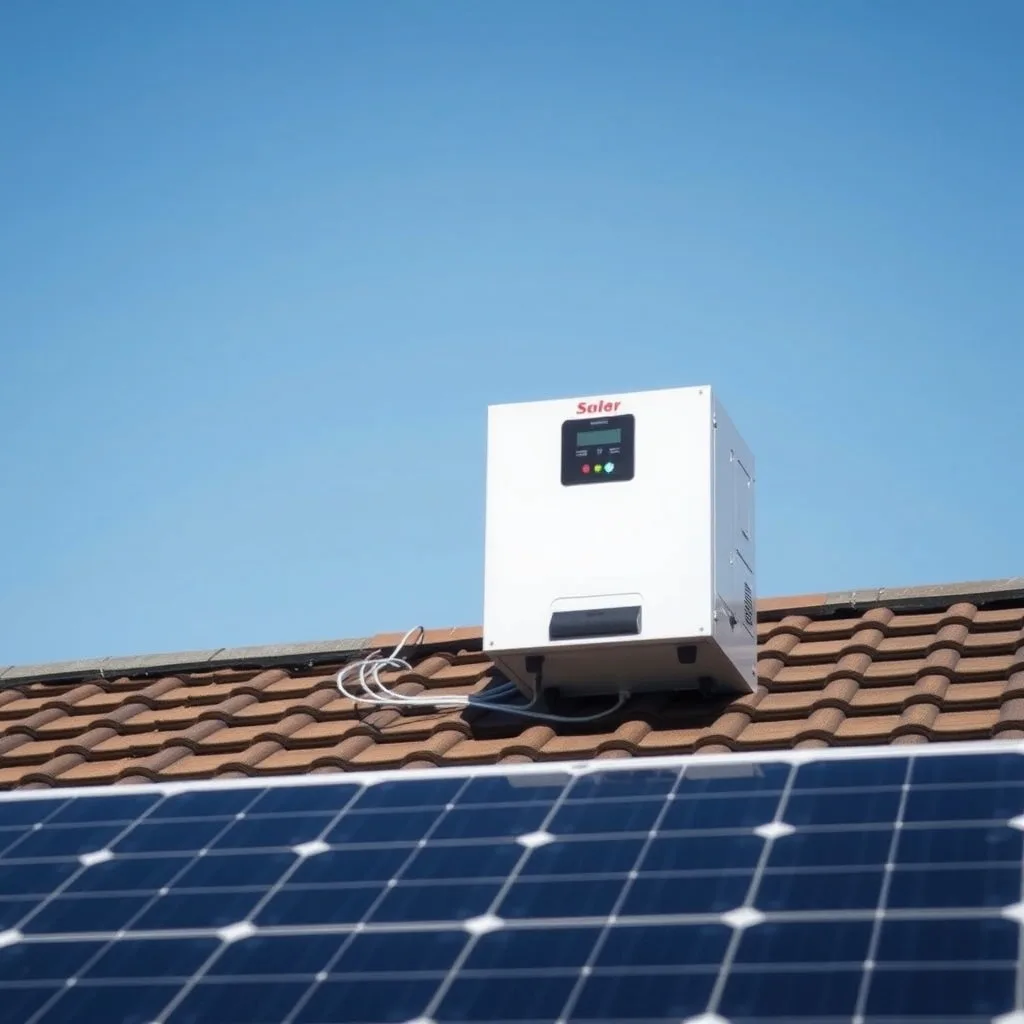
An inverter also uses a little power when the sun is down, to keep its controller, display, and monitoring radio alive. Spec sheets list this as night-time or standby consumption, typically a few watts. Over a year that adds up to tens of kilowatt-hours, small compared with daytime losses but worth checking when two units are otherwise identical. Systems with many microinverters have many small standby draws, so compare the total for the whole array rather than the per-unit figure.
Grid support functions
Modern smart inverters that meet IEEE 1547-2018 provide voltage and frequency support to the utility. Those functions occasionally hold output slightly below maximum on request, which shows up as lower apparent efficiency in monitoring even though the hardware is working correctly. The IEEE 1547 standard describes these required behaviors.
Why the Difference Actually Matters
A 2-point efficiency difference on a 10,000 kWh/year system means roughly 200 kWh lost annually — often $30-60 depending on local electricity rates. Over a 15-year inverter lifespan, that’s a real, compounding cost difference between comparable products, which is why efficiency belongs on every side-by-side comparison, not just price.
Putting a price on it
The U.S. Energy Information Administration reports an average residential electricity price of 18.34 cents per kWh for June 2026 in its Electric Power Monthly. At that rate, 200 kWh a year is about 37 dollars, or roughly 550 dollars over 15 years before any increase in rates. That is often close to the price difference between a mid-range and a premium inverter, so efficiency alone rarely decides the purchase. Warranty length, monitoring quality, and service support matter at least as much.
When efficiency should tip the decision
If two inverters have similar warranties and prices, take the higher CEC figure. If your electricity rate is well above average, the value of each point grows. If your roof is hot and unshaded, a string inverter mounted in a cool spot may beat microinverters baking under the panels. If the roof is shaded, the reverse is often true regardless of the rated efficiency.
Frequently Asked Questions
What’s considered a good solar inverter efficiency rating?
97% CEC weighted efficiency or higher is considered strong for a modern inverter.
Does inverter efficiency decline over time?
Slightly, but far less than solar panel degradation — inverter efficiency loss over its lifespan is usually minor.
Should I compare peak or CEC weighted efficiency?
Always compare CEC weighted efficiency — it reflects real-world performance, not a single best-case number.
Does heat really reduce inverter efficiency?
Yes, high ambient temperatures measurably reduce efficiency, which is why proper ventilation and mounting location matter.
Is a more expensive inverter always more efficient?
Usually correlated but not guaranteed — always check the actual CEC efficiency spec rather than assuming price predicts performance.
Are microinverters less efficient than string inverters?
Their conversion rating is usually a point or two lower, but panel-level tracking often recovers more than that on shaded or complex roofs.
For sizing guidance that accounts for efficiency, see our solar inverter sizing mistakes guide. For independent efficiency data, see the U.S. Department of Energy’s inverter overview.
For why inverters limit output at peak, read solar inverter clipping.
Related Posts
Leave a Comment
Your comment will be published after it has been approved. Please send comments that do not contain slang words.