
Utility Scale Solar
Short answer: Utility-scale solar means large ground-mounted installations — typically several megawatts up to hundreds of megawatts — built to sell electricity into the grid rather than to offset one property’s own consumption. It is the largest and fastest-growing segment of new solar capacity globally, and its economics are driven by development, financing and grid interconnection rather than by rooftop factors.
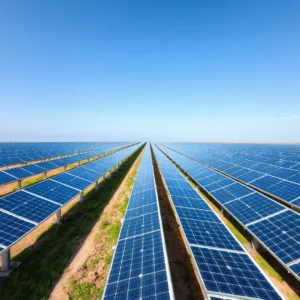
Utility-scale solar refers to large ground-mounted solar installations – typically several megawatts up through hundreds of megawatts – built primarily to sell electricity into the grid, distinct from residential or commercial systems built primarily to offset one property’s own consumption. It represents the largest and fastest-growing segment of new solar capacity globally.
This guide covers what defines utility-scale solar. It explains how these projects actually get developed and financed, and their key economics. It covers environmental considerations. It also explains how this segment differs from the residential and commercial solar covered elsewhere on this site.
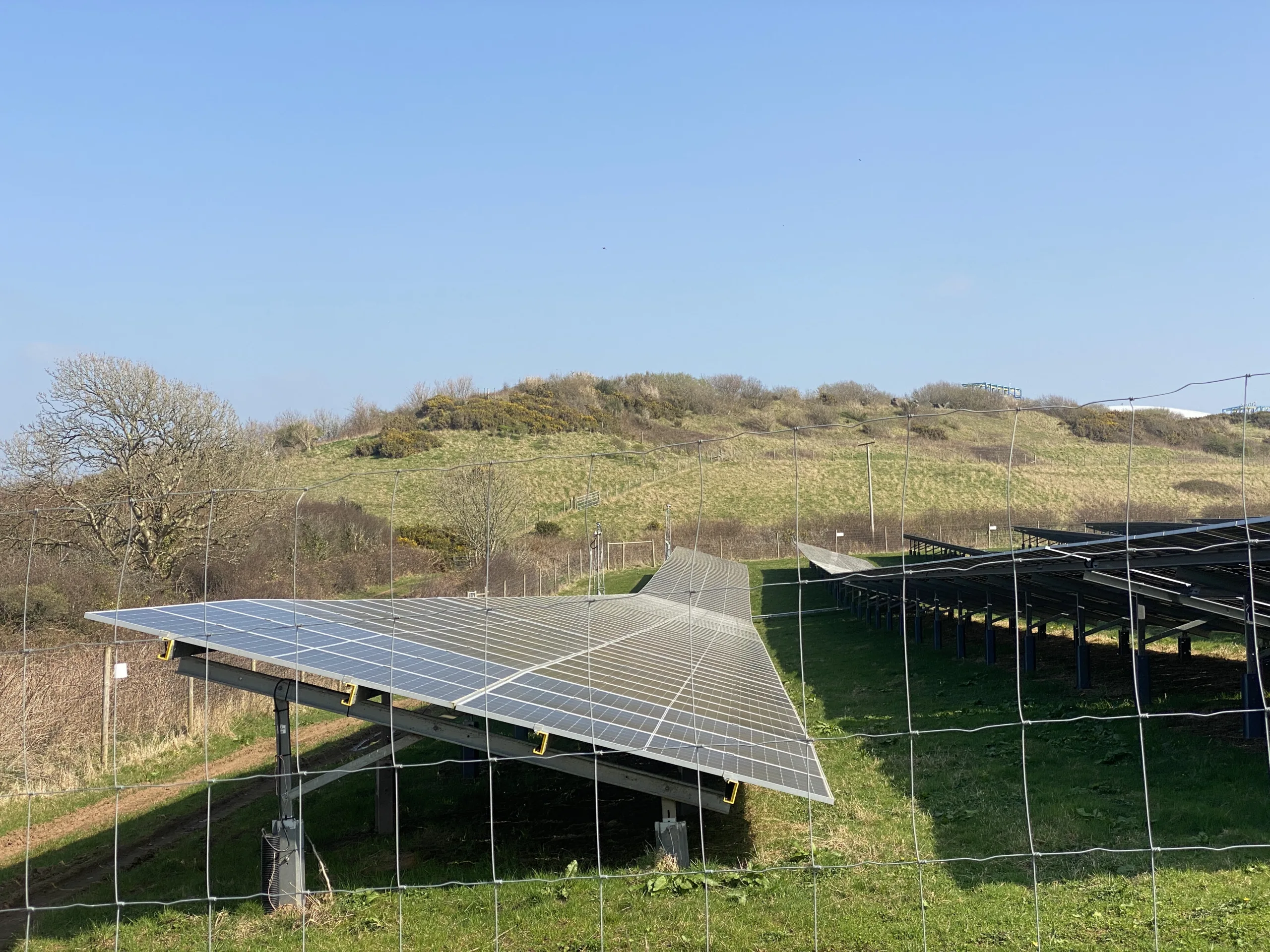
Table of Contents
- What Defines Utility-Scale Solar
- How Projects Get Developed
- Financing Structures
- Key Economics
- Technology at Utility Scale
- Environmental and Siting Considerations
- Utility-Scale vs. Distributed Solar
- Grid Interconnection Process in Detail
- Major Global Trends
- Community and Local Economic Impact
- Who Actually Develops These Projects
- Decommissioning and End of Life
- Common Misconceptions
- Frequently Asked Questions
What Defines Utility-Scale Solar
There is no single universal size threshold. Utility-scale generally refers to installations from a few megawatts up to several hundred megawatts. These are built as standalone power-generation assets. They sell electricity wholesale into the grid, or under a power purchase agreement (PPA) with a specific buyer, rather than serving one property’s own load. This distinguishes it from residential (kW-scale, self-consumption focused) and most commercial solar (still primarily self-consumption focused, even at larger scale) – see our commercial solar inverters guide for that adjacent but distinct category.
How Projects Get Developed
Utility-scale project development typically spans several years from initial site identification to operation. It starts with land acquisition or lease agreements. Interconnection studies with the regional grid operator follow. Then come environmental and permitting review, and securing a power purchase agreement or confirming wholesale market participation. Financing close comes next. Construction is last, commonly taking 6 to 18 months depending on project size. This multi-year timeline runs much longer than residential or commercial installation. It reflects the scale of engineering involved. It also reflects the complexity of grid interconnection studies for large new generation capacity.
Financing Structures
Utility-scale projects are financed differently than residential or commercial solar. They typically use project finance structures involving equity investors. Debt financing is secured against the project’s long-term revenue contracts. Tax equity investors are brought in specifically to use the federal investment tax credit and depreciation benefits efficiently. A long-term power purchase agreement with a utility or corporate buyer is often the foundation making this financing structure viable. It provides the predictable revenue stream lenders and investors require.
Key Economics
Utility-scale solar benefits from meaningful economies of scale compared to residential and commercial installations – lower cost per watt for equipment (bulk purchasing), more efficient use of installation labor across a large single site, and central inverter architecture (see our commercial solar inverters guide for the equipment comparison across scales) reducing per-watt equipment cost further. This scale economics is a major reason utility-scale solar has become one of the cheapest sources of new electricity generation in many markets. That holds independent of residential and commercial retail solar economics.
Technology at Utility Scale
Utility-scale installations commonly use central inverters (handling large blocks of the array from one location) or increasingly large string inverter configurations, single-axis tracking systems (panels that rotate to follow the sun through the day, boosting production over fixed-tilt arrays), and increasingly bifacial panels paired with elevated racking to capture the ground-reflection advantage discussed in our bifacial solar panels guide – conditions that suit bifacial technology much better than a typical residential rooftop.
Environmental and Siting Considerations
Utility-scale projects require meaningfully more land per megawatt than distributed solar. That raises land-use and environmental review considerations irrelevant to rooftop solar. Habitat and wildlife impact assessments are one. Agricultural land preservation concerns matter in some regions. Agrivoltaics approaches, combining solar with continued agricultural use, are increasingly used as a partial response to land-use competition. See our clean energy technology trends guide for more on agrivoltaics specifically.
Utility-Scale vs. Distributed Solar
| Factor | Utility-Scale | Residential/Commercial (Distributed) |
|---|---|---|
| Primary purpose | Sell power to the grid/buyer | Offset the property’s own usage |
| Typical scale | Several MW to hundreds of MW | kW to a few MW |
| Development timeline | Multiple years | Weeks to months |
| Financing | Project finance, tax equity, PPAs | Cash, consumer loan, lease/PPA |
| Cost per watt | Lowest, benefiting from scale | Higher per-watt, offset by direct retail-rate savings |
Grid Interconnection Process in Detail
Interconnection is frequently the longest and most schedule-risky part of utility-scale development. A project must join a regional grid operator’s interconnection queue. It then undergoes increasingly detailed engineering studies, covering feasibility, system impact, and facilities. These assess how the new generation capacity affects grid stability and what upgrades the surrounding infrastructure may need. The developer must then negotiate and fund any required upgrades before receiving final interconnection approval. Interconnection queues in many regions have grown substantially longer in recent years. The cause is simply the volume of new solar, wind, and storage projects applying, not any project-specific issue. This queue-length risk is one of the most significant non-technical challenges facing new utility-scale project timelines today.
Major Global Trends
| Trend | Impact on Utility-Scale Development |
|---|---|
| Growing interconnection queues | Extending typical project timelines in many regions |
| Co-located battery storage | Increasingly common pairing, smoothing output and capturing time-of-use value |
| Corporate PPA growth | Large corporate buyers increasingly financing new capacity directly through long-term power purchase agreements |
| Domestic manufacturing incentives | Reshaping panel/equipment sourcing decisions for new projects in some markets |
Community and Local Economic Impact
Utility-scale projects typically bring local economic effects distinct from their grid role. Construction-phase employment is often the largest short-term local job impact. Property and land lease payments go to landowners over the project’s multi-decade operating life. Local tax revenue can be significant for smaller rural jurisdictions hosting a large project. These local economic considerations are frequently part of the community engagement and permitting process. They are a genuine dimension of how these projects affect the areas that host them. They remain secondary to the grid and generation story, but are worth understanding.
Who Actually Develops These Projects
Utility-scale solar development involves several distinct roles. Sometimes one integrated company handles all of them, and sometimes they are split across specialized firms. Developers identify sites, secure land rights, and shepherd projects through permitting and interconnection. EPC contractors handle engineering, procurement, and construction, building the project once financing closes. Long-term owner-operators run the finished asset, and may be the original developer or a separate investment entity that acquires it. Understanding this division of roles explains why a project might change hands from developer to owner-operator at various points. It does not necessarily indicate any problem with the project itself. It is a normal part of how the industry’s capital and expertise are structured across a project’s multi-decade life.
Decommissioning and End of Life
Utility-scale projects are typically built with a 25 to 35 year operating life expectation. Modern development agreements and permits increasingly include decommissioning plans. Financial assurance requirements, such as a bond ensuring funds are available for site restoration, are now a standard permitting condition in many jurisdictions. This addresses a legitimate community concern: ensuring a large solar installation does not become an abandoned liability decades from now. It reflects the industry’s response as utility-scale solar has matured. What was once an emerging technology is now a mainstream, long-lived infrastructure asset class with established end-of-life planning norms.
Common Misconceptions
- Assuming utility-scale and residential solar economics are directly comparable – different revenue models (wholesale/PPA vs. retail-rate offset) make direct comparison misleading.
- Underestimating development timeline – multi-year timelines are normal for utility-scale, unlike residential’s months-long process.
- Assuming all utility-scale projects use the same technology as residential systems, just bigger – central inverters, tracking systems, and bifacial-optimized mounting are purpose-built for this scale.
- Overlooking land-use and environmental review as a major project variable – often a bigger schedule risk than the technical engineering itself.
Frequently Asked Questions
What size counts as “utility-scale” solar?
No single universal threshold, but generally a few megawatts up through hundreds of megawatts, built as a standalone power-generation asset rather than to serve one property’s own load.
How long does it take to develop a utility-scale solar project?
Commonly several years from initial site identification through interconnection studies, permitting, financing, and construction – much longer than residential or commercial installation timelines.
Why is utility-scale solar cheaper per watt than residential solar?
Economies of scale in equipment purchasing, installation labor efficiency across one large site, and central/large-scale inverter architecture all reduce cost per watt compared to smaller distributed installations.
Do utility-scale solar farms use the same panels as residential systems?
Often similar core panel technology, but typically deployed with different mounting (single-axis tracking, elevated bifacial-optimized racking) and inverter architecture purpose-built for large-scale ground-mount deployment.
What is agrivoltaics and how does it relate to utility-scale solar?
Combining solar generation with continued agricultural use of the same land – a growing approach partly addressing land-use competition concerns associated with large utility-scale developments.
What happens to a utility-scale solar project after 25-30 years?
Modern projects increasingly include decommissioning plans and financial assurance requirements as a standard permitting condition, ensuring funds are available for site restoration rather than the project becoming an abandoned liability.
Who actually owns a utility-scale solar farm?
Varies – can be the original developer, a separate investment/owner-operator entity that acquired the operating asset, or a utility itself, depending on how the specific project’s development and financing was structured.
Conclusion
Utility-scale solar operates on fundamentally different economics, timelines, and technology than residential or commercial solar, despite sharing core panel technology. It is best understood as its own category. It has its own development process, financing structure, and siting considerations. See our clean energy technology trends guide and market and policy outlook guide for the broader context this segment fits into.
Further reading: U.S. Energy Information Administration – Where Solar Is Found and Wikipedia – Photovoltaic power station.
For the step-by-step development sequence, from land control through interconnection to commercial operation, see our guide to how utility solar projects are built.
For the full breakdown, see our utility-scale solar guide. See our utility scale solar construction timeline guide for how this plays out in practice.
Solar is also being applied to industrial processes beyond electricity generation. Our solar powered desalination guide covers one of the largest.
For every grid-scale article on the site, see the utility-scale topic guide.
Related Posts
Leave a Comment
Your comment will be published after it has been approved. Please send comments that do not contain slang words.