
Solar Panel Tilt Angle and Azimuth: How Much They Actually Matter
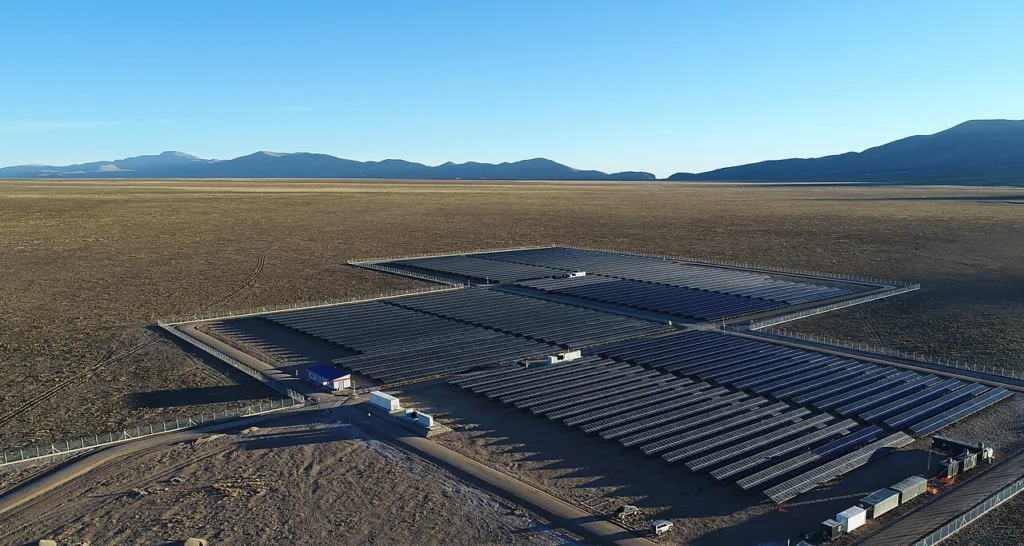
Quick answer: In the northern hemisphere the best fixed orientation is true south at a tilt roughly equal to your latitude. The important part is what happens when you cannot achieve that. The penalty curve is gentle near the optimum and steep only at the extremes. A roof facing southeast or southwest typically gives up only a few percent. A flat roof gives up more. A north-facing roof is the only orientation that is usually not worth using.
What this guide covers
- Tilt and azimuth, defined properly
- The optimal numbers, and why they are approximate
- What each deviation actually costs
- When west beats south
- Flat roofs, ballast tilt and row spacing
- Seasonal adjustment and trackers
- Measuring your own roof
- Common mistakes
- FAQ
Tilt and azimuth, defined properly
Two angles describe how a panel faces the sky, and people mix them up constantly.
Tilt is the angle from horizontal. A panel lying flat on the ground has a tilt of zero degrees. A panel standing vertically has a tilt of ninety degrees. A typical pitched roof falls somewhere between eighteen and thirty five degrees.
Azimuth is the compass direction the panel faces. Convention usually sets due south at one hundred and eighty degrees, east at ninety, and west at two hundred and seventy.
One detail matters and is often skipped. Azimuth is measured from true south, not magnetic south. A compass points to magnetic north, which differs from true north by an amount that varies by location. That difference is called magnetic declination and it can exceed fifteen degrees in parts of North America.
Getting that correction wrong is a small error, but it is free to avoid.
The optimal numbers, and why they are approximate
For a fixed array in the northern hemisphere, the classic rule is simple. Face true south, and set the tilt close to your latitude.
That rule maximises annual energy over the whole year. It is a good starting point, not a precise answer.
Two things shift the true optimum slightly below latitude. First, summer days are long and the sun sits high, so a slightly shallower tilt captures more of the strongest season. Second, most locations have more cloud in winter, which reduces the value of optimising for the low winter sun.
In practice, tilts a few degrees under your latitude often edge out tilts exactly at latitude for total annual output. The difference is small enough that no one should re-engineer a roof over it.
Two situations do justify deviating deliberately. If your priority is winter production, such as an off-grid cabin, steepen the tilt above latitude. If you want maximum summer output, for air conditioning or a pool, shallow it.
What each deviation actually costs
These are typical mid-latitude figures for annual energy relative to the optimum. Treat them as planning guidance and model your own site for a real number.
| Orientation | Approximate annual output | Verdict |
|---|---|---|
| True south, tilt near latitude | 100 percent | The reference |
| South, tilt off by 15 degrees | Around 97 to 99 percent | Effectively no penalty |
| Southeast or southwest | Around 92 to 96 percent | Perfectly good roof |
| Flat, zero tilt | Around 85 to 90 percent | Usable, but soils badly |
| Due east or due west | Around 80 to 88 percent | Often still worth building |
| Northeast or northwest | Around 60 to 75 percent | Marginal, model carefully |
| Due north, steep tilt | Well under 60 percent | Avoid |
The headline is worth repeating. Orientation matters far less than shading. A perfectly south-facing array under a tree performs worse than a southwest array in clear sun. See tree shading and solar panels.
When west beats south
South maximises kilowatt-hours. It does not always maximise money.
Under a time-of-use tariff, electricity in the late afternoon and early evening is worth far more than electricity at noon. A west-facing array shifts production later in the day, into those expensive hours.
So a west array might produce ten percent fewer units while offsetting more expensive units. Whether that trade wins depends entirely on your tariff’s peak window and price spread.
Some utilities have explicitly encouraged west-facing installations for this reason. Run the numbers against your own rate schedule rather than assuming. Our guide to time-of-use rates explains the arithmetic.
A split east and west array is another sensible pattern, especially on a flat roof. It flattens the production curve, raises self-consumption, and allows a higher panel-to-inverter ratio because both halves never peak together.
Flat roofs, ballast tilt and row spacing
Flat roofs give you a free choice of azimuth, which sounds ideal until you meet the constraints.
Most flat-roof arrays are ballasted rather than penetrating, and they use a shallow tilt of roughly five to fifteen degrees. The reason is wind. A steeper panel catches far more uplift, which means more ballast weight, which the roof structure may not accept.
Shallow tilt costs some annual output. It also collects dirt, because there is not enough slope for rain to wash the surface clean. Plan on more frequent cleaning, as covered in panel cleaning.
Row spacing is the other constraint. Tilted rows shade the row behind them when the sun is low. Space rows too tightly and you lose winter mornings and afternoons across the whole array.
The usual approach is to design against the winter solstice sun angle at your latitude, accepting a defined small loss rather than zero shading. Tighter spacing fits more panels but each one produces less. Our guide to ground mount solar covers the same geometry at scale.
Seasonal adjustment and trackers
Adjustable racks let you change tilt twice a year, steeper for winter and shallower for summer.
The gain is real but modest, commonly in the range of a few percent annually for two adjustments. Against that you have hardware cost, a mechanism that can seize, and a task somebody has to remember to do on a roof twice a year.
For a ground-mounted array within easy reach, it can be worth it. For anything on a roof, it usually is not.
Single-axis trackers are a different proposition. They follow the sun east to west and can add meaningfully more energy, often in the region of fifteen to twenty five percent depending on climate. They also add motors, controls, maintenance and cost, and they need space.
At residential scale trackers rarely pay back. At utility scale they routinely do, which is why you see them in large fields and almost never on houses.
Measuring your own roof
You can get usable numbers in ten minutes without any special equipment.
Azimuth. Use a compass app while standing square to the roof plane, or look at a satellite image of your house and measure the ridge line against true north. Correct for magnetic declination if you used a compass.
Tilt. Most phones have an inclinometer in the measuring app. Rest the phone flat against the roof plane, or measure the rise and run of the roof from inside the attic and take the arctangent.
Shading. Stand where the array will sit and photograph the southern sky at mid-morning, midday and mid-afternoon. Note anything that will grow.
Feed those three values into a public modelling tool along with your address and system size. That gives an expected annual production figure you can compare against any installer proposal. Our system sizing calculator uses the same inputs.
Common mistakes
Using magnetic south instead of true south. A free correction that people skip.
Rejecting a good roof over a small azimuth deviation. Southeast and southwest are fine.
Ignoring shading while optimising angles. Shading costs far more than orientation.
Steep tilt on a flat roof without a wind calculation. Uplift and ballast weight both rise quickly.
Packing rows too close. More panels, less output per panel, and worse winter performance.
Forgetting snow. Shallow tilts hold snow far longer. See snow removal.
FAQ
What is the best angle for solar panels?
For annual output, a tilt near your latitude facing true south in the northern hemisphere. A few degrees shallower often performs marginally better.
How much do west-facing panels lose?
Typically in the region of twelve to twenty percent of annual energy at mid latitudes, though under a time-of-use tariff the financial result can still favour west.
Are flat roof panels worth it?
Yes. A shallow ballasted tilt typically returns around eighty five to ninety percent of the optimum, and you can choose the azimuth freely.
Should I adjust tilt seasonally?
Only on an accessible ground mount. The gain is a few percent annually, which rarely justifies roof work twice a year.
Do north-facing panels ever make sense?
Rarely in the northern hemisphere. Output falls sharply, and the money is usually better spent on a smaller array in a better position.
How do I find true south?
Take a compass reading and apply your local magnetic declination, or measure from a satellite image, which is already aligned to true north.
Does tilt affect cleaning?
Yes. Steeper panels shed rain, dust and snow far better. Very shallow arrays need cleaning more often.
Where to go next
Use the panel count calculator with your measured tilt and azimuth, then read string sizing for the electrical design that follows.
Irradiance data and modelling methods are published by the National Renewable Energy Laboratory, with background on solar azimuth angle on Wikipedia.
Related Posts

Leave a Comment
Your comment will be published after it has been approved. Please send comments that do not contain slang words.